
Typically around 65° Brix
Current conventional and organic supplier specifications commonly use approximately 65 ±1–2° direct Brix. Acid-corrected values may be slightly higher depending on natural fruit acidity.
Bulk Elderberry Juice Concentrate provides concentrated dark-berry flavor, natural fruit acidity, soluble solids and deep purple-red color in an efficient liquid format. Commercial programs are commonly based on European black elderberry and are used in beverages, fruit preparations, dairy systems, confectionery, bakery, fermentation and industrial flavor formulations.
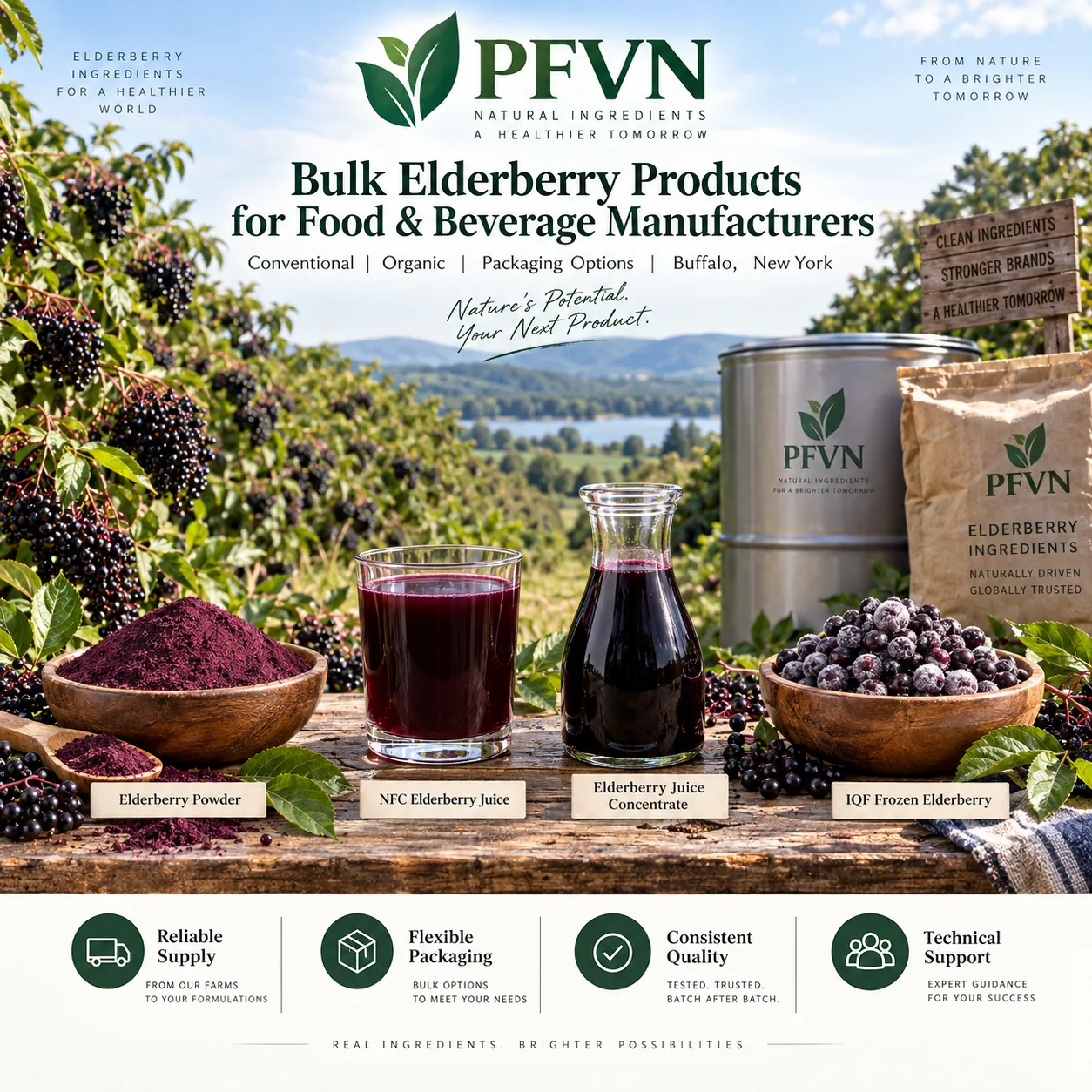
European black elderberry (Sambucus nigra) belongs to the Adoxaceae family. The plant produces clusters of small dark-purple to almost black fruits that are commercially processed into juice, concentrate, frozen fruit, powders and other food ingredients.
Ripe elderberries provide a tart, dark-fruit profile with earthy and mildly floral notes. Compared with sweeter berries, elderberry is frequently used as part of a blend where its concentrated color, acidity and distinctive berry character complement apple, grape, cherry, cranberry, blackcurrant and other fruits.
For juice-concentrate production, ripe fruit is typically crushed or pressed, followed by separation of seeds and coarse solids, clarification or filtration and vacuum concentration. Commercial juice concentrate is therefore more fluid and lower in insoluble fruit material than whole-fruit preparations.
65° Brix is a common commercial elderberry juice concentrate grade. Buyers should also compare acidity, pH, color, clarity and sensory profile because natural variation in fruit origin and processing can materially affect finished-product performance.
Current conventional and organic supplier specifications commonly use approximately 65 ±1–2° direct Brix. Acid-corrected values may be slightly higher depending on natural fruit acidity.
Current 65° Brix programs report titratable acidity broadly around 3–10% at concentrate strength, with specifications expressed as either citric or malic acid depending on the supplier.
Several commercial elderberry concentrate programs use approximately 11° Brix as their single-strength formulation reference, with about 1 part 65° Brix concentrate to 6.46 parts water.
Color strength can be an important purchasing parameter and may be measured by absorbance or color ratio. Clarified programs are typically controlled for sediment, turbidity and insoluble fruit material.
Approved concentrate should provide full elderberry fruit character without fermented, scorched, caramelized, oxidized or other objectionable flavor and aroma notes.
Typical supplier specifications establish limits for total plate count, yeast and mold together with applicable pathogen, residue, authenticity, certification and customer-specific requirements.
Elderberry concentrate is particularly useful in formulations that need strong dark-fruit character, deep purple-red color and concentrated fruit solids without the added water of single-strength juice.
Used in elderberry drinks, juice blends, fruit beverages, flavored waters and specialty beverage systems, commonly combined with apple, grape, cherry, cranberry, blueberry or blackcurrant.
Suitable for concentrated beverage shots, syrups and functional beverage formulations where pronounced elderberry color and flavor are required at controlled inclusion levels.
Used in yogurt fruit preparations, cultured products, sorbet and frozen-dessert systems where deep berry flavor and color complement sweet or creamy formulations.
Provides dark-berry flavor, fruit acidity and concentrated color to gummies, jellies, chews, hard candies and confectionery centers.
Used in bakery fillings, fruit layers, glazes, dessert sauces, spreads and compounds where concentrated elderberry character is needed without excessive added water.
Used in fermented beverages and flavor compounds where elderberry contributes fermentable fruit solids, acidity, dark-fruit aroma and deep purple-red appearance.
Choose the elderberry format according to required fruit texture, juice strength, dry-solids format, storage system and finished-product application.
Select package size according to concentrate Brix, annual volume, frozen or aseptic storage requirements, production batch size, thawing needs and plant pumping or unloading capabilities.
Often used for product development and smaller manufacturing runs. Commercial conventional and organic 65° Brix elderberry concentrate programs are available in pail formats.
Lined steel drums are a common industrial format for frozen elderberry concentrate. Commercial examples include 50- to 52-gallon open-top drum programs with protective liners.
Useful for higher-throughput programs where concentrate stability, annual demand and supplier filling capability support tote or IBC handling.
May be available for selected high-volume programs where product stability, sanitary transport and suitable unloading infrastructure permit.
Include your application, target °Brix, acidity, color and clarity requirements, conventional or organic program, estimated quantity, packaging, storage condition, delivery location and timing.