
Bulk fruit & vegetable ingredients, organized for industrial sourcing.
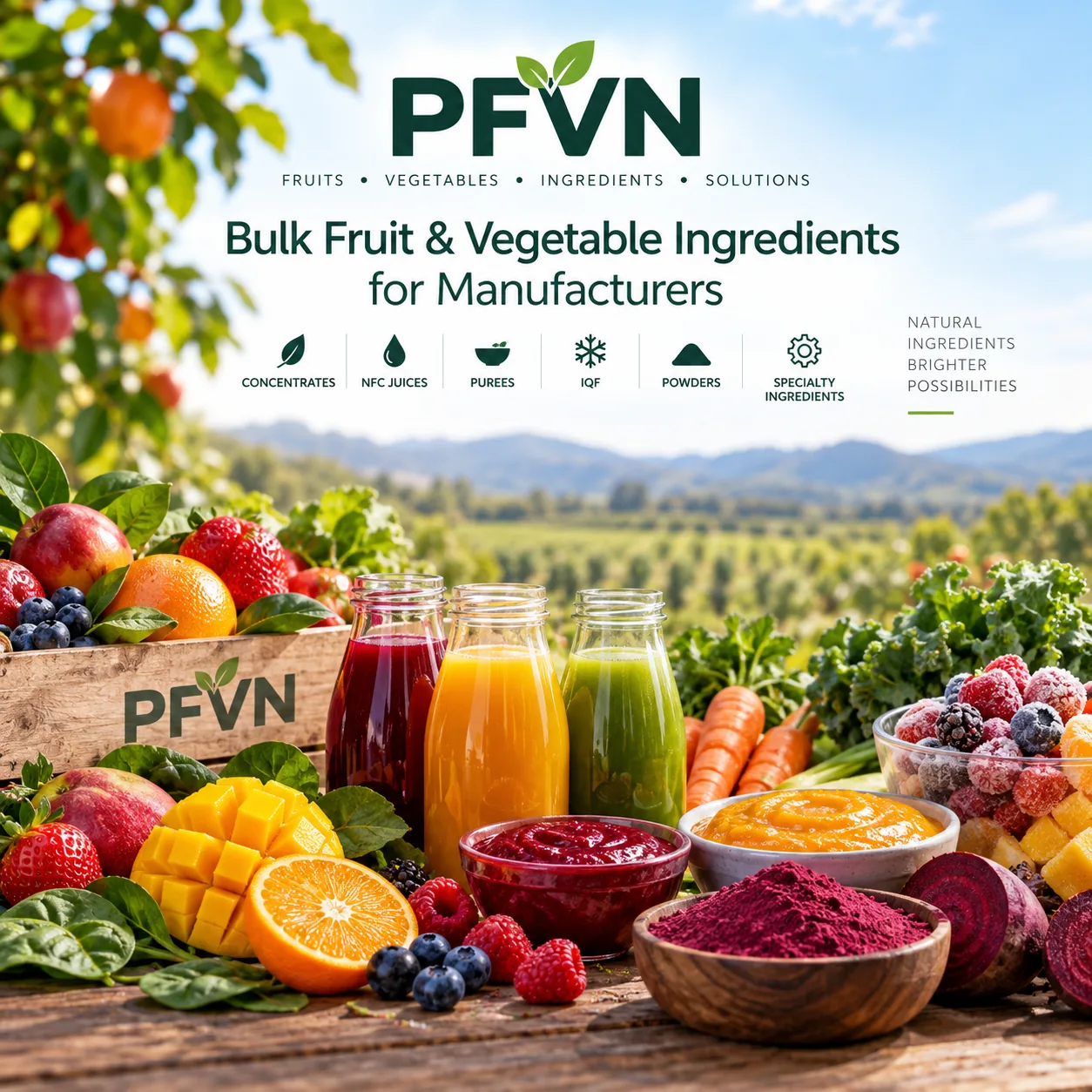
Compare juice concentrates, NFC juices, purees, IQF frozen fruits and vegetables, powders and specialty formats by ingredient, application and processing need. PFVN helps purchasing and R&D teams move from product discovery to a specification-ready commercial inquiry.
Send the ingredient, specification, quantity and delivery point.
For faster sourcing review, include the product format, critical analytical or physical requirements, conventional or organic status, preferred packaging, trial or annual volume and destination.
Choose the fruit or vegetable ingredient format that fits your process.
PFVN organizes its portfolio around the formats commonly requested by industrial food and beverage buyers. Search individual ingredients or begin with the processing format, product characteristics and handling requirements relevant to your production line.
Juice Concentrates
Bulk fruit and vegetable juice concentrates for beverages, food formulations, fermentation, sweetening, flavor systems, sauces and ingredient manufacturing. Concentrates can help manufacturers obtain fruit character while reducing the volume associated with transporting single-strength juice.
Explore juice concentrates → 36 productsNFC Juices
Single-strength not-from-concentrate fruit and vegetable juices for beverage, blending and food applications where manufacturers require a juice format closer to its original soluble-solids concentration rather than a concentrated ingredient.
Explore NFC juices → 42 productsFruit & Vegetable Purees
Bulk purees for beverages, smoothies, baby food, dairy products, bakery fillings, sauces, desserts and prepared foods. Purees provide both flavor and fruit or vegetable solids where texture and body are important formulation considerations.
Explore purees → 51 productsIQF & Frozen Ingredients
IQF and frozen fruit and vegetable ingredients for industrial manufacturers, foodservice processors, bakery products, prepared meals, toppings and applications that require recognizable pieces, particulates or whole-product formats.
Explore IQF frozen products → 58 productsFruit & Vegetable Powders
Powdered fruit and vegetable ingredients for dry beverage systems, bakery mixes, seasonings, snacks, nutritional formulations and other applications where a shelf-stable dry format offers processing or handling advantages.
Explore powders → 15 productsSpecialty Ingredients
Citrus cells, citrus oils, fruit pastes and complementary specialty formats for manufacturers developing beverages, bakery products, confectionery, sauces, flavor systems and other formulated foods.
Explore specialty ingredients →Find the ingredient you need without navigating hundreds of individual pages.
Industrial buyers often begin a sourcing project with an ingredient name, a product format or a manufacturing application rather than a specific catalog page. PFVN's product finder brings those different search paths together so procurement and product-development teams can move more quickly from research to inquiry.
Search the catalog by fruit or vegetable name, browse a complete format category, or start with the finished product you are manufacturing. Relevant application guides can help identify which ingredient formats may be worth evaluating before requesting technical documentation or pricing.
- Search by fruit or vegetable name
- Search by product format such as concentrate, puree, NFC or powder
- Filter the catalog by ingredient group
- Share product searches with a
?q=URL - Move from manufacturing applications to relevant ingredient categories
- Submit a sourcing inquiry once your product requirements are defined
Start with what you manufacture, then identify the ingredient format.
Ingredient selection depends on much more than the fruit or vegetable itself. Manufacturers may need to consider flavor impact, solids, viscosity, particulates, processing conditions, packaging, storage, logistics and the role of the ingredient in the finished formulation. PFVN's application library gives buyers an additional way to explore the portfolio from the perspective of the finished product.
A sourcing process designed around commercial requirements.
PFVN is focused on ingredient supply for professional buyers rather than consumer retail. The objective is to help purchasing, R&D, operations and supply-chain teams communicate the requirements that determine whether a product is suitable for their program.
Identify the Product
Begin with the ingredient and format you require. A request for apple concentrate, for example, is materially different from a request for NFC apple juice, apple puree, IQF apple pieces or apple powder.
Define the Application
Tell us how the ingredient will be used. Beverage production, bakery filling, baby food, brewing, dry blending and prepared foods can require very different product characteristics and packaging formats.
Share the Specification
When available, provide the required specification or important parameters. Product characteristics can differ according to crop, process, source, origin, grade and individual supply program.
Confirm Packaging
Packaging requirements affect handling, storage, transportation and production. Include your preferred commercial package or advise how the ingredient will be received and used at your facility.
Provide Volume
Commercial quantity is an important part of an ingredient inquiry. Share your expected order size, annual requirement or trial requirement so the request can be evaluated in the correct supply context.
Specify Destination
Delivery country and destination help define the logistics and commercial scope of an inquiry. PFVN supplies customers in North America while also serving international ingredient buyers.
From ingredient search to a commercially defined sourcing request.
A useful B2B ingredient inquiry requires more detail than a product name alone. PFVN's website is structured to help industrial buyers identify a relevant product family and then provide the commercial and technical information required for the next stage of sourcing.
Depending on the product and program, buyers may need to evaluate characteristics such as formulation suitability, packaging, minimum commercial quantities, destination, storage requirements and supporting product documentation.
- Fruit and vegetable ingredients across multiple processing formats
- Commercial inquiries for food and beverage manufacturing
- Support for North American and international customer requirements
- Specification-led product discussions
- Packaging and logistics considerations incorporated into the inquiry process
- Documentation requests matched to the applicable product and supply program
Information that helps buyers ask better sourcing questions.
Product pages provide an initial overview, but the appropriate ingredient for a commercial formulation cannot always be determined from a generic website specification. Characteristics may vary by product source, production method, origin, season, crop, lot or customer program.
For this reason, PFVN emphasizes current specifications and program-specific documentation rather than presenting every technical value as universally applicable to every available source.
- Use catalog pages to identify candidate ingredients
- Use application guides to compare possible formats
- Provide your target requirements when requesting a quote
- Request current product documentation for technical evaluation
- Confirm commercial and logistics requirements before purchase
Use the website to narrow the request—not to guess the specification.
Industrial fruit and vegetable ingredients are agricultural and processed products, and their characteristics can vary according to the ingredient, manufacturing method, source, origin, crop and individual supply program.
PFVN therefore avoids treating one generic technical value as the definitive specification for every product that may be available under a given ingredient name. Buyers should request the current specification and applicable documentation for the product being evaluated.
When submitting an inquiry, include any mandatory technical parameters, packaging needs, expected order quantity and destination. This helps focus the discussion on options appropriate for the intended manufacturing application.
A practical starting point for industrial fruit and vegetable ingredient sourcing.
PFVN combines a broad ingredient catalog with application-focused content and a commercial inquiry workflow. The website is designed to help ingredient buyers research available formats, understand which category may suit their application and communicate meaningful purchasing requirements.
Broad Ingredient Coverage
Explore fruits and vegetables across concentrate, NFC juice, puree, IQF frozen, powder and specialty formats instead of limiting a search to one processing type.
Application-Focused Research
Manufacturers can research ingredients from the perspective of beverages, bakery, baby food, brewing, dairy, sauces, dry mixes and many other industrial applications.
Commercial Inquiry Workflow
Quote requests are structured around the details that matter in B2B sourcing, including product, quantity, packaging, destination and technical requirements.
Specification Awareness
Rather than assuming all sources are identical, PFVN encourages buyers to evaluate current specifications and documentation relevant to the actual product offered.
Buyer Resources
Dedicated pages for supply capabilities, quality documentation, packaging, logistics, applications and frequently asked questions support more informed purchasing discussions.
Global Customer Scope
PFVN is based in Buffalo, New York and primarily supports the North American market while also working with international customers seeking bulk fruit and vegetable ingredients.
What should you include in a fruit or vegetable ingredient inquiry?
The more clearly your requirements are defined, the easier it is to evaluate the request in a commercial context. If you already have a technical specification, purchasing specification or incumbent product information, include the relevant requirements with your inquiry.
- Ingredient name
- Required format
- Intended food or beverage application
- Important technical or quality requirements
- Preferred packaging format
- Trial, order or annual quantity
- Delivery destination
- Requested timing or purchasing schedule
Research the product first, then contact PFVN.
If your requirement is still at the development stage, begin with the product catalog or application library. These resources can help your team compare ingredient forms before requesting commercial information.
For example, a beverage manufacturer evaluating mango may want to compare mango concentrate, mango puree and other mango formats depending on the required flavor, solids, texture, processing method and finished-product concept.
Once the appropriate ingredient category has been identified, PFVN can use the information in your inquiry to focus the sourcing discussion on the relevant commercial requirements.
Send the product, required format, volume, package and destination.
Include your key technical requirements and intended application so your inquiry can be reviewed in the correct commercial context.