
5-gallon or roughly 15–25 kg pails
Useful for product-development trials and smaller manufacturing runs. Commercial blueberry puree programs may use frozen pails or aseptic pail and bag-in-box formats depending on processor.
Bulk blueberry puree is a deeply colored berry ingredient used by food and beverage manufacturers for characteristic blueberry flavor, natural acidity, fruit solids and purple-red color. Applications include smoothies, beverages, yogurt preparations, bakery fillings, frozen desserts, jams, sauces, nutrition products and specialty foods. PFVN supports industrial buyers with conventional and organic programs, technical specifications, packaging, documentation and commercial supply options.
Blueberries belong to the genus Vaccinium. Commercial ingredients may be produced from cultivated highbush blueberries, including Vaccinium corymbosum, or from other commercial blueberry types such as wild or lowbush fruit depending on origin and supply program.
Ripe blueberries combine natural sweetness, moderate acidity and characteristic berry aroma. Their dark blue-to-purple appearance comes largely from pigments concentrated in the fruit skin. When whole berries are processed into puree, skin-derived color and finely dispersed fruit solids become part of the ingredient rather than being removed as they may be in clarified juice.
Cultivar, berry size, crop maturity, growing region and harvest conditions can affect soluble solids, acidity, skin-to-pulp ratio, color intensity and flavor. Wild and cultivated blueberry ingredients may therefore produce noticeably different sensory and color profiles even when both are sold simply as blueberry puree.
Commercial blueberry puree may be supplied at natural strength or as a higher-solids puree concentrate. Buyers should confirm the format because solids concentration affects formulation water, viscosity, freight economics and how much ingredient is required to achieve the desired fruit loading.
Single-strength blueberry puree retains a solids level closer to the original processed fruit and is suitable for smoothies, beverages, dairy preparations, bakery, baby food, sauces and frozen desserts.
Blueberry puree concentrate has part of the water removed, increasing soluble solids and reducing shipped water. Commercial concentrated products may be supplied around the upper-20s to approximately 30°Brix depending on processor.
Concentrated puree normally requires water adjustment in the finished formula. Formulators should compare products on equivalent fruit solids rather than simply comparing their price per kilogram.
The commercial specification should identify whether the product contains only blueberries or includes processing aids, acidulants, added water or other ingredients relevant to formulation and labeling.
There is no single universal specification for blueberry puree. Commercial ranges depend on fruit type, crop, origin, processing method and whether the puree is frozen, aseptic or concentrated. The following parameters are useful for industrial qualification.
°Brix indicates soluble-solids concentration and influences sweetness, fruit loading and formulation yield. Current single-strength commercial programs include specifications from approximately 8–9°Brix minimum through broader ranges such as 9–14°Brix, depending on crop and processor.
Blueberry puree is naturally acidic. Commercial examples commonly fall around pH 2.5–4.0, while titratable acidity may be specified separately as citric acid. Both measurements are useful because pH alone does not describe total acid contribution or perceived tartness.
Refining controls skin particles and overall smoothness. Commercial examples use fine screens ranging roughly from fractions of a millimeter to about 1 mm depending on the desired puree style and processing system.
Consistency affects pumping, mixing, filling and finished-product texture. Some commercial blueberry puree programs define Bostwick or viscosity ranges. Test temperature and method should be matched when comparing suppliers.
Color should be characteristic of processed ripe blueberries. Skin content, fruit type, pH, thermal process, oxygen exposure and storage can influence the intensity and shade of the finished puree.
Commercial qualification should confirm characteristic blueberry flavor and aroma with freedom from fermented, scorched, oxidized, metallic or other objectionable sensory notes.
Specifications may establish limits for aerobic plate count, yeast and mold, coliforms and relevant pathogens. Required limits depend on processing method, packaging system and intended end use.
Buyers should verify whether the puree is 100% blueberry and whether any processing aid is used. Unsweetened puree should be distinguished from formulated blueberry bases or preparations containing sugar and stabilizers.
Blueberry's dark blue, purple and red tones are associated strongly with anthocyanin pigments concentrated in the fruit skin. These pigments give blueberry puree significant visual impact in beverages, yogurt, frozen desserts and fruit preparations.
Anthocyanins are sensitive to their surrounding environment. Color expression changes with pH, while extended heating, oxygen exposure, light and storage can reduce pigment stability and shift the appearance of processed blueberry products.
Manufacturers should evaluate color after the complete production process rather than approving puree only in its incoming state. Pasteurization, baking, dairy interactions, storage temperature and final product pH can all affect finished appearance.
Blueberry puree is useful wherever manufacturers require recognizable berry flavor, natural acidity, purple-red color and fruit body. Major pathways include smoothies, beverages, dairy preparations, bakery fillings, frozen desserts, fruit spreads and blended fruit products.
Blueberry puree contributes berry flavor, color and suspended fruit solids to smoothies, fruit beverages and blended drink bases. Its natural acidity pairs well with banana, apple and other sweeter fruits.
Application guide → Purees Baby Food & Fruit PouchesFine-finish blueberry puree can be incorporated into blended fruit pouches and puree products where acidity, particle profile and microbiological criteria meet the manufacturer's requirements.
Application guide → Dairy Fruit Preparations for YogurtBlueberry is a major flavor profile for stirred yogurt, fruit-on-the-bottom systems and cultured-dairy preparations. Color stability, fruit texture and interaction with the dairy base should be evaluated during development.
Application guide → Bakery Bakery Fillings & InclusionsPuree can provide blueberry flavor and fruit solids in pastry fillings, cake layers, fruit pockets and other bakery preparations where starch, pectin or other systems establish final texture.
Application guide → Frozen desserts Frozen Dessert ManufacturingBlueberry puree is used in ice cream variegates, frozen yogurt, sorbet and fruit desserts where its berry flavor and purple coloration provide strong product identity.
Application guide → Fruit preparations Jams, Preserves & Fruit SpreadsPuree provides blueberry flavor, acidity and fruit solids for jams, spreads, compotes and multi-berry preparations, either as the primary fruit component or as part of a blend.
Application guide →The combination of recognizable berry flavor, dark color and moderate acidity also makes blueberry puree useful in adjacent product categories beyond traditional jams and smoothies.
Blueberry puree can form the fruit base for dessert sauces, cheesecake toppings, fruit drizzles and plated-dessert components.
Puree can provide recognizable fruit character in nutrition pouches, blended smoothies and specialty food formulations where natural fruit solids and color are desired.
Blueberry puree can contribute flavor and color to confectionery fillings, fruit gels and layered dessert preparations when combined with suitable sugar, pectin or other texturizing systems.
Commercial blueberry puree is also used in selected beer, cider, kombucha and other fermented-beverage programs where processors want whole-fruit character without handling intact berries.
Blueberry puree should not be evaluated solely by price per pound. Cultivated highbush and wild blueberry sources can differ in berry size, skin-to-pulp ratio, color intensity, acidity and flavor. Processing method can further change consistency and finished appearance.
Origin and crop year may also influence analytical ranges and commercial availability. Buyers with strict color, organic-certification or origin requirements should identify those requirements before samples or quotations are requested.
For annual programs, RFQs should include expected volume, delivery frequency, destination, packaging preference and whether aseptic, frozen or concentrated supply is acceptable. Where technically practical, qualifying more than one source can support supply continuity.
Blueberry puree may be supplied aseptically, frozen or in concentrated frozen formats depending on processor. Storage requirements and package size should be matched to production volume, color-quality expectations and available handling equipment.
Aseptic processing can allow unopened shelf-stable storage under supplier- specified conditions. Current commercial programs range from ambient-storage systems to programs recommending refrigeration to better preserve color and flavor quality.
Frozen puree requires a maintained cold chain but can provide a useful alternative where manufacturers have frozen storage. Thawing and post-thaw handling should follow the exact supplier specification.
Receiving teams may verify lot identity, package integrity, net weight, product condition, temperature where applicable and required quality documentation before material is released to production.
Packaging should match batch size and consumption rate so opened or thawed product can be used efficiently while limiting unnecessary oxygen exposure and extended storage.
Microbiological requirements depend on preservation method, package format and intended use. Specifications may include limits for total plate count, yeast, mold, coliforms and relevant pathogens together with customer-specific requirements.
Physical quality criteria can include coarse skin particles, stems, leaves, foreign material, color, consistency and other defects. Fine-finish beverage or baby-food programs may require tighter particle specifications than bakery or rustic fruit preparations.
Because blueberries vary naturally by cultivar and crop, some difference in color, acidity and sweetness is expected. Defined commercial ranges provide a more useful receiving standard than expecting identical sensory characteristics from every harvest.
Blueberry color and texture can change substantially after the ingredient is combined with proteins, sugars, stabilizers and other fruits. The pH of the finished product can also influence the apparent red, purple or blue character of anthocyanin pigments.
Manufacturers should reproduce actual heating, cooling, freezing and storage conditions during product trials when color and berry aroma are commercially important. Dairy systems, bakery applications and fermented products can each produce different visual and sensory results.
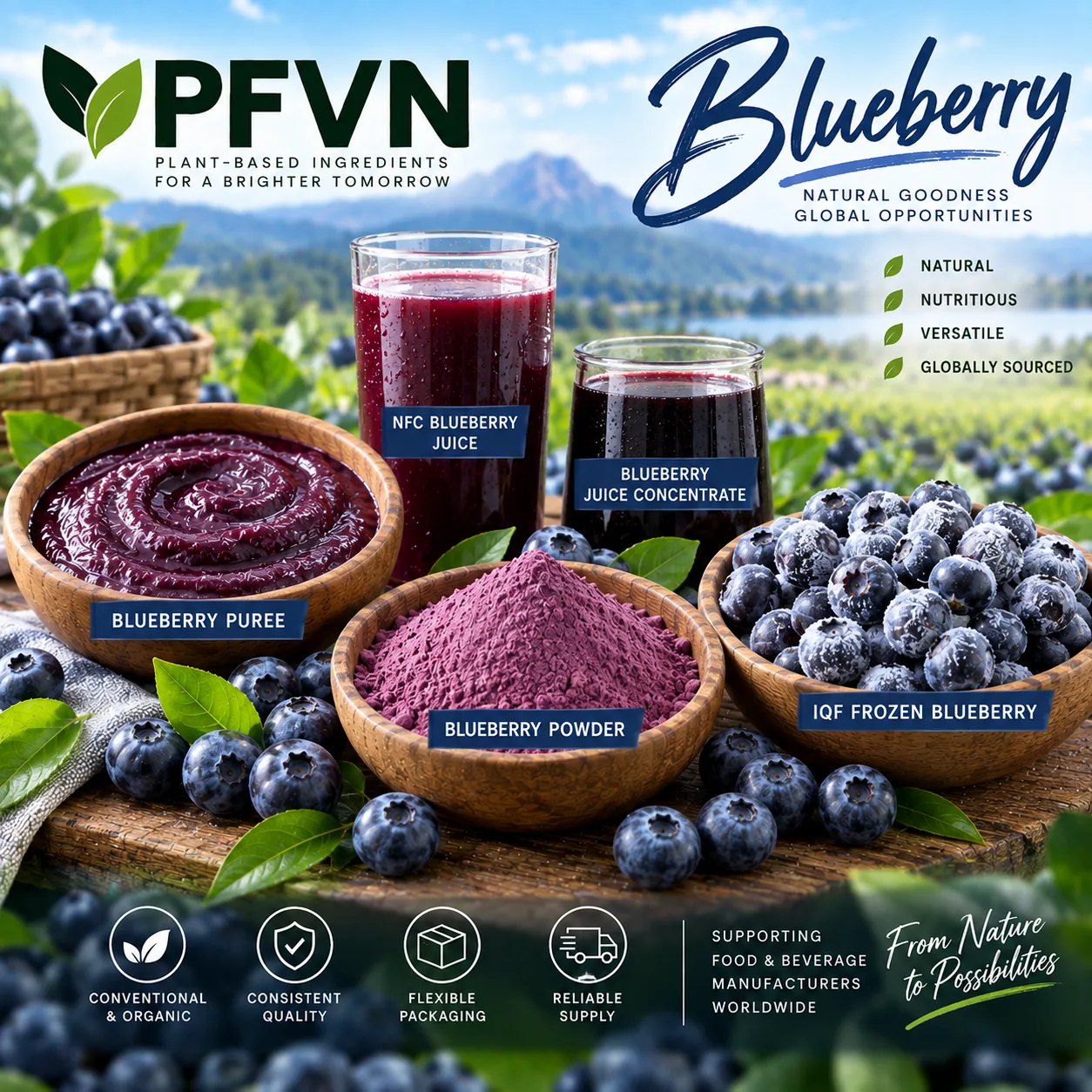
Depending on the application, blueberry may also be sourced as IQF frozen fruit, juice concentrate, NFC juice or powder when a recognizable berry piece, concentrated liquid, single-strength juice or dry-format ingredient better suits the manufacturing process.
Select package size around batch volume, storage requirements, thawing or pumping needs, line rate and inventory turnover. Exact pack formats depend on whether the puree is aseptic, frozen, natural strength or concentrated.
Useful for product-development trials and smaller manufacturing runs. Commercial blueberry puree programs may use frozen pails or aseptic pail and bag-in-box formats depending on processor.
A common industrial scale for blueberry puree. Current supplier programs include approximately 400–450 lb drum fills in frozen or aseptic configurations, with exact net weight varying by source.
Used by selected high-volume programs where puree consistency, filling technology and customer handling equipment support bulk tote supply. Commercial blueberry programs can also use larger aseptic bag-in-tote systems.
Selected programs may use aseptic bag-in-box or frozen block formats where smaller handling units, easier portioning or lower manufacturing volumes are preferred.
Include the application, blueberry type or origin if relevant, single-strength or concentrated format, target °Brix, pH or acidity, sieve or consistency requirement, conventional or organic program, quantity, packaging, delivery location and timing.