
5-gallon pails
Often suitable for trials and smaller manufacturing runs; exact net weight varies with concentrate density and °Brix.
Bulk prune juice concentrate for industrial manufacturers seeking concentrated dried-plum flavor, natural fruit sugars, soluble solids and deep brown fruit color in an efficient liquid format. PFVN supports specification-based sourcing for beverage, bakery, fruit-preparation, confectionery, snack and culinary programs.
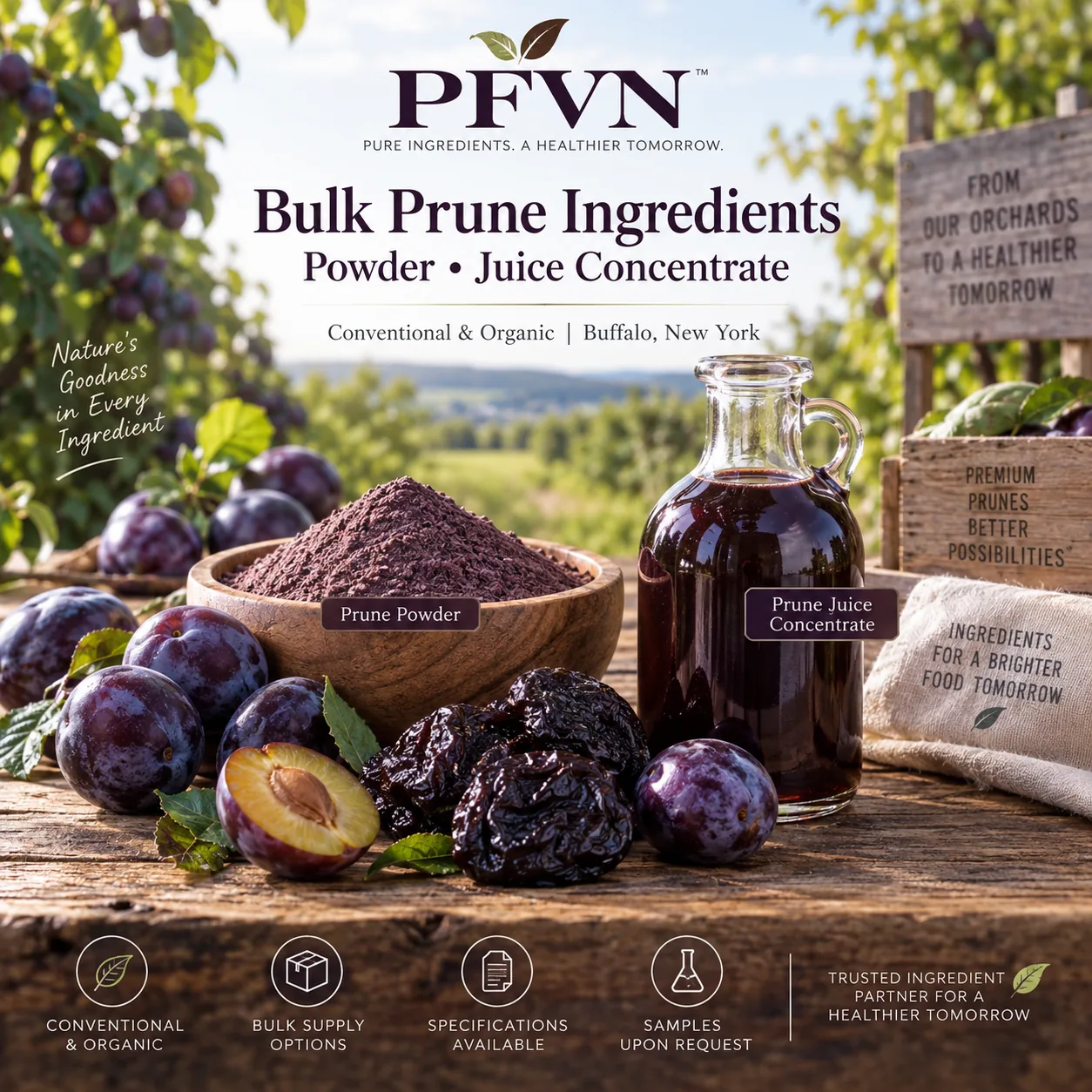
Prunes are dried plums, generally produced from plum varieties selected for their sugar content, flavor and ability to dry while maintaining desirable fruit quality. Drying removes a substantial portion of the fruit's water and concentrates naturally occurring sugars, organic acids, color compounds and characteristic plum flavor.
Prune juice and prune juice concentrate typically show a fuller, darker and more cooked-fruit sensory profile than fresh plum juice. Flavor can include sweet plum, raisin-like, caramelized and dried-fruit notes, with moderate acidity and a deep brown-to-purple-brown appearance depending on raw material and processing.
Prunes also naturally contain sorbitol, a sugar alcohol occurring in plums and several other fruits. Its presence, together with glucose, fructose and other soluble fruit components, contributes to the characteristic sweetness and solids profile of prune-derived ingredients.
The purchasing specification should control the properties that influence formulation yield, sweetness, color, pumping and finished-product consistency.
Prune concentrate is generally supplied as a high-solids liquid. Confirm the actual commercial °Brix because it determines fruit-solids contribution, dilution and cost at use.
Both parameters help describe the acid balance of the concentrate and its effect on beverage, fruit-preparation or confectionery formulations.
Prune-derived soluble solids include naturally occurring sugars and sorbitol. Composition can affect sweetness, solids balance and formulation behavior.
Prune concentrate normally contributes a dark fruit color. Establish an acceptable color range when the ingredient materially influences finished-product appearance.
Confirm whether the commercial grade is clarified or contains suspended fruit material according to the intended manufacturing application.
High-solids prune concentrate can be viscous, particularly at lower temperatures. This affects pumping, metering, mixing and container evacuation.
Approve representative material for characteristic prune flavor and absence of excessive fermentation, oxidation, scorching or other atypical notes.
Define microbiological requirements appropriate to the concentrate format, commercial storage system and validated manufacturing process.
Prune juice concentrate can contribute sweetness, fruit solids, dark color and flavor simultaneously. In some formulations its concentrated sugar system and viscosity can also influence moisture retention, body and finished texture.
Those properties are especially relevant in bakery, fruit preparations and snack products, where prune concentrate may perform differently from a lighter clarified juice concentrate. The actual effect depends on inclusion rate, concentrate specification and the rest of the formulation.
Prune concentrate is used where manufacturers need concentrated dried-fruit character, natural fruit solids and dark color while limiting the amount of additional water introduced into the formulation.
Used in prune beverages, reconstituted drinks and multi-fruit blends where its concentrated solids and characteristic dried-plum flavor provide the main or supporting fruit profile.
Application guide → Beverages Functional & Specialty BeveragesPrune concentrate can provide the fruit base, sweetness and dark-fruit character in wellness and specialty beverage formulations.
Application guide → Bakery Bakery, Fillings & Baked GoodsIts dark color, fruit solids and sweet dried-fruit profile can support breads, cakes, bars, fillings and other bakery products.
Application guide → Confectionery Gummies, Chews & Fruit ConfectioneryPrune concentrate can contribute soluble solids, sweetness, dark fruit flavor and color to high-solids confectionery systems.
Application guide → Snacks Fruit Bars, Bites & Snack ProductsSuitable for fruit-based bars, bites, sheets and blended fruit-snack formulations requiring concentrated fruit solids and flavor.
Application guide → Culinary Sauces, Glazes & MarinadesPrune concentrate can contribute sweetness, color and fruit depth to selected sauces, glazes and savory-sweet culinary systems.
Application guide →Prune concentrate's high soluble-solids level and dark color make processing behavior an important part of qualification. Production trials should use realistic ingredient temperatures, mixing conditions and thermal exposure.
Cold concentrate may pump more slowly. Follow the supplier's handling guidance and validate the temperature needed for efficient transfer without unnecessary heat exposure.
Introduce the concentrate under sufficient agitation to prevent localized high-solids zones and achieve consistent batch composition.
Prune naturally works well with cooked-fruit profiles, but excessive thermal exposure can still create overly caramelized or scorched sensory notes.
Prune concentrate can substantially darken light-colored formulations. Evaluate the final product after the complete heating and storage cycle.
Include prune-derived soluble solids when calculating total sugar and solids so the formula is not unintentionally oversweetened or over-concentrated.
Document concentrate lot, °Brix, use level, process settings and finished-product results during successful commercial trials.
Prune concentrate is an agricultural ingredient, so raw-plum supply, drying quality, processing conditions, origin and production season can influence sensory profile and commercial availability.
For recurring programs, buyers should identify the critical specification, anticipated annual usage and acceptable origins early in the qualification process. Where continuity is important, alternate sources can be evaluated against the same technical and sensory benchmark.
Supplier documentation should correspond to the exact prune concentrate and production source being offered. The purchasing specification should emphasize the parameters that materially affect manufacturing consistency.
Review soluble solids, pH, acidity, color, physical profile, sensory characteristics, storage conditions and shelf life.
Where applicable, define which analytical results are required on the Certificate of Analysis for each commercial lot.
Confirm the exact composition of the supplied concentrate and any declarations relevant to the finished product.
Align supplier microbiological criteria with the manufacturer's own validated process and finished-product requirements.
Confirm country-of-origin and lot-traceability information where required by the purchasing or quality program.
Request organic, allergen, GMO-status or other applicable documents according to the specific customer and market requirements.
Commercial packaging should be selected around concentrate viscosity, batch volume, storage condition, pumping requirements and production throughput.
Often suitable for trials and smaller manufacturing runs; exact net weight varies with concentrate density and °Brix.
Common frozen or aseptic bag-in-drum scale for juice concentrates; exact fill weight and handling condition are product-specific.
Potential option for higher-throughput programs where product viscosity, stability and the supplier's filling system support tote supply.
May be suitable for selected high-volume programs where transport, storage and unloading systems are designed for the concentrate.
Prune concentrate quotations should be compared with the actual °Brix, use level and logistics program in mind. A lower price per kilogram does not necessarily mean a lower finished-formula cost if concentration, packaging or handling efficiency differs.
For high-solids products, also consider viscosity, residual product in containers and the practical ability to empty drums or totes efficiently.
Include the application, target °Brix or other critical specification, quantity, packaging, certifications, delivery location and timing. We’ll use those details to route your inquiry efficiently.