

Citrus Cells
Blood Orange
Powders & Specialty Ingredients
View product →Specialty fruit and vegetable ingredient formats that complement PFVN's juice, puree, frozen and powder portfolio. Explore citrus cells, citrus oils, fruit pastes and vegetable pastes for beverage, bakery, sauce, flavor, confectionery and other industrial food applications.
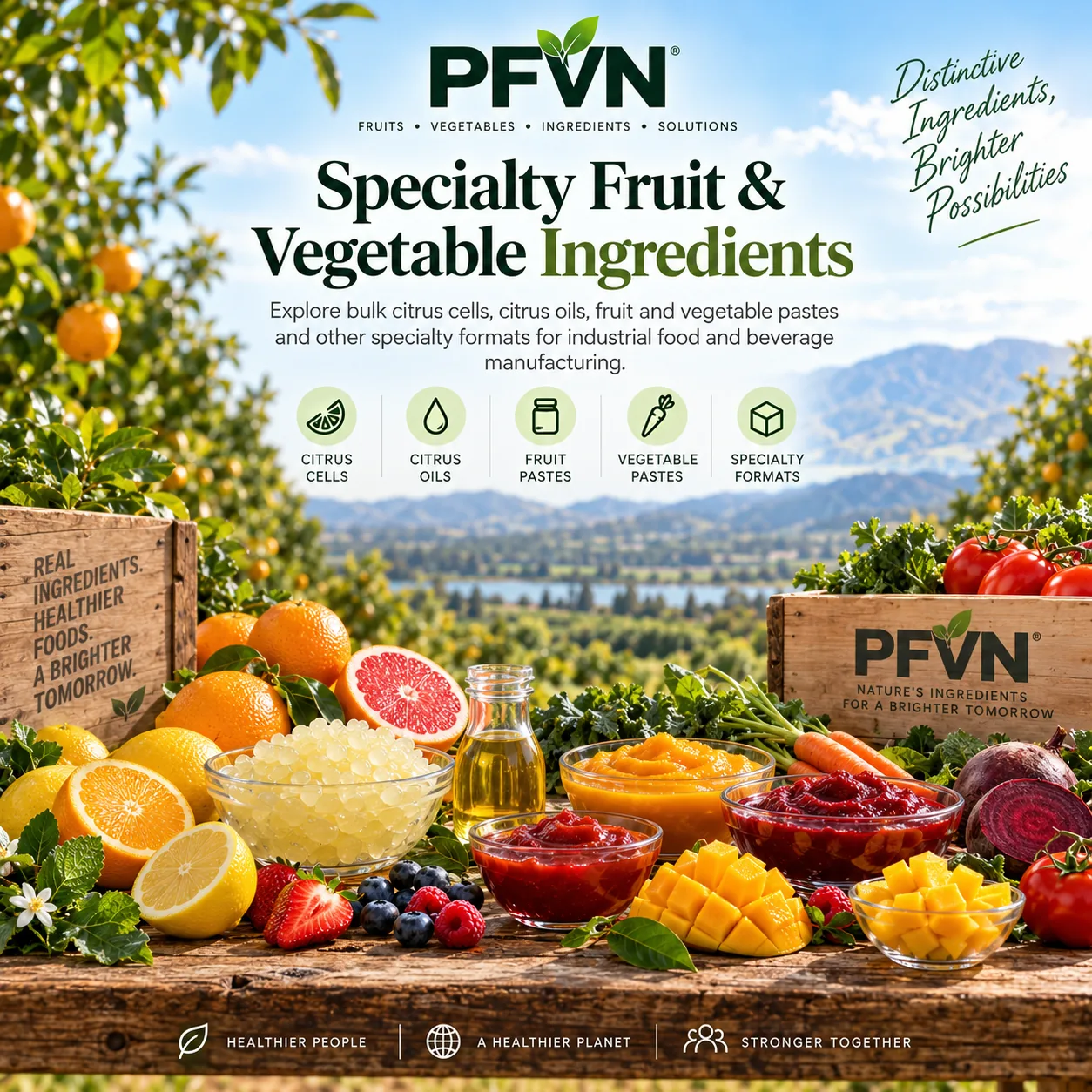
Specialty formats allow manufacturers to add particular sensory or physical characteristics that conventional juice or puree alone may not provide. Citrus cells can contribute visible pulp and texture, citrus oils can provide concentrated aroma and flavor components, and fruit or vegetable pastes can deliver body, concentrated solids and characteristic flavor.
Product characteristics vary substantially by ingredient, source and processing method. Buyers should evaluate the current specification for the material being offered, particularly where particle profile, soluble solids, volatile composition, viscosity, microbiological criteria or packaging requirements are critical to the finished formulation.
Citrus cells, citrus oils and pastes are technically different ingredient families. The parameters used to qualify one format may therefore be very different from those used for another. Exact limits and test methods should be confirmed on the current product specification or certificate of analysis.
Citrus cells may be evaluated for pulp or cell content, particle size, appearance, color, flavor and suspended-solids characteristics. Cell size and integrity can influence visual appearance, mouthfeel and suspension behavior in beverage systems.
Citrus oils may be characterized using parameters such as specific gravity, refractive index, optical rotation, color and organoleptic profile. Chromatographic composition may also be used where volatile-component identity or consistency is important.
Naturally occurring compounds such as d-limonene and other terpenes can represent important portions of citrus-oil profiles. Composition varies according to citrus species, origin, extraction method and processing, so current analytical data should be reviewed where specific limits apply.
Fruit and vegetable pastes are often evaluated for soluble solids or concentration using °Brix. Target values depend on the raw material and processing method and should be matched to the intended application rather than assumed from the ingredient name alone.
Pastes may also be specified by pH, titratable acidity, viscosity or consistency. These parameters can affect flavor balance, pumping, depositing, mixing and finished-product texture in industrial processing.
Depending on the ingredient and processing format, specifications may include microbiological limits or testing for total plate count, yeast, mold, coliforms and other relevant organisms. Applicable criteria should be confirmed for the specific product and program.
Powders & Specialty Ingredients
View product →
Powders & Specialty Ingredients
View product →
Powders & Specialty Ingredients
View product →
Powders & Specialty Ingredients
View product →
Powders & Specialty Ingredients
View product →
Powders & Specialty Ingredients
View product →
Powders & Specialty Ingredients
View product →
Powders & Specialty Ingredients
View product →
Powders & Specialty Ingredients
View product →
Powders & Specialty Ingredients
View product →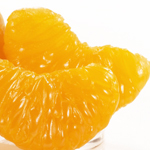
Powders & Specialty Ingredients
View product →
Powders & Specialty Ingredients
View product →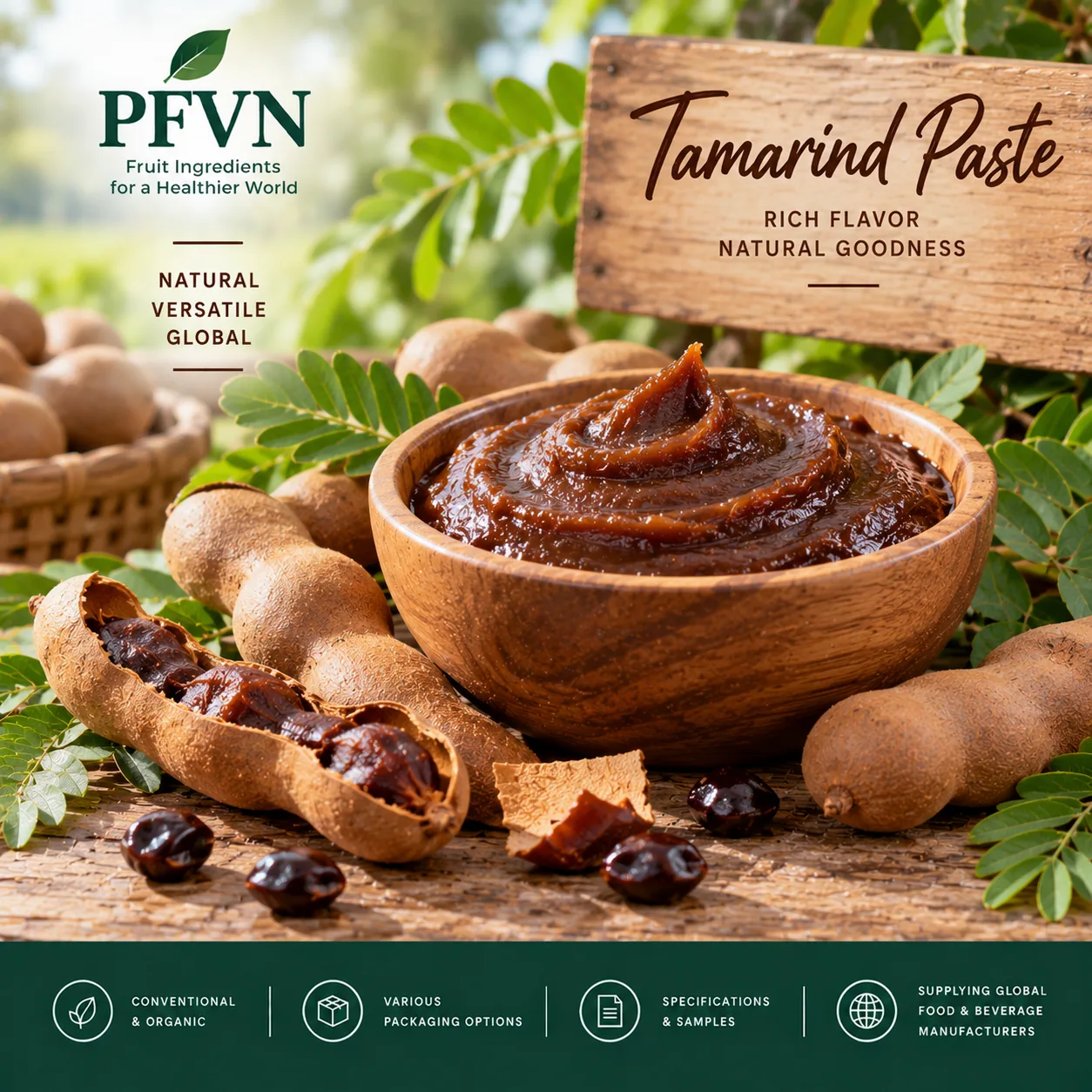
Powders & Specialty Ingredients
View product →
Powders & Specialty Ingredients
View product →
Powders & Specialty Ingredients
View product →Selecting a specialty ingredient should begin with the function it needs to perform in the finished product. Texture, aroma, concentration, visual identity, flavor impact and process compatibility can all influence the appropriate format.
Citrus cells can provide visible fruit pulp, texture and a more authentic citrus appearance in juice drinks, nectars and other beverage systems. Particle integrity, cell size, pulp percentage and suspension behavior may be important qualification parameters.
Citrus oils provide concentrated aromatic and flavor-active components. They may be used in beverages, flavor systems, confectionery, bakery, sauces and other formulated foods where citrus top notes or peel-derived character are desired.
Fruit pastes provide concentrated fruit solids, body and characteristic flavor in bakery fillings, bars, confectionery, sauces and prepared foods. Soluble solids, moisture, viscosity and particle profile may be important depending on the process.
Vegetable pastes can provide concentrated flavor and solids for sauces, soups, marinades, prepared foods and seasoning systems. Parameters such as solids, salt where applicable, viscosity, pH and microbiological limits may be relevant to qualification.
Specialty ingredients can have a strong sensory impact at relatively low usage levels compared with bulk juice or puree components. Pilot-scale evaluation is recommended where aroma intensity, bitterness or flavor balance is critical.
Heat treatment, homogenization, mixing, pumping, filling and storage may influence how a specialty ingredient performs. Buyers should consider the complete production process rather than evaluating the ingredient only in an unprocessed formulation.
Specialty products differ widely in physical form and sensitivity. Citrus oils require different handling considerations from pastes or citrus cells, so package configuration and storage conditions should always be confirmed for the specific product.
Citrus oils may be supplied in suitable food-industry containers selected to limit contamination, leakage and unnecessary exposure to air or light. Exact container material, fill weight and package size depend on source and commercial program.
Fruit and vegetable pastes may be supplied in drums, pails, cartons, aseptic systems or other industrial configurations depending on processing method, product characteristics and order quantity.
Citrus-cell products may require refrigerated, frozen, aseptic or other product-specific handling depending on the manufacturing process and preservation system. Confirm storage instructions before shipment.
Citrus oils contain volatile and oxidation-sensitive constituents. Exposure to excessive heat, oxygen and light may affect sensory quality, so appropriate storage and tightly closed packaging are important.
Shelf life depends on the ingredient, processing method, package and storage temperature. Use the shelf-life statement and storage conditions provided for the specific production lot or supply program.
Depending on the program, buyers may request product specifications, certificates of analysis, ingredient statements, allergen information, origin details, microbiological criteria and available certification documentation.
Specialty ingredients often require more targeted qualification than broad commodity categories. Include the relevant technical and sensory requirements in your inquiry so the proposed product can be evaluated against your process.
Specialty fruit and vegetable ingredients can differ according to cultivar, origin, extraction or processing method, season and individual manufacturer. Technical values from one source should therefore not automatically be applied to another source carrying the same ingredient name.
For commercial qualification, request the current specification and applicable lot or program documentation. Where your formulation depends on a particular analytical or sensory parameter, communicate the target requirement at the beginning of the sourcing process.
Specialty ingredients can support flavor, aroma, texture, color, solids and product identity across a wide range of food and beverage systems. PFVN's application library provides additional context for procurement and product-development teams evaluating ingredient formats.
Include any required pulp profile, °Brix, pH, viscosity, oil identity parameters, packaging or documentation requirements with your inquiry.
Share the required oil, cell, paste or specialty format, use level, specification, packaging and volume.