
5 gal · 52–55 gal · ~275 gal
Common reference formats include pails, frozen or aseptic bag-in-drum, totes/IBCs and, for selected high-volume programs, bulk tanker delivery.
Package format, storage condition, freight mode, pallet configuration and receiving capability can materially affect the right sourcing option for a bulk fruit or vegetable ingredient. Define these requirements early so the product and logistics plan can be evaluated together.
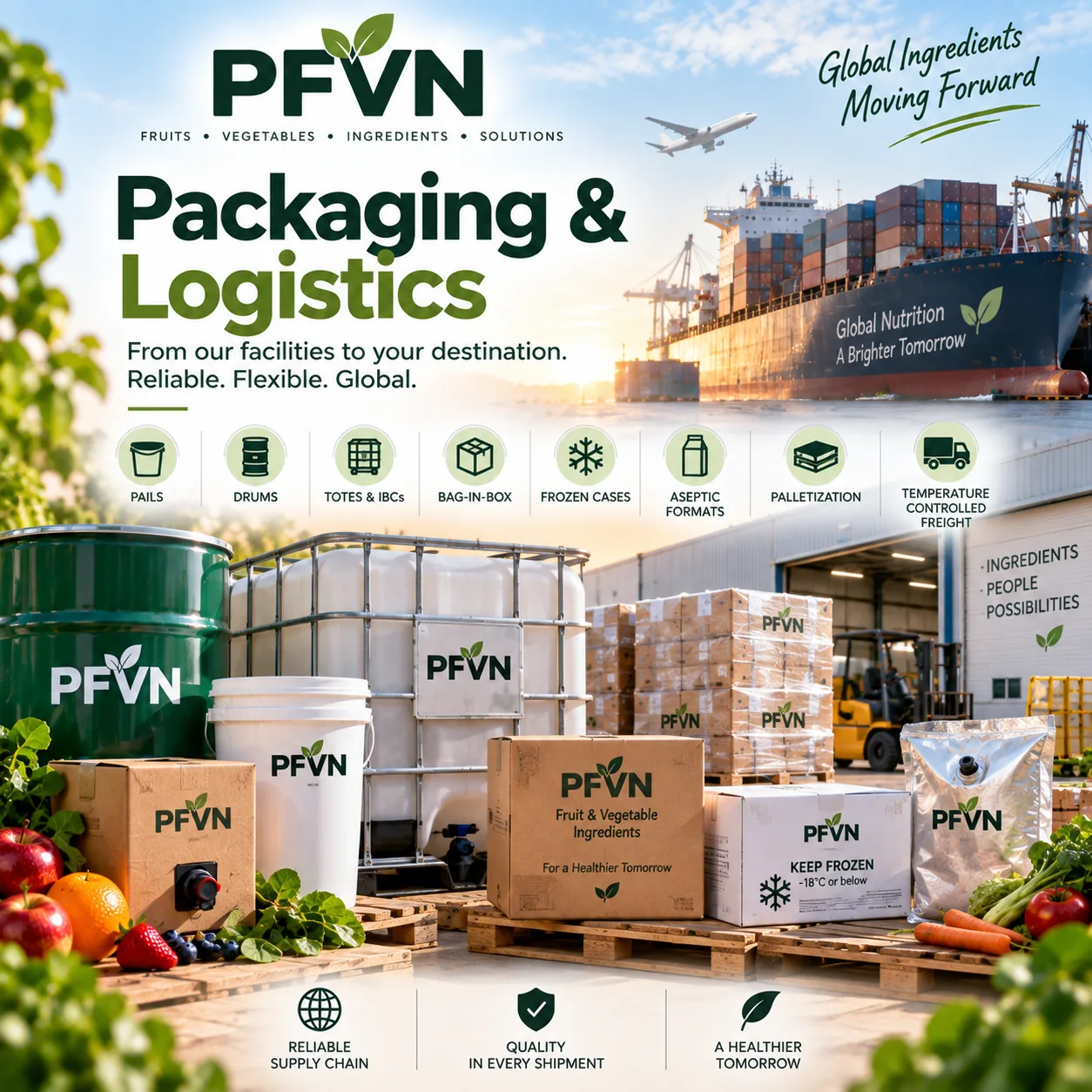
PFVN product programs can include pails, bag-in-box systems, drums, aseptic bags in drums, totes, cartons, cases, sacks or other industrial formats depending on the ingredient and source. Package type can affect storage, dispensing, production handling, freight efficiency and minimum order quantity.
Before purchase, confirm the package configuration applicable to the quoted product, including net weight, container type, liner or aseptic format, closure system, pallet configuration and any special handling requirements.
The following sizes are practical industry reference points gathered from commercial ingredient suppliers. They are not universal standards and should not be interpreted as guaranteed PFVN inventory. Density, product stability, processor equipment, country of origin and supplier filling lines all affect the exact net weight and package available for a quotation.
Common reference formats include pails, frozen or aseptic bag-in-drum, totes/IBCs and, for selected high-volume programs, bulk tanker delivery.
Pails and drums are widely used in frozen and aseptic programs; larger totes and tankers may be practical for compatible high-throughput operations.
Pails, aseptic or frozen drums and pumpable tote/IBC formats are common reference points, with smaller bag-in-box or frozen block formats used by some suppliers.
PE-lined cartons and multi-bag cartons are common for individually quick-frozen fruits and vegetables, with 1 kg or 2.5 kg inner bags used in selected foodservice programs.
Foil-lined bag-in-box, lined multiwall kraft bags and fiber drums are typical dry-ingredient formats; moisture and oxygen barrier requirements should guide selection.
Light-protective aluminum containers and compatible metal drums are common because concentrated oils require careful container compatibility and aroma protection.
Frozen cartons, metal drums, bag-in-box, aseptic jumbo bins and preserved IBC programs are all used commercially depending on cell style and storage method.
Pails, aseptic drums and large bins/IBCs are common reference formats for fruit, vegetable and culinary pastes, subject to viscosity and pumping requirements.
Juice concentrates, purees and other liquid or semi-liquid ingredients are often supplied in industrial drums. Depending on the product, the drum may contain a conventional food-grade liner or an aseptic bag designed to maintain product integrity after thermal processing and filling.
Buyers should confirm whether the offered product is aseptic, frozen, refrigerated or otherwise processed, because the package alone does not determine the required storage condition.
Pails, cartons and bag-in-box systems may be useful where production volumes are smaller, ingredient handling requires more manageable unit sizes or the plant prefers reduced open-container exposure during production.
Availability depends on the ingredient and source. Net weight, liner configuration, number of units per pallet and minimum commercial quantity should therefore be confirmed before qualification.
Certain liquid ingredients may be available in larger industrial containers or totes where the product, supply source and customer handling system allow. Larger packaging can reduce the number of individual containers handled but may require appropriate unloading, pumping, storage and sanitation capability.
Buyers should confirm whether their facility can safely receive, move and dispense the proposed package before committing to the format.
IQF fruits and vegetables are typically packed in commercial frozen-food configurations such as lined cartons, bags within cases or other bulk case formats. Exact case weight and pack configuration vary by product, cut size, processor and destination market.
Frozen products require appropriate receiving, storage and handling procedures to maintain the required temperature through the supply chain. Thawing and refreezing should be avoided unless specifically permitted by the applicable product instructions.
Fruit and vegetable powders may be supplied in multiwall sacks, lined bags, cartons, drums or other dry-ingredient packaging. Packaging should protect the powder from contamination, humidity and excessive exposure to air during storage and transportation.
Hygroscopic powders may absorb moisture from the surrounding environment, which can affect flowability, caking and handling. Keep packages properly closed and follow the storage conditions stated on the applicable product specification.
Storage and transportation conditions depend on the exact ingredient and processing method. Frozen and selected chilled products require controlled temperature conditions, while shelf-stable aseptic and dry ingredients have different warehouse and freight requirements.
Storage temperature should never be assumed from the product category alone. Confirm the current technical specification, shelf-life statement and handling instructions for the product being purchased.
Products requiring refrigerated or frozen handling depend on an uninterrupted cold chain from the shipping point through delivery and storage. Equipment, transit time, loading conditions and receiving procedures can all influence temperature control.
Buyers should identify temperature-sensitive products at the RFQ stage so the required freight mode and destination capabilities can be considered before shipment.
Pallet quantity, unit dimensions and gross shipment weight can affect warehouse space, unloading procedures, freight planning and production scheduling. Exact pallet configuration varies by package and supplier.
Where receiving or warehouse restrictions apply, provide maximum pallet dimensions, weight restrictions, rack requirements or other relevant handling information during the sourcing process.
Destination information helps determine freight feasibility and the appropriate commercial structure. Provide the delivery city, state or province, postal code and country whenever possible.
Dock capability, forklift availability, appointment requirements, operating hours and requested delivery windows can also affect logistics. These details become particularly important for larger palletized, refrigerated or frozen shipments.
Depending on origin, quantity and storage requirements, shipments may move by parcel or small freight services, less-than-truckload, full truckload, refrigerated equipment, ocean freight or other appropriate modes.
Freight decisions should account for package integrity, temperature requirements, transit time, shipment size and the customer's receiving capabilities rather than focusing on transportation cost alone.
PFVN serves North American buyers and can also evaluate international commercial inquiries. Cross-border shipments may involve additional documentation, customs procedures, duties, import requirements, inspections or transit considerations depending on the origin and destination.
The final destination and intended market should therefore be identified early in the inquiry so commercially relevant logistics requirements can be considered.
Fruit and vegetable ingredients originate from agricultural and processed supply chains. Seasonality, crop timing, production windows, inventory positions, packaging availability and transit time can all influence commercial lead time.
Buyers planning recurring demand should provide estimated annual volume, expected order frequency and target delivery dates as early as possible. Advance forecasting can be particularly useful for seasonal products, larger-volume programs or imported ingredients.
Requested delivery date and required production date are not always the same. Manufacturers should allow adequate time for transportation, receiving, quality review, sampling, thawing where applicable and internal production preparation.
If an ingredient is required for a fixed production run or launch date, include that timing in the initial RFQ.
Package availability is product- and source-specific. The examples below describe common industrial formats and the questions buyers should consider when evaluating them.
Commonly associated with certain purees, concentrates and liquid ingredients. Confirm net weight, liner configuration, storage conditions and whether specialized opening or dispensing procedures are required.
Some liquid or puree ingredients are shipped frozen in drums and require frozen transportation and warehouse capacity. Buyers should also consider thawing time and production scheduling.
Smaller industrial units can support trial production, lower-volume use or manufacturing environments where manageable package sizes are preferred. Exact availability depends on the product.
Larger liquid-handling formats may be practical for higher-volume use when the customer's facility has appropriate receiving, pumping and storage capability.
IQF fruits and vegetables may be supplied in lined cartons or bags within cases. Confirm case weight, cut format, pallet quantity and required frozen storage conditions.
Powders and other dry ingredients may use lined sacks, cartons or drums. Moisture protection, package closure and dry warehouse conditions can be important for maintaining product handling characteristics.
A commercially suitable ingredient can still create problems if the package or shipment cannot be efficiently received by the manufacturing facility.
Packaging and logistics should be considered together with the ingredient specification. If your plant requires a specific package size, handling method or freight condition, communicate that requirement before the quotation is finalized.
Industrial packaging affects freight density, storage space, labor, dispensing, waste, production scheduling and temperature control. Evaluating the complete handling process can help avoid selecting a package that creates unnecessary difficulty at the manufacturing plant.
Where packaging is critical, request the current package specification, pallet configuration and shipping information for the actual product being considered.
Include any temperature-control, pallet, receiving or recurring-delivery requirements so the sourcing request can be evaluated in the correct logistics context.