
Cell size & intactness
Buyers may specify larger recognizable juice sacs, medium pulp or a finer cell fraction. Cell-size distribution affects beverage appearance, mouthfeel, pumpability and the degree of perceived whole-fruit character.
Bulk lime cells—also described as citrus pulp, juice sacs or juice vesicles—are specialty citrus ingredients used to add authentic lime pulp texture, visible fruit identity and suspended citrus material to limeades, juices, nectars, chilled beverages and premium drink systems. They combine characteristic lime acidity and aroma with the visual and textural impact of real citrus pulp.
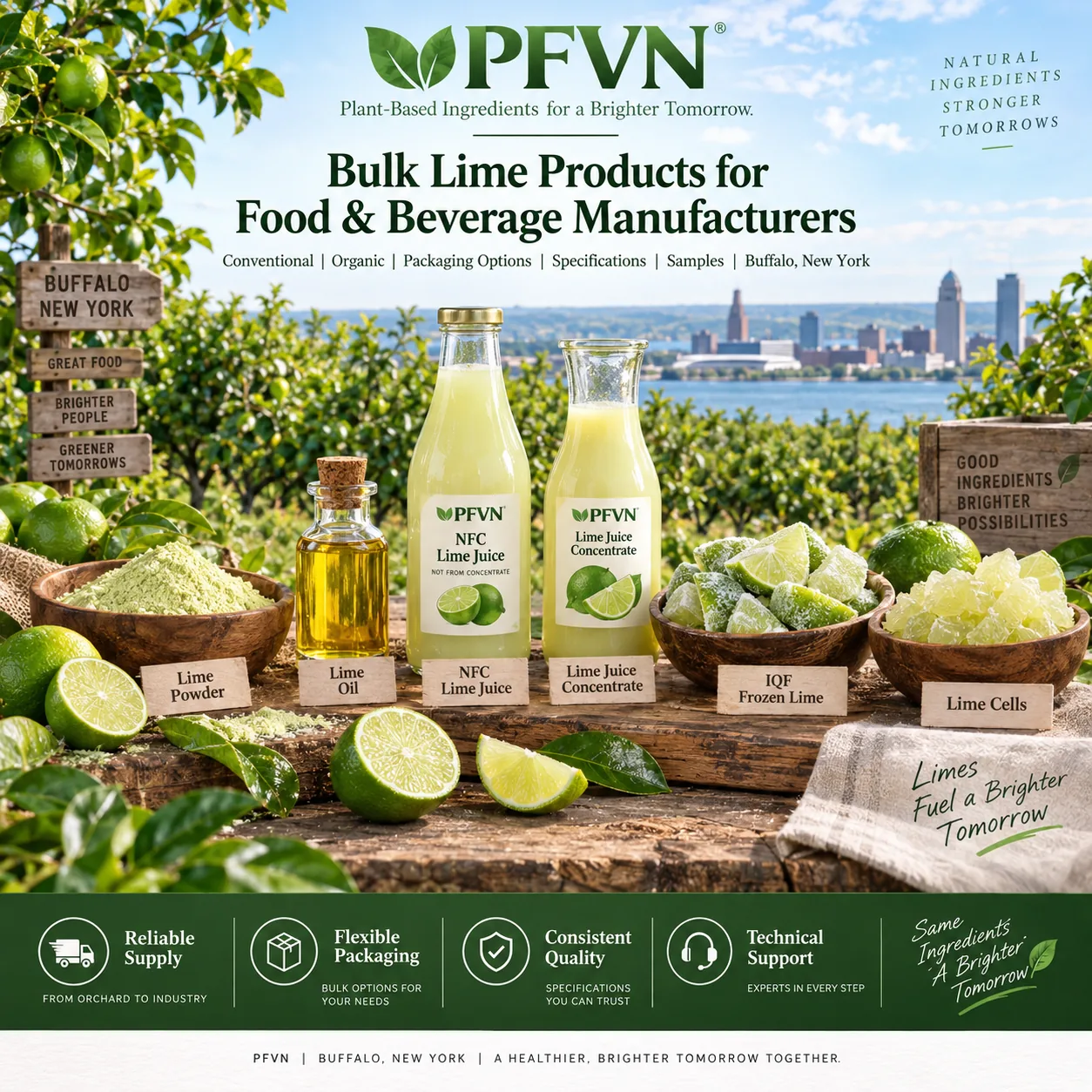
Commercial lime production includes several citrus types. Persian or Tahiti lime, generally identified as Citrus × latifolia, is widely used in industrial markets because of its larger fruit size and generally low seed content. Key or Mexican lime, Citrus aurantiifolia, is smaller and typically has a more intense aromatic profile.
Lime fruit contains an aromatic outer peel, white albedo, segment membranes and juice-filled vesicles within each segment. These juice sacs contain the acidic liquid portion of the fruit and form the basis of commercial lime-cell ingredients.
Fruit color changes from green toward yellow as maturity progresses, while the internal pulp is usually pale greenish-yellow to yellow. Variety, maturity and origin can influence acidity, aroma, bitterness and juice-sac characteristics, so commercial programs should qualify the actual supplied material.
Lime-cell qualification should focus on physical structure, pulp concentration, acidity and flavor cleanliness. Cell size and intactness determine the visible pulp effect, while peel and membrane control can strongly influence bitterness and aroma.
Buyers may specify larger recognizable juice sacs, medium pulp or a finer cell fraction. Cell-size distribution affects beverage appearance, mouthfeel, pumpability and the degree of perceived whole-fruit character.
Commercial lime-cell products may range from concentrated pulp fractions to more fluid suspensions. Confirm pulp percentage, surrounding juice content, suspended solids and drainage characteristics where relevant.
Where relevant, the liquid phase may be controlled for soluble solids / °Brix, pH and titratable acidity. Lime is naturally high in acidity, making acid level particularly important when matching cells to a finished beverage base.
Commercial approval commonly evaluates clean lime aroma, characteristic tartness, pale green-yellow to yellow pulp appearance and freedom from excessive peel, coarse membrane, seed material, oxidation or objectionable bitterness.
Lime cells originate from the juice vesicles inside the fruit's segments. Industrial recovery aims to separate this desirable pulp fraction from peel, seeds, coarse segment membranes and excessive albedo while maintaining the intended amount of intact cell structure.
Processing may include extraction, screening, separation, washing, size classification and stabilization before packing. The selected process influences cell integrity, pulp-to-liquid ratio, acidity, aroma retention and the amount of smaller broken pulp particles.
Lime peel contains highly aromatic essential oils and can also contribute bitterness. Controlled separation is therefore important: a small amount of peel-derived character may reinforce fresh lime identity, while excessive peel or membrane material can make the finished beverage harsh or bitter.
Lime has a highly distinctive volatile aroma profile. Excessive heat, oxygen exposure and prolonged storage can reduce fresh citrus notes, so premium beverage manufacturers should evaluate the cells after the actual pasteurization, filling and shelf-life conditions planned for production.
Because acidity is an important part of lime identity, the cells should be evaluated together with the juice or beverage base. A highly acidic cell fraction can materially affect the total acid balance when used at substantial inclusion levels.
Color may vary naturally from pale greenish-yellow to yellow according to lime type and maturity. Buyers should therefore qualify acceptable color by application rather than assuming that all commercial lime pulp will remain bright green.
Lime cells are intended to remain recognizable as fruit material, so processing equipment should handle them gently enough to preserve the desired size distribution. Excessive shear from pumps, mixers or restrictive valves can convert larger juice sacs into finer pulp.
Suspension behavior depends on cell size, pulp concentration, beverage viscosity and the density of the liquid phase. Depending on the formulation, some settling or flotation can occur during storage, making finished-product stability trials important.
Commercial filling systems should distribute pulp consistently across packages. Agitation should be sufficient to maintain a uniform cell concentration without causing unnecessary mechanical damage.
Lime cells are used primarily where visible citrus pulp adds authenticity, texture or premium positioning. They are especially useful in tart, refreshing beverage systems where whole-fruit appearance supports the intended product identity.
The primary application for lime cells, including limeades, mixed-citrus drinks and specialty beverages formulated with visible pulp and recognizable juice sacs.
Application guide → Juice & nectar Fruit juice & nectar productionUsed in juice and nectar systems where lime cells add suspended fruit solids, natural texture and a more authentic whole-fruit drinking experience.
Application guide → Premium beverages Premium juice manufacturingSuitable for premium juices and citrus blends where visible pulp reinforces fresh-fruit perception and differentiates the product from clarified beverages.
Application guide → Clean-label Clean-label beverage programsLime cells can provide natural texture and recognizable fruit material in beverages designed around straightforward citrus ingredients.
Application guide → Foodservice Foodservice juice programsUseful in limeades, citrus refreshers and hospitality beverage programs where visible pulp helps create a fresh-prepared visual and sensory profile.
Application guide → Chilled drinks Chilled beverage programsSuitable for refrigerated lime drinks and mixed-citrus beverages where fresh aroma, tart flavor and natural pulp texture are important.
Application guide →Lime cells are particularly suitable for limeades and citrus refreshers where pulp provides visible evidence of real fruit. They can also be blended with lemon, orange, grapefruit, tangerine or blood orange ingredients to create more complex mixed-citrus beverages.
In tropical beverage systems, lime cells can complement pineapple, mango, passion fruit, guava and other fruits by contributing acidity, citrus aroma and textural contrast. Finer lime pulp may also be used in selected sauces, fruit preparations and dessert systems where visible citrus material is desirable.
The first purchasing requirement should be the desired physical appearance. A premium limeade may require larger recognizable cells, while a smoother juice drink may perform better with a finer pulp fraction.
Lime type can also affect flavor. Persian / Tahiti lime generally offers a different aromatic and seed profile from Key / Mexican lime, so buyers with specific sensory expectations should state the required type or approve representative samples.
Commercial planning should consider origin, harvest season, conventional or organic status, annual volume, package format, storage capability and delivery timing. Larger recurring programs benefit from agreed physical, analytical and sensory tolerances.
Technical and compliance requirements should be confirmed for the exact lime-cell product and producing facility. In addition to routine food-safety review, physical defects, pulp integrity and bitterness control are important quality considerations for premium beverage applications.
The specification may identify cell or pulp size, pulp percentage, liquid phase, °Brix, pH, acidity, color, sensory criteria, microbiological limits, packaging, storage requirements and shelf life.
Buyer requirements may address seeds, peel, coarse membrane, dark particles, excessive broken cells and other defects that could affect appearance, mouthfeel or flavor.
Where included in the supply program, lot documentation may report selected physical, chemical and microbiological results against the approved product specification.
Facility certification, allergen and GMO statements, country-of-origin information, traceability documentation and organic certification where applicable may form part of the approval package.
Select the lime format according to whether the formulation requires intact frozen fruit, concentrated juice solids, single-strength juice, aromatic peel oil, a dry ingredient or visible citrus cells.
Lime cells may be supplied frozen, aseptic or in other stabilized formats depending on processor capability and product specification. Package selection should account for cell integrity, batch size, storage temperature, thawing or pumping method, line rate and unloading equipment.
Used for frozen citrus cells where manageable frozen blocks or bulk cell material are preferred. Controlled thawing and gentle handling help reduce unnecessary cell breakage.
Frozen, aseptic or preserved drum formats are common industrial reference points for citrus-cell supply and support larger beverage manufacturing runs.
Aseptic bag-in-box formats may support product development, foodservice and smaller manufacturing requirements where available from the selected processor.
Used for selected high-volume aseptic or preserved programs where cell size, product consistency and the receiving plant's unloading system support large-format handling.
Include the beverage or food application, lime type if relevant, desired cell size, pulp percentage, intactness, acidity or other chemistry requirements, quantity, packaging, delivery location and timing. These details help us evaluate the appropriate lime-cell supply program for your manufacturing requirements.