
400 GPL is a common commercial grade
A current Tahiti-lime specification uses 390–410 g/L acidity, while commercial Key-lime 400 GPL programs are also available. The exact acid strength should be stated in the purchasing specification.
Bulk Lime Juice Concentrate provides concentrated citrus acidity, characteristic lime aroma and soluble fruit solids for industrial formulations. Its sharp acid profile and distinctive green-citrus character make it useful in beverages, confectionery, bakery products, dairy applications, sauces, marinades, fermented products and flavor systems.
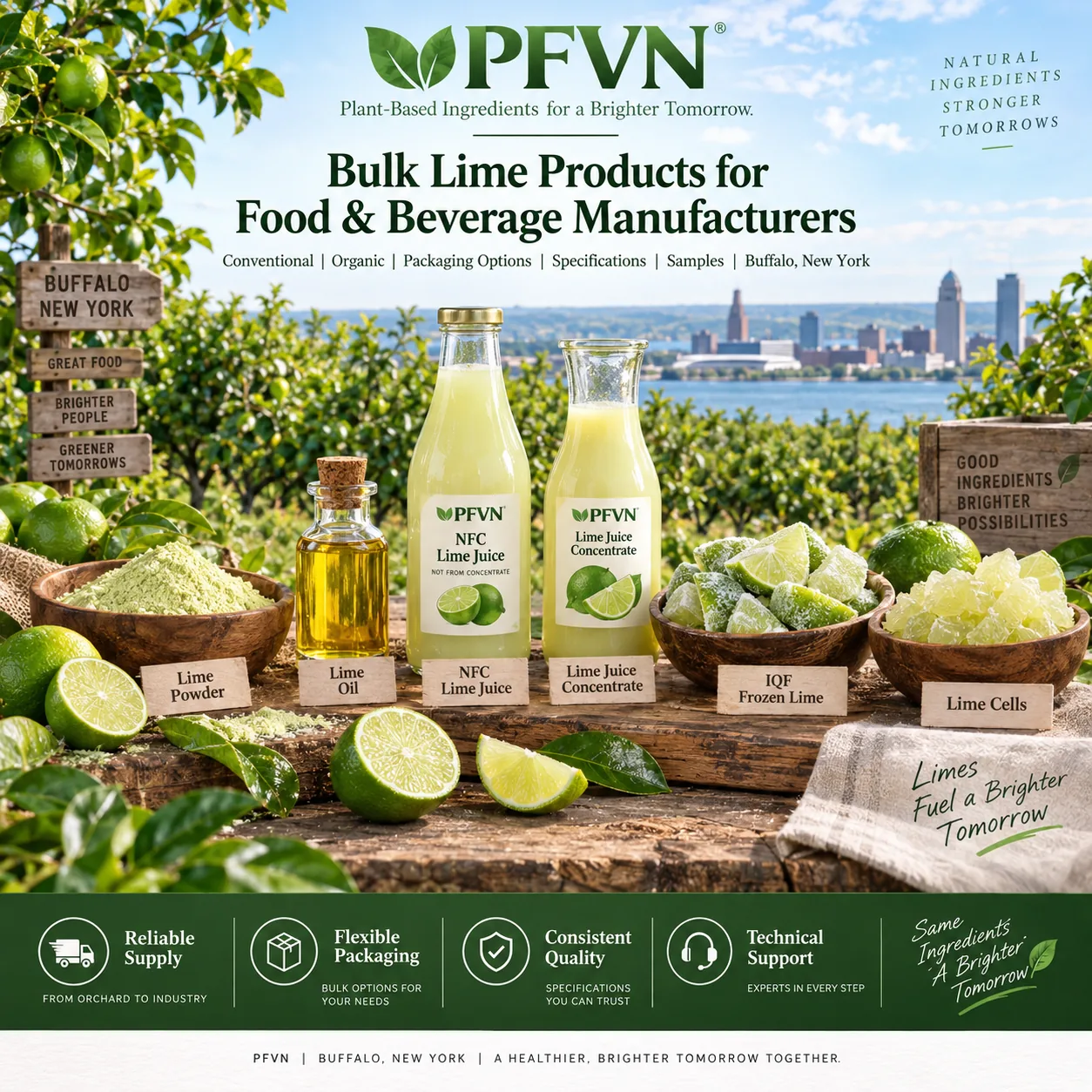
Commercial lime ingredients are commonly produced from Persian or Tahiti lime (Citrus × latifolia) and Key or Mexican lime (Citrus aurantiifolia), both members of the Rutaceae family. Persian limes are generally larger and less seedy, while Key limes are smaller and often deliver a more intense aromatic profile.
The fruit consists of a thin aromatic peel surrounding segmented, juice-filled vesicles. Juice is pale green-yellow to yellow and is characterized by strong citric acidity, relatively low natural sugar compared with sweeter citrus fruits and a fresh, penetrating lime aroma.
Industrial concentrate is produced by extracting the juice, screening or adjusting pulp and removing water under vacuum. Clarified grades may receive additional filtration, while aroma recovery can be important because volatile lime compounds are sensitive to heat and oxygen.
Lime concentrate is frequently purchased by acid strength rather than Brix alone. Commercial programs may be described as 400 GPL, referring to approximately 400 grams of acid per liter, so acidity, Brix, pH, pulp and sensory profile should be reviewed together.
A current Tahiti-lime specification uses 390–410 g/L acidity, while commercial Key-lime 400 GPL programs are also available. The exact acid strength should be stated in the purchasing specification.
A commercial Tahiti-lime 400 GPL specification requires at least 47° corrected Brix. Key-lime examples may center closer to the upper-40s corrected Brix, so Brix should not be assumed from acid strength alone.
Commercial 400 GPL examples show pH roughly 1.4–3.0, with Tahiti-lime specifications commonly near pH 1.8–2.8. Titratable acidity is typically expressed as anhydrous citric acid.
Pulp specifications vary by program, with commercial examples ranging from low-pulp clarified material to products retaining controlled citrus solids. Appearance can range from yellow-green to medium green-brown.
Approved concentrate should provide strong lime acidity and characteristic citrus flavor without fermented, scorched, caramelized, oxidized or other objectionable notes.
Supplier specifications typically establish limits for total plate count, yeast and mold together with applicable pathogen, residue, authenticity, certification and customer-specific requirements.
Lime concentrate is especially valuable where manufacturers need substantial acidity and recognizable citrus character at a relatively low inclusion rate.
Used in limeade, carbonated beverages, flavored waters, juice blends, mixers and beverage bases where bright acidity and recognizable lime flavor are required.
Suitable for functional beverages, hydration products, kombucha, fermented drinks and specialty formulations where lime provides both flavor and acid balance.
Used in marinades, salad dressings, dipping sauces, salsa systems, culinary bases and prepared foods where concentrated lime acidity and citrus character are required.
Provides sharp citrus flavor and acidity to gummies, fruit jellies, chews, hard candies and confectionery centers, alone or in mixed-citrus systems.
Used in lime fillings, glazes, creams, cultured dairy preparations, sorbet and frozen desserts where concentrated citrus flavor helps balance sweetness.
Used in flavor compounds, syrups, fruit preparations and beverage bases where standardized lime acidity and flavor are required across production batches.
Choose the lime format according to required citrus texture, juice strength, aroma intensity, dry-solids format and finished-product application.
Select packaging according to acid strength, concentrate grade, annual volume, storage requirements, production batch size, thawing needs and plant pumping or unloading capabilities.
Common for development and smaller manufacturing runs; commercial 400 GPL lime concentrate programs are available in polyethylene pails.
Lined steel drums are a common format for frozen lime concentrate. Exact fill weight varies with acid strength, concentration, density and supplier configuration.
Useful for higher-throughput programs where concentrate stability, annual demand and supplier filling capability support tote or IBC handling.
May be available for selected high-volume programs where sanitary transport, temperature control and suitable unloading infrastructure permit.
Include your application, Persian/Tahiti or Key lime preference if relevant, target GPL or acidity, Brix, pulp or clarity requirements, certification, estimated quantity, packaging, storage condition, delivery location and timing.