
Cell size & intactness
Buyers should define whether they need larger recognizable juice sacs, smaller broken cells or a finer pulp fraction. Cell-size distribution affects mouthfeel, visual appearance, pumping and suspension behavior.
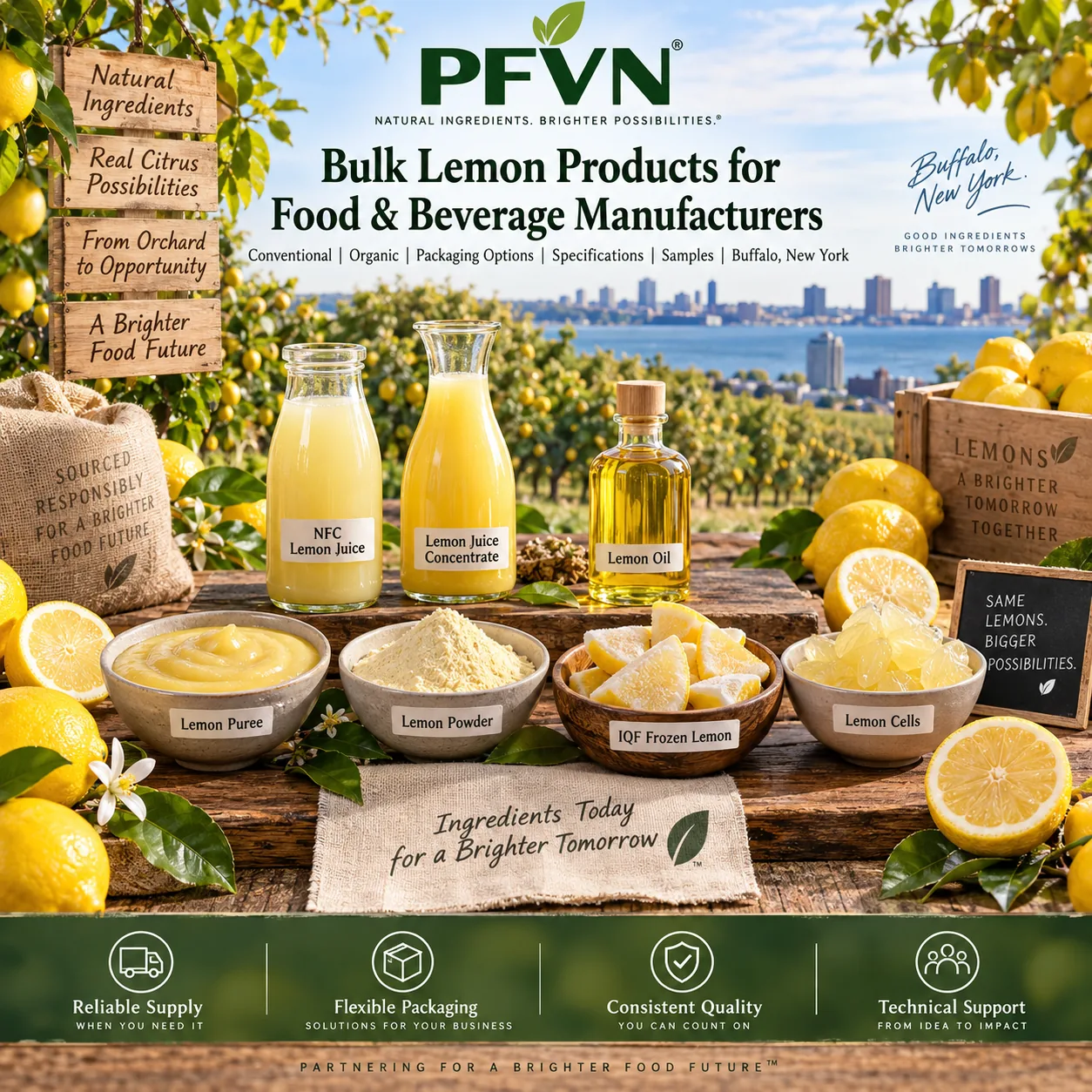
Bulk lemon cells—also described as citrus pulp, juice sacs or juice vesicles—are specialty citrus ingredients used to add authentic lemon pulp texture, visible fruit identity and suspended citrus material to juices, nectars, lemonades and premium beverage systems. PFVN supports industrial buyers with cell-size, pulp-level, sensory, packaging and documentation requirements for commercial lemon-cell programs.
Lemon (Citrus limon) is an acidic citrus fruit composed of an aromatic outer peel, white albedo, segment membranes, seeds and juice-filled internal segments. Inside each segment are many elongated juice sacs or vesicles that contain the liquid portion of the fruit.
Commercial lemon cells are recovered from this internal pulp fraction and prepared as a food ingredient with controlled cell size, pulp level and cleanliness. Depending on the processing method, the product may consist of largely intact juice sacs, smaller pulp particles or a defined mixture suspended in lemon juice or another permitted liquid phase.
Unlike lemon juice concentrate, which is selected mainly for soluble solids and acidity, lemon cells are primarily a texture and fruit-identity ingredient. Their value lies in visible pulp, mouthfeel and the perception of minimally processed citrus character in the finished beverage or food.
Lemon-cell qualification should focus on physical structure as much as basic chemistry. Cell size, intactness, pulp percentage, membrane content and suspended-liquid characteristics can materially change the visual and sensory effect in the finished product.
Buyers should define whether they need larger recognizable juice sacs, smaller broken cells or a finer pulp fraction. Cell-size distribution affects mouthfeel, visual appearance, pumping and suspension behavior.
Commercial products can differ in the ratio of citrus cells to surrounding liquid. Confirm pulp or cell percentage, drain characteristics where relevant and whether the product is designed as a concentrated pulp fraction or a more fluid cell suspension.
Where applicable, soluble solids / °Brix, pH and titratable acidity may be included in the specification for the liquid phase. These values help confirm compatibility with the lemon juice or beverage base in which the cells will be used.
Commercial approval typically considers pale yellow to cream pulp color, characteristic lemon flavor and freedom from excessive peel, albedo, seed fragments, dark particles, bitterness or other objectionable material.
The desirable cell fraction comes primarily from the juice vesicles located inside the lemon segments. During commercial citrus processing, this material must be separated from components such as peel, coarse segment membrane, seeds and excessive albedo that can negatively affect appearance, texture and flavor.
Peel-derived material is especially important because lemon peel contains highly aromatic essential oils and components that can contribute bitterness when present at excessive levels. A cell ingredient intended for premium beverages should therefore be evaluated for both clean citrus character and absence of objectionable peel or membrane notes.
Processing may include extraction, screening, washing or separation, size classification and stabilization before packing. The exact process should be confirmed with the supplier because it influences cell integrity, juice content, sensory profile and final handling characteristics.
Lemon cells need to remain visually and texturally recognizable through mixing, pumping and filling. Excessive mechanical shear can break larger juice sacs into smaller particles, changing both appearance and mouthfeel.
Manufacturers should therefore test the cells with the intended agitators, pumps, valves and filling equipment. Pipe diameter, pump type, mixing intensity and transfer speed can all influence cell integrity.
Suspension is another important consideration. Citrus cells naturally differ in density from the liquid phase and may settle or float depending on cell size, beverage viscosity and formulation. Finished-product trials should evaluate distribution through filling as well as stability during the intended shelf life.
Lemon cells are primarily used where visible citrus pulp improves authenticity, mouthfeel or premium positioning. They are especially relevant in beverage systems that would otherwise appear too clarified or uniform.
The core application for lemon cells, including lemon drinks and mixed-citrus beverages formulated with visible pulp or juice sacs for authentic fruit texture.
Application guide → Juice & nectar Fruit juice & nectar productionLemon cells can be incorporated into juice and nectar systems where manufacturers need natural pulp, suspended solids and stronger whole-fruit perception.
Application guide → Premium beverages Premium juice manufacturingUseful in higher-pulp and premium-positioned juice products where visible juice sacs reinforce a fresh-squeezed or minimally processed visual identity.
Application guide → Clean-label Clean-label beverage programsCitrus cells can provide natural texture and fruit identity in formulations designed around recognizable fruit ingredients and straightforward ingredient declarations.
Application guide → Foodservice Foodservice juice programsSuitable for lemonades and juice-based beverages prepared for restaurants, hospitality and institutional channels where visible pulp contributes to consumer perception.
Application guide → Chilled drinks Chilled beverage programsCan be used in refrigerated lemonades, citrus drinks and premium chilled juices where pulp integrity and fresh sensory character are important.
Application guide →Lemon cells are especially suitable for lemonades and lemon-based refreshment beverages where visible pulp can distinguish the finished drink from a clear or fully homogenized product. Inclusion level can be adjusted from subtle pulp presence to a visibly pulpy beverage style.
They may also be blended with orange, grapefruit, lime or other citrus ingredients to create mixed-citrus drinks and specialty juice products. In selected food formulations, fine lemon pulp may provide fruit identity in sauces, fruit preparations or dessert systems, although beverage applications remain the primary commercial use.
The first commercial question should be the desired pulp appearance. Buyers sourcing lemon cells for a premium lemonade may need clearly visible intact juice sacs, while a smoother juice product may require a smaller and more uniform pulp fraction.
Cell integrity should be evaluated both before and after processing. A product that looks ideal in the supplier sample may change after pumping, blending or pasteurization, making plant or pilot testing important for applications with strict visual standards.
Commercial planning should also consider lemon origin, variety where relevant, conventional or organic status, annual usage, pack format, frozen or ambient storage requirements and delivery timing. Seasonal raw-material availability may influence larger annual sourcing programs.
Technical and compliance requirements should be confirmed for the exact lemon-cell product and producing facility being considered. Cell ingredients require both conventional food-safety review and close attention to physical defects that could affect beverage appearance.
The specification may identify cell or pulp size, pulp percentage, liquid phase, °Brix, pH, acidity, color, sensory criteria, microbiological limits, packaging, storage requirements and shelf life.
Buyer requirements may address seeds, peel, coarse membrane, dark particles, excessive broken cells and other visible defects that could affect premium beverage appearance.
Where included in the supply program, lot documentation may report selected chemical, physical and microbiological results against the approved product specification.
Facility certification, allergen and GMO statements, country-of-origin information, traceability documentation and organic certification where applicable may form part of the approval package.
Select the lemon format according to whether the formulation requires intact fruit pieces, concentrated juice solids, single-strength juice, aromatic peel oil, dry material, whole-fruit puree or visible citrus cells.
Lemon cells may be supplied frozen, aseptic or in other stabilized formats depending on the processor and specification. Package selection should account for cell integrity, storage temperature, batch size, thawing or pumping method, unloading equipment and expected production rate.
Used for frozen citrus cells where manageable frozen blocks or bulk cell material are preferred. Thawing procedures should minimize unnecessary mechanical damage to the cells.
Frozen, aseptic or preserved drum formats are common industrial reference points for citrus-cell trade and support larger manufacturing batches.
Aseptic bag-in-box formats may support foodservice, pilot production and smaller manufacturing requirements where available from the selected processor.
Used for selected high-volume aseptic or preserved programs where product consistency, cell size and the receiving plant's unloading system support large-format handling.
Include the beverage or food application, desired cell size, pulp level, intactness, chemistry requirements if relevant, quantity, packaging, delivery location and timing. These details help us evaluate the appropriate lemon-cell supply program for your manufacturing requirements.