Fruit & Vegetable Purees · Bulk B2B ingredients

Bulk Lemon Puree

Bulk lemon puree is a high-acid citrus ingredient used when manufacturers need authentic lemon character together with pulp, fruit solids and a fuller texture than lemon juice alone. It provides bright citrus flavor, pronounced acidity and natural fruit body for beverages, bakery fillings, sauces, dressings, frozen desserts, fruit preparations, confectionery and culinary formulations.

Bulk supply Conventional programs Organic options Aseptic / frozen options Documentation on request
Bulk Lemon Puree
Ingredient profile

About lemons and lemon puree

Lemon (Citrus limon) is distinguished by its high natural acidity, fresh citrus aroma and pale yellow pulp. Commercial varieties differ in juice yield, acidity, peel thickness, seed content and aromatic profile, while maturity and growing conditions can influence both soluble solids and acid balance.

The fruit consists of juice-filled segments surrounded by membranes, white albedo and an aromatic yellow outer peel, or flavedo. The outer peel contains volatile citrus oils responsible for much of lemon's characteristic aroma, while the juice and pulp provide citric acidity and fresh fruit flavor.

Industrial lemon puree normally retains substantially more pulp and insoluble fruit material than clarified lemon juice. The exact composition varies by processor: some products focus primarily on refined pulp and juice, while others may retain controlled amounts of membrane or peel-derived material. Buyers should therefore confirm the ingredient declaration, finish and peel contribution for the specific product offered.

Technical & commercial profile

Key specification points for industrial lemon puree

For lemon puree, acidity, fruit finish and sensory profile are often more important purchasing variables than sweetness alone. Specifications should be reviewed against the intended formulation because pulp level, peel contribution and processing method can noticeably change flavor, texture and bitterness.

Physical & chemical

°Brix, pH & titratable acidity

Commercial qualification commonly includes soluble solids / °Brix, pH and titratable acidity, typically expressed according to the supplier's specified test method. These parameters influence acid contribution, flavor balance and dosing requirements.

Texture

Pulp, fiber & puree finish

Sieve or finishing conditions determine the amount and size of pulp, membrane and other fruit solids retained. Fine finishes suit smoother beverages and sauces, while heavier finishes can provide more body in fillings and culinary preparations.

Sensory

Aroma, freshness & bitterness

Approval should consider characteristic lemon aroma, fresh versus cooked character, acidity, pulp mouthfeel and bitterness. Peel or membrane carryover can materially influence aromatic intensity and bitter notes.

Microbiological

Criteria matched to the process

Specifications may include total aerobic count, yeast and mold and relevant pathogen criteria. Exact limits, sampling plans and test methods should be confirmed for the specific processor and intended application.

Specification note: °Brix, pH, titratable acidity, viscosity, pulp level, sieve / finish, peel contribution, microbiological limits, shelf life and storage conditions vary by processor and program. PFVN confirms these parameters against the current supplier specification rather than publishing one universal lemon puree specification.
Processing & functionality

Important processing characteristics

Industrial processing generally involves washing and preparation of the fruit, extraction or pulping, seed removal and controlled finishing. The resulting material may be deaerated and thermally processed for aseptic filling or packed for frozen storage depending on the production program.

Lemon aroma is highly dependent on volatile compounds, so aggressive heating and extended oxygen exposure can reduce fresh citrus character. Where aroma quality is a critical selling point, buyers should evaluate the puree after the same thermal process and storage conditions planned for the finished product.

Bitterness is another important qualification point. Citrus membranes, seeds and peel contain compounds that can contribute bitter character, and bitterness may become more noticeable in some processed systems. Specifying the desired fruit finish and evaluating the material in the actual formulation helps prevent unexpected sensory differences.

Industrial applications

Major uses for bulk lemon puree

Lemon puree is particularly useful when a manufacturer wants more whole-fruit character and texture than lemon juice or concentrate provides. Inclusion level and puree finish should be matched to acidity targets and the desired finished-product texture.

Specialty formulation

Confectionery, sauces & flavor systems

Lemon puree can be used in confectionery fillings, fruit gels, dessert sauces and specialty flavor systems where manufacturers want recognizable citrus character together with natural fruit solids. Its acidity can provide contrast to high-sugar formulations and rich flavors such as vanilla, chocolate and cream.

In savory applications, lemon puree can contribute both acidification and fruit texture to sauces, vinaigrettes, marinades, seafood preparations, herb-based sauces and Mediterranean-style products. Manufacturers should validate the finished formula rather than assuming the puree alone determines final product pH or shelf stability.

Commercial purchasing

Qualifying lemon puree for production

The correct lemon puree specification depends strongly on the application. Beverage manufacturers may prioritize smooth flow, controlled pulp and consistent acidity, while bakery and culinary processors may prefer greater body and more pronounced whole-fruit character.

Because peel, membrane and pulp levels can influence both aroma and bitterness, samples should be evaluated in the actual finished formulation whenever sensory character is important. Two products described simply as “lemon puree” can perform differently depending on fruit preparation and finishing method.

Commercial planning should also consider production origin, crop timing, conventional or organic status, annual volume, order frequency, storage requirements and package size. Repeat programs benefit from agreed analytical limits and an approved sensory reference where appropriate.

Quality & documentation

Common commercial approval documents

Technical and compliance requirements vary by customer, destination and application. Buyers should confirm the document package for the specific lemon puree and producing facility being considered.

Technical

Product specification

Specifications commonly address composition, °Brix, pH, acidity, sensory profile, pulp or finish, microbiological limits, packaging, storage conditions and declared shelf life.

Lot control

Certificate of analysis

Where included in the supply program, lot-specific documentation may report selected physical, chemical and microbiological results against the approved specification.

Compliance

Ingredient & program statements

Depending on customer requirements, documentation may include ingredient, allergen, GMO, country-of-origin, traceability and organic certification information where applicable.

Supplier approval

Food-safety documentation

Facility certification, quality-system and food-safety information may be requested as part of supplier qualification and should be confirmed for the specific processor.

Same ingredient

Other Lemon formats

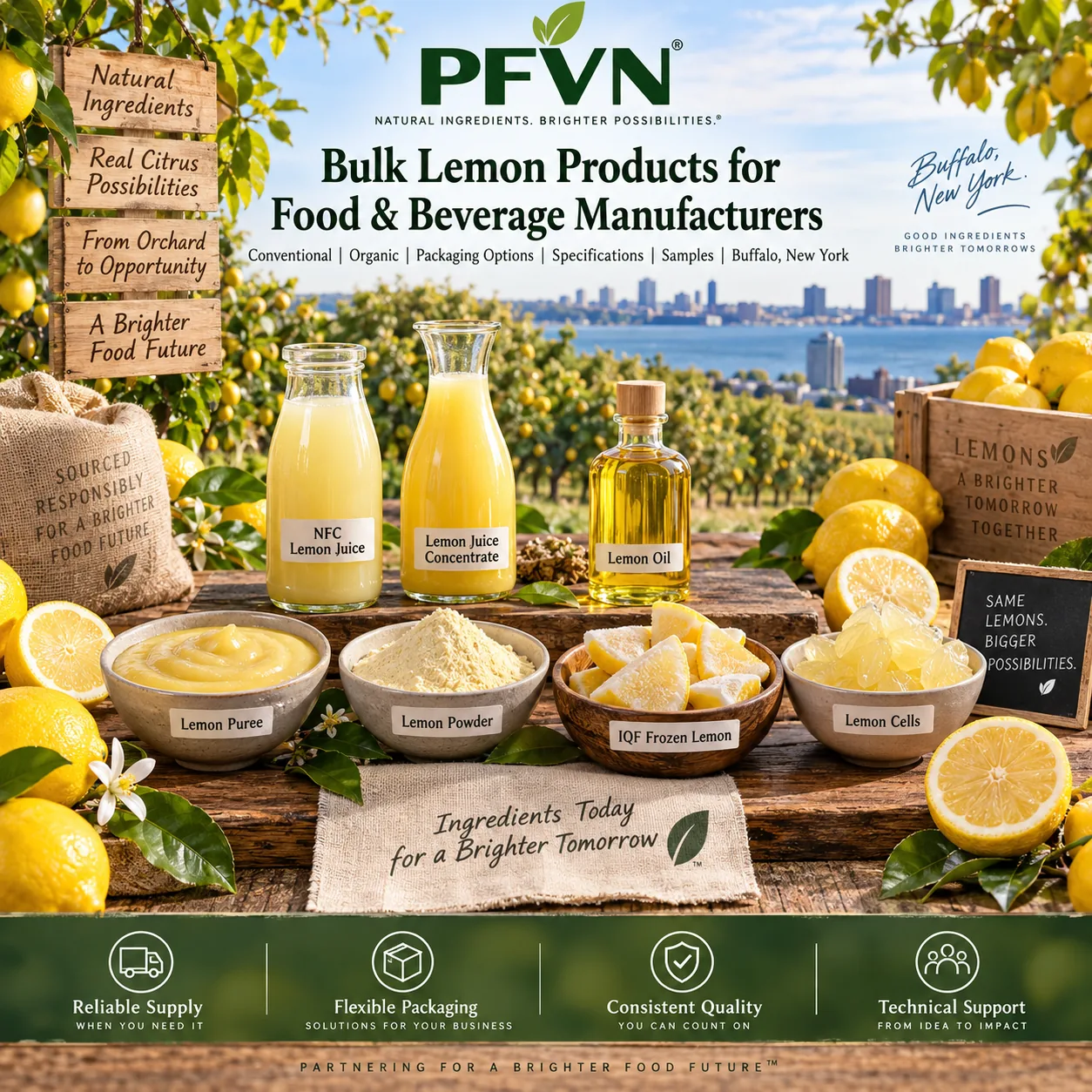
Lemon is available in several industrial ingredient formats. Select the form according to whether the formulation requires citrus pulp, whole fruit structure, juice acidity, concentrated soluble solids, aromatic oil or a dry ingredient.

Packaging & handling

Industrial lemon puree packaging

Lemon puree may be supplied in aseptic or frozen formats depending on processor capability and the required product specification. Package selection should reflect batch size, storage conditions, product turnover, pumping characteristics and production-line configuration.

Pilot / smaller batch

5-gallon or roughly 15–25 kg pails

Useful for laboratory trials, product development and smaller manufacturing runs. Availability may be frozen or aseptic depending on product and supplier.

Commercial drum

Roughly 180–225 kg bag-in-drum

A common industrial scale for fruit puree programs. Lined drums support palletized handling and may be used for frozen or aseptic lemon puree.

Tote / IBC

About 275 gallons / around 1,000 L

Potentially suitable for higher-volume programs where puree consistency, processor filling capability and plant unloading equipment support bulk tote supply.

Smaller bulk / foodservice

Bag-in-box or block formats

Selected lemon puree programs may use smaller bag-in-box, lined-carton or frozen formats where portioning flexibility or lower batch consumption is preferred.

Availability note: The package sizes shown above are common industrial reference points rather than guaranteed options for every lemon puree source. Confirm current net weight, liner type, pallet configuration, storage temperature, shelf life, minimum order quantity and lead time in the quotation.
Request a quote

Tell us what your lemon program needs.

Include the application, target acidity, pulp or finish requirement, quantity, preferred packaging, delivery location and timing. These details help us evaluate the appropriate lemon puree supply program for your manufacturing requirements.

PFVN · Buffalo, New York
info@pfvn.us

We use your details only to respond to this inquiry.