Juice Concentrates · Bulk B2B ingredients

Bulk Lemon Juice Concentrate

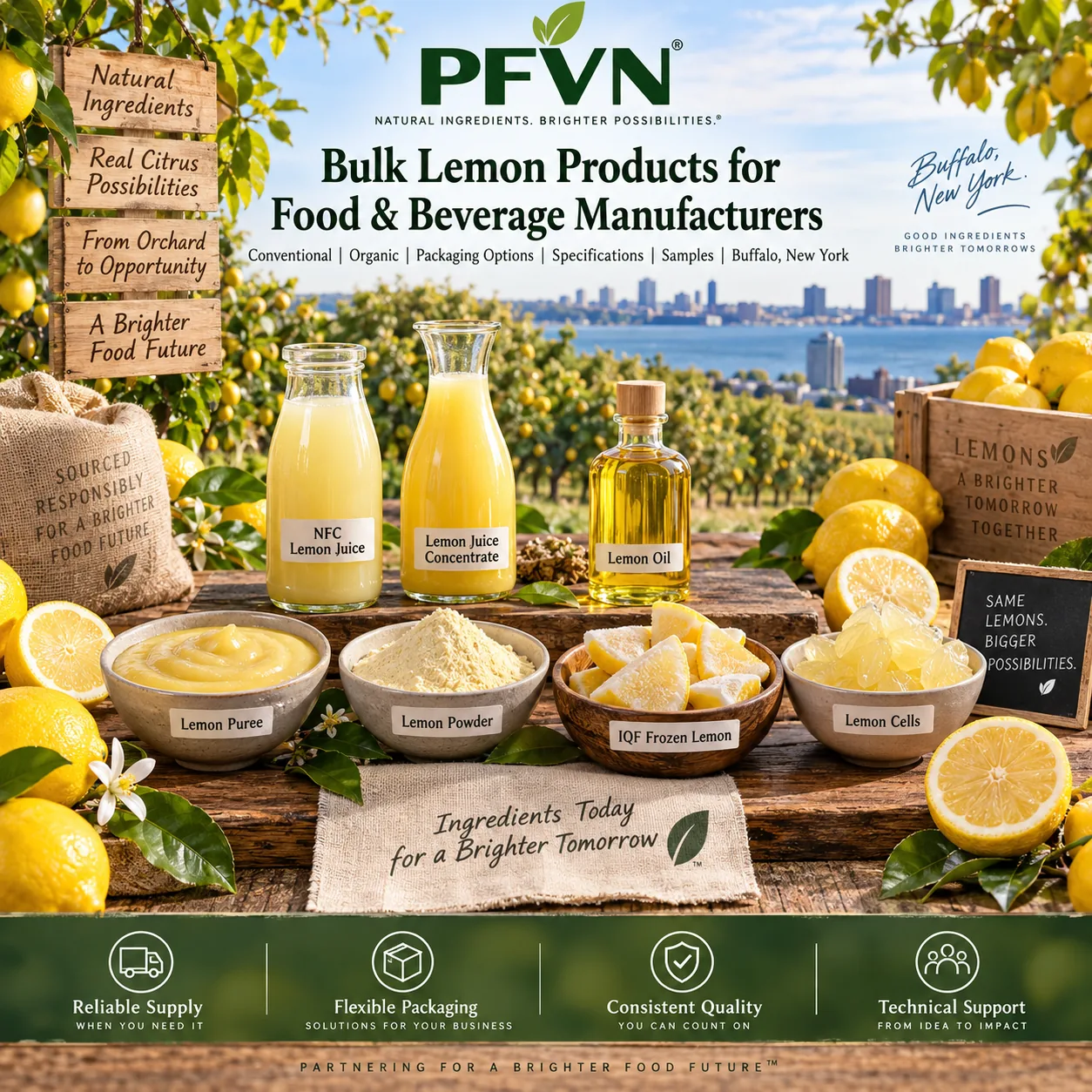
Bulk Lemon Juice Concentrate is produced from lemon fruit (Citrus limon) and provides concentrated citrus acidity, characteristic lemon flavor and soluble fruit solids for industrial formulation. It is widely used in beverages, confectionery, bakery products, sauces, marinades, dairy preparations, fruit systems and flavor compounds.

High-acid citrus profile Bulk industrial supply Pulp options Conventional programs Organic options
Bulk Lemon Juice Concentrate
Fruit & ingredient profile

High-acid citrus fruit with distinctive aroma

Lemon (Citrus limon) is a citrus fruit in the Rutaceae family. Commercial processing varieties include Eureka, Lisbon, Femminello and other regional cultivars selected for juice yield, acidity, peel characteristics and aromatic quality.

The fruit contains highly acidic juice surrounded by aromatic peel rich in volatile citrus oils. Lemon flavor is defined by the combination of strong citric acidity and fresh citrus aroma, making it useful at relatively low inclusion levels across both sweet and savory formulations.

For concentrate production, juice is extracted, screened or adjusted for pulp and concentrated under reduced pressure. Aroma fractions may be managed separately during processing because volatile lemon notes are sensitive to excessive heat and prolonged exposure to oxygen.

Commercial distinction: lemon concentrate is frequently purchased against both soluble-solids and acid specifications. Two products with similar Brix can therefore deliver materially different acid contribution and formulation performance.
Technical & commercial specifications

Key parameters for industrial qualification

Lemon concentrate is often commercialized according to acid strength as well as Brix. Concentration, titratable acidity, pH, pulp, color and aroma should therefore be reviewed together when comparing supplier programs.

Soluble solids & grade

Supplier-specific high-acid concentrate

A current commercial 400 GPL program specifies at least 47° acid-corrected Brix. Other Brix and acidity grades are available, so buyers should specify the required concentration rather than assume one universal value.

Titratable acidity

Citric acid is a primary commercial parameter

Commercial lemon concentrates may be sold by acid strength, commonly expressed as grams per liter of anhydrous citric acid. A documented 400 GPL grade specifies approximately 390–410 g/L.

pH

Strongly acidic profile

Industrial lemon concentrate is naturally low in pH; one current high-acid commercial specification sets pH at 3.0 maximum. Exact value varies with origin, crop and concentration.

Pulp & appearance

Hazy yellow to clarified styles

Programs may retain controlled citrus pulp or be processed toward lower turbidity. A commercial specification example permits 4–12% pulp when evaluated at reconstituted strength.

Aroma & sensory

Clean characteristic lemon

Approved material should deliver sharp lemon acidity and fresh citrus character without fermented, scorched, oxidized or excessively bitter notes. Aroma retention is particularly important in beverage applications.

Quality & microbiology

Program-specific release criteria

Specifications normally establish total-count, yeast and mold limits together with applicable pathogen, authenticity, residue, certification and documentation requirements.

Specification guidance: 47° acid-corrected Brix, pH ≤3.0 and approximately 390–410 g/L citric acid are documented commercial examples for one 400 GPL program, not universal PFVN specifications. Codex lists 8.0° Brix as its minimum reference for reconstituted lemon juice, while U.S. percentage-juice calculations for lemon rely on anhydrous citric-acid content. Confirm the actual Brix method, acid strength, pulp, microbiology, storage and shelf life for the quoted product.
Industrial applications

Major uses for lemon juice concentrate

Lemon concentrate is valued across food and beverage manufacturing because a relatively small addition can contribute substantial acidity together with recognizable citrus flavor.

Beverages

Lemonades, soft drinks & juice blends

Used in lemonade, carbonated beverages, flavored waters, juice blends and beverage bases where strong citrus acidity and lemon flavor are required.

Functional beverages

Wellness, hydration & shot formulations

Suitable for functional drinks, electrolyte beverages, wellness shots and fruit-based formulations, often combined with ginger, turmeric, apple, berry or tropical ingredients.

Culinary products

Sauces, dressings & marinades

Used in salad dressings, sauces, marinades, dips, culinary bases and prepared foods where lemon provides both acidification and characteristic citrus flavor.

Confectionery

Gummies, jellies & candies

Provides sharp citrus acidity to gummies, fruit jellies, chews, hard candies and confectionery centers where a clean lemon profile is required.

Bakery & dairy

Fillings, creams, yogurt & desserts

Used in bakery fillings, glazes, lemon creams, cheesecake systems, yogurt preparations, sorbet and other desserts requiring concentrated citrus flavor.

Flavor systems

Compounds, syrups & fruit preparations

Used in flavor compounds, fruit preparations and beverage bases where standardized lemon acidity and flavor are required across production batches.

Application guides

Related manufacturing pathways

Same ingredient

Other Lemon formats

Choose the lemon format according to required juice strength, citrus texture, aroma intensity, dry-solids format and finished-product application.

Packaging & handling

Lemon juice concentrate packaging

Select package size according to acid strength, concentration, annual volume, storage requirements, production batch size, pumping needs and unloading equipment.

Pilot / smaller production

5-gallon pails

Often used for trials and smaller manufacturing runs; exact net weight varies with product density, Brix and acid concentration.

Commercial drum

52–55 gallon / roughly 200–265 kg drums

Common frozen or aseptic bag-in-drum scale for concentrated juices; exact fill weight and liner configuration are product-specific.

Tote / IBC

About 275 gallons / around 1,000 L

Useful for higher-throughput liquid programs where product stability, annual demand and supplier filling capability support tote handling.

High-volume bulk

Tanker or bulk liquid shipment

Available for selected high-volume programs where sanitary transport, product stability and appropriate unloading systems permit.

Storage & availability: frozen storage around 0°F / -18°C is common for lemon concentrate programs and helps preserve characteristic flavor; aseptic programs may have different requirements. Confirm current net weight, liner, acid grade, storage condition, shelf life, minimum order quantity and lead time in the quotation.
Request a quote

Tell us what your lemon program needs.

Include your application, required acid strength or GPL, target °Brix, pulp or clarity requirements, certification, estimated quantity, packaging, storage condition, delivery location and timing.

PFVN · Buffalo, New York
info@pfvn.us

We use your details only to respond to this inquiry.