
Approximately 45–65° Brix
Current commercial cantaloupe and melon programs commonly include products in the mid-40s Brix range and high-solids concentrate around 65° Brix. Custom concentration levels may also be available.
Bulk Melon Juice Concentrate is produced from ripe melons such as cantaloupe, muskmelon and honeydew and provides concentrated natural sweetness, characteristic melon aroma and fruit solids in an efficient liquid format. It is used in juices, smoothies, dairy products, frozen desserts, confectionery, fruit preparations, syrups and flavor systems.
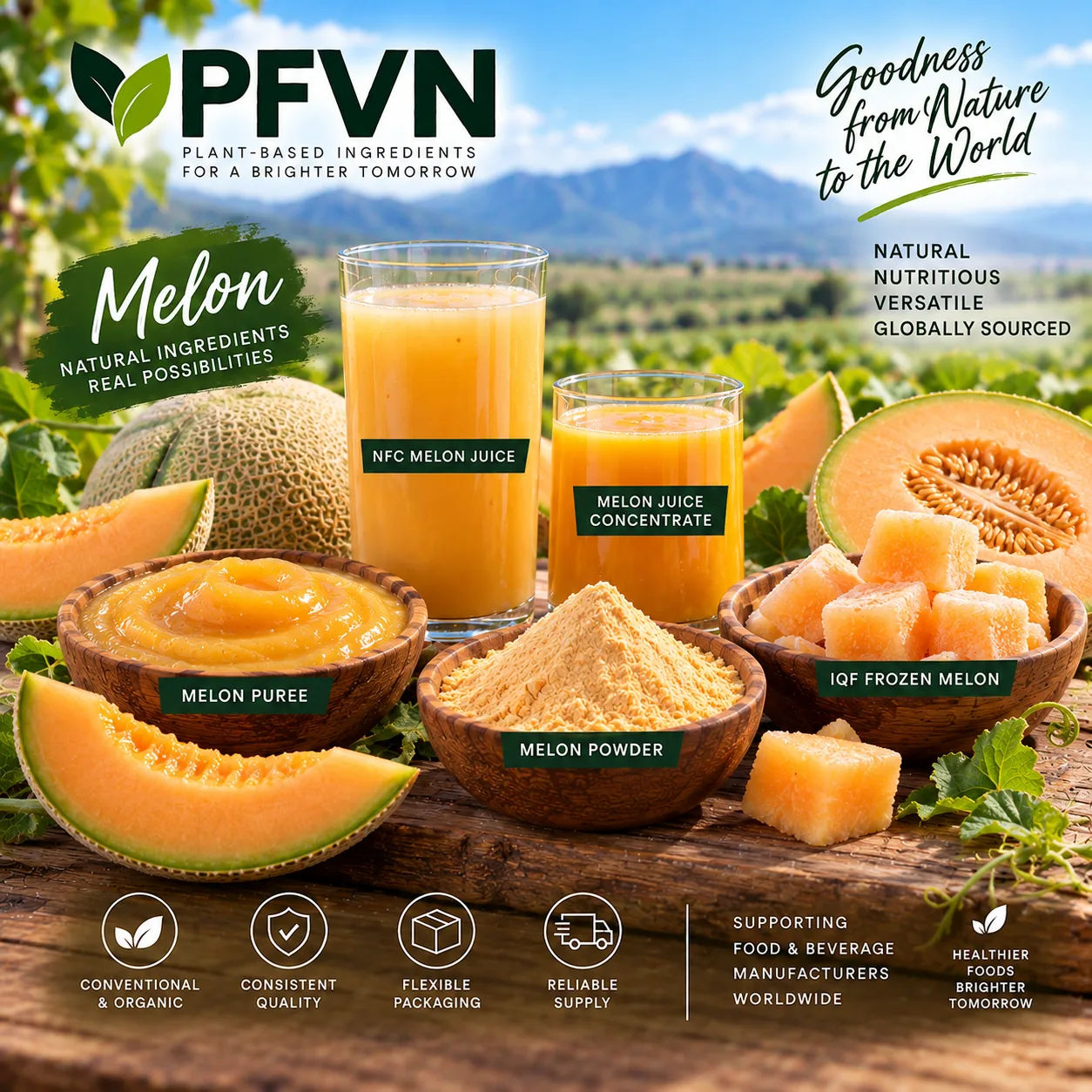
Commercial melons are principally forms of Cucumis melo, a species in the Cucurbitaceae family. Important groups include cantaloupe and muskmelon with orange flesh, honeydew with pale green to white flesh, and regional specialty types such as Hami melon.
Ripe melon is naturally sweet and highly aromatic, with flavor ranging from floral and musky in cantaloupe to cleaner, milder and honey-like in honeydew. Variety, harvest maturity and growing region have a strong influence on sweetness, aroma intensity and flesh color.
For concentrate production, ripe melon flesh is separated from rind and seeds, juiced, screened or clarified as required, and concentrated under reduced pressure. Gentle processing is particularly important because many of the volatile compounds responsible for fresh melon aroma are sensitive to heat.
Melon concentrate is supplied at different concentration levels depending on variety, processor and application. Commercial purchasing should therefore focus on the actual approved specification rather than assuming one universal Brix or acidity standard.
Current commercial cantaloupe and melon programs commonly include products in the mid-40s Brix range and high-solids concentrate around 65° Brix. Custom concentration levels may also be available.
Commercial specifications can fall within this general range depending on melon type, acidification and processing. Exact pH should be confirmed where it affects beverage formulation or preservation.
Melon is naturally less acidic than many berry or citrus fruits. Some concentrates may therefore be acidified or blended with citric acid to meet processing and finished-product requirements.
Honeydew concentrate may be pale green to yellow, while cantaloupe and Hami melon programs can range from golden to light orange. Establish an approved color range where appearance is important.
Clarified products are useful for lower-turbidity beverages and syrups, while cloudy concentrates retain more suspended fruit character. Specify pulp, turbidity or transmittance requirements where relevant.
Commercial specifications normally establish limits for total plate count, yeast, mold and relevant pathogens. Exact criteria depend on processing, packaging and storage method.
Melon's fresh identity depends heavily on volatile aroma compounds, so two concentrates with similar Brix can differ noticeably in sensory impact. Products exposed to stronger thermal processing can develop more cooked, honeyed or caramelized notes and less fresh-cut melon character.
For melon-forward beverages, dairy products and frozen desserts, buyers should evaluate aroma intensity after dilution and after the intended heat process. Color and clarity should also be checked in the actual formulation because proteins, acids and other fruit ingredients can change finished appearance.
Commercial approval should also define melon type, origin if relevant, conventional or organic status, packaging, frozen or aseptic storage, annual volume, delivery schedule and required quality documentation.
Melon concentrate is used where manufacturers need recognizable sweet melon character, fruit solids and natural color in a standardized liquid ingredient.
Used in melon drinks, juice blends, smoothies, flavored waters and soft drinks. Melon pairs well with citrus, pineapple, mango, peach, strawberry, cucumber and mint.
Suitable for yogurt preparations, dairy beverages and plant-based alternatives where melon contributes sweetness, aroma and a recognizable fruit profile.
A major application for cantaloupe and honeydew flavor profiles, including ice cream, sorbet, popsicles, granita and frozen beverage systems.
Used in gummies, fruit jellies, chews, hard candies and fillings where melon provides a familiar sweet and aromatic flavor.
Can be incorporated into fruit fillings, dessert sauces, creams, glazes and bakery preparations where concentrated melon flavor is required.
Used in syrups, fruit compounds and flavor bases where manufacturers need consistent melon sweetness and aroma in an easy-to-dose liquid format.
Choose the melon format according to required freshness, concentration, handling system and finished-product application.
Package selection should reflect Brix, annual consumption, frozen or aseptic storage capability, batch size, pumping requirements and production-line handling.
Useful for product development and specialty production. Commercial melon concentrate programs may be available in smaller food-grade bags or bag-in-box formats.
Drums with food-grade liners or aseptic bags are common industrial formats for melon concentrate. Exact fill weight depends on product density and supplier program.
IBC supply may be available for higher-volume users where product stability, annual demand and supplier filling capability support bulk liquid handling.
Selected programs may support tanker-scale supply for qualified volumes where sanitary transport, product stability and unloading systems permit.
Include the melon type, application, target Brix, cloudy or clarified style, acidity or pH requirements, aroma and color targets, certification needs, estimated quantity, packaging, delivery location and timing. These details help us identify the most suitable melon concentrate program.