
Typically around 68° Brix
Current Montmorency programs commonly specify approximately 67.5° direct Brix with acid-corrected values near 68–69°. Brix is used for formulation yield, dilution and comparison of delivered fruit solids.
Bulk Tart Cherry Juice Concentrate is produced from sour cherries (Prunus cerasus) and provides concentrated cherry flavor, pronounced natural acidity, soluble fruit solids and deep ruby-red color. It is widely used in juices, functional beverages, fermentation, dairy preparations, frozen desserts, bakery fillings, confectionery and fruit systems.
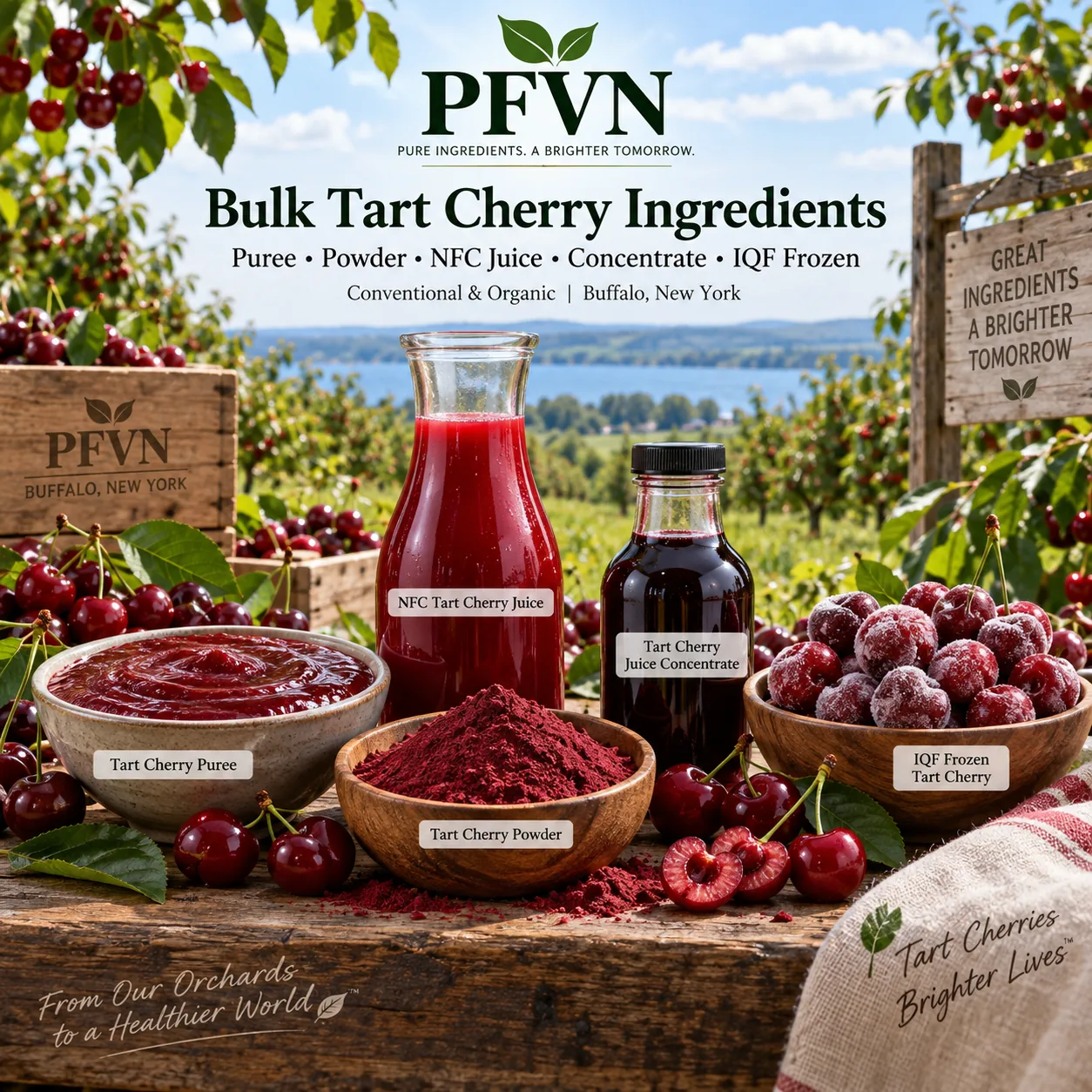
Tart cherry, also known as sour or acid cherry, is the fruit of Prunus cerasus, a stone-fruit species in the Rosaceae family. Montmorency is the dominant commercial tart-cherry cultivar in North America, while Balaton and other sour-cherry cultivars are also processed in selected markets.
Compared with dark sweet cherry, tart cherry has substantially higher perceived acidity, a sharper sweet-sour flavor and a bright red to deep ruby appearance. This stronger acid profile allows it to remain recognizable in formulations containing sugar, dairy ingredients, chocolate, other fruits or fermented components.
Industrial juice concentrate is generally produced by crushing and pressing destemmed fruit, removing pits and insoluble material, clarifying where required and concentrating the juice under reduced pressure. Processing conditions influence aroma retention, color density, clarity and final acidity.
Commercial Montmorency concentrate is commonly traded near 68° Brix. Acidity, color, clarity and sensory profile still vary by crop and processor, so purchasing should be based on the current supplier specification and representative sample.
Current Montmorency programs commonly specify approximately 67.5° direct Brix with acid-corrected values near 68–69°. Brix is used for formulation yield, dilution and comparison of delivered fruit solids.
FDA uses 14.0° Brix as the minimum single-strength reference for red sour cherry juice. Commercial 68° Brix concentrate is typically diluted with roughly five parts water to approach single-strength juice.
Current supplier specifications show pH broadly around 2.8–4.2. Titratable acidity is commonly reported as malic acid and is an important parameter for flavor balance, fermentation and finished-product formulation.
Clarified concentrate should retain characteristic tart-cherry color with controlled haze and sediment. Where appearance is critical, specify color, turbidity or insoluble-solids requirements.
Approved concentrate should show clean, full tart-cherry flavor without fermented, scorched, caramelized or other objectionable processing notes.
Supplier specifications generally establish limits for total plate count, yeast and mold together with relevant pathogen, residue, authenticity and customer-specific quality requirements.
Tart cherry concentrate is used where manufacturers need pronounced cherry flavor, fruit acidity and dark red color that remain identifiable after dilution, sweetening, fermentation or incorporation into complex food systems.
Used in tart-cherry beverages, juice blends, wellness drinks, concentrates and beverage bases, often combined with apple, grape, pomegranate, berry or citrus ingredients.
Provides fermentable fruit solids, acidity, cherry flavor and red color in craft beer, cider, mead, wine-style products and other fermented beverage systems.
Suitable for yogurt fruit preparations, cultured products, ice cream, sorbet and frozen desserts where tart cherry helps balance sweetness and rich dairy flavors.
Used in pie and pastry fillings, bakery fruit preparations, sauces and glazes where concentrated cherry flavor is required without excessive added water.
Provides strong sweet-sour cherry identity to gummies, fruit jellies, chews, hard candies and confectionery centers.
Used in fruit compounds, snack fillings, syrups, fruit bars and multi-fruit systems where standardized acidity, red color and tart-cherry character are required.
Choose the tart cherry format according to required fruit texture, concentration, solids contribution, storage method and finished-product application.
Select packaging according to annual volume, concentration, frozen or aseptic storage requirements, production batch size and plant pumping or unloading capabilities.
Common for development work and smaller production runs; current commercial Montmorency concentrate programs are available in polyethylene pails.
Steel drums with food-grade liners and related bag-in-drum systems are common industrial formats for frozen tart-cherry concentrate.
Useful for higher-throughput programs where concentrate stability, annual demand and supplier filling capability support tote or IBC handling.
May be available for selected high-volume programs where sanitary transport, temperature control and suitable unloading infrastructure permit.
Include your application, target °Brix, acidity, clarity and color requirements, certification, estimated quantity, packaging, storage condition, delivery location and timing.