
5-gallon pails
Often suitable for trials and smaller manufacturing runs; exact net weight varies with density and °Brix.
Bulk red grape juice concentrate for industrial food and beverage manufacturers seeking concentrated grape flavor, natural fruit sugars, soluble solids and red-purple color in an efficient liquid format. PFVN supports specification-based sourcing for beverage, wine, flavor, bakery, confectionery and fruit-processing programs.
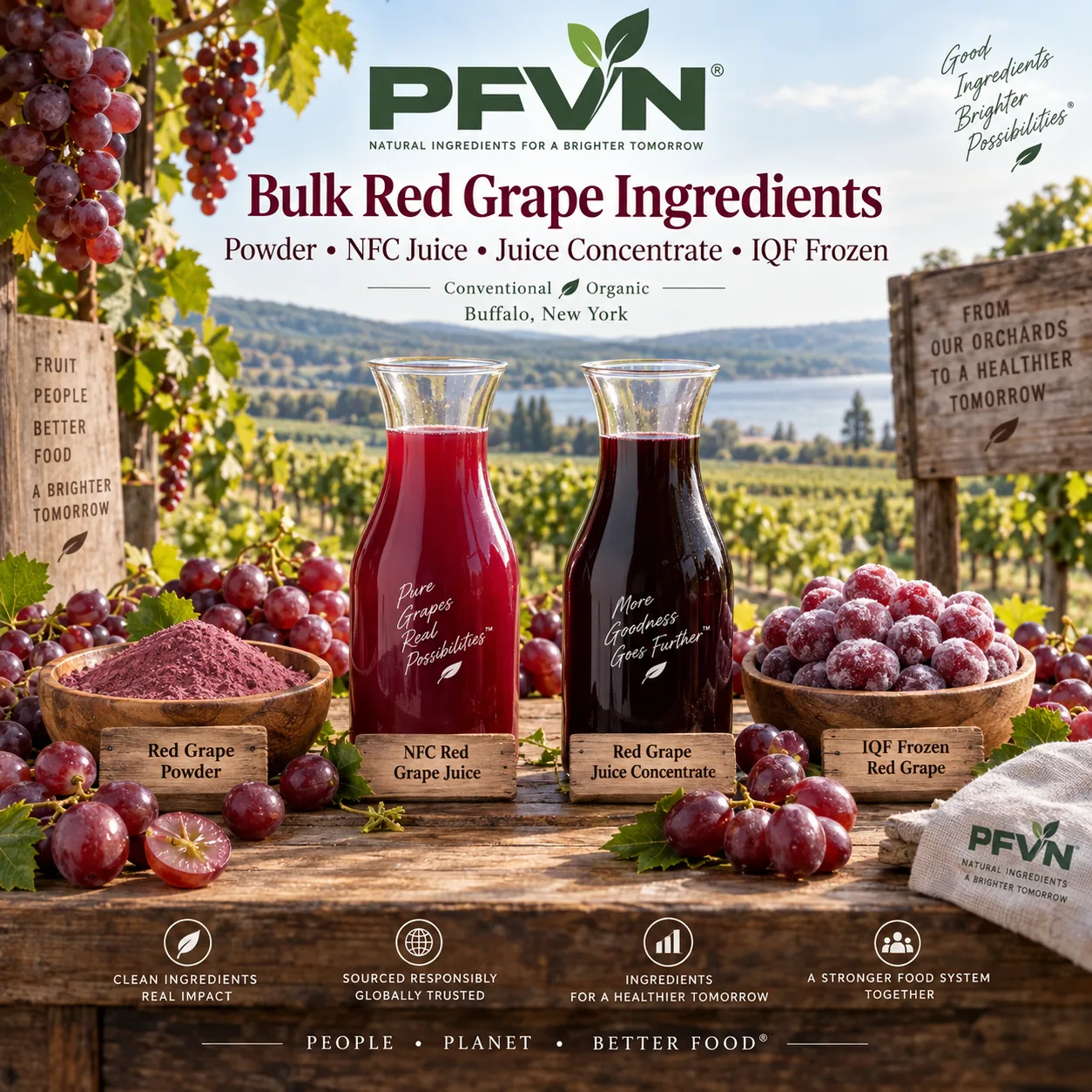
Red grapes are berries of Vitis species grown in numerous table, juice and processing varieties. Their composition varies by cultivar, maturity, growing region and harvest conditions, but the fruit generally provides a combination of glucose and fructose, organic acids, characteristic grape aroma and red-to-purple skin pigments.
Much of the visible red or purple color associated with red grapes comes from pigments in the skins. Juice color therefore depends not only on grape variety but also on crushing, skin contact, extraction and clarification conditions. Commercial concentrates can range from brighter red grape styles to deeper purple-red profiles.
Concentration removes part of the natural water while retaining grape-derived soluble solids and much of the characteristic flavor and color profile. This makes red grape concentrate useful where manufacturers need meaningful fruit contribution with lower transport and storage volume than single-strength juice.
Industrial qualification should focus on the analytical and sensory characteristics that determine formulation yield, color, flavor and processing consistency.
Confirm the commercial °Brix because it determines grape-solids contribution, reconstitution ratio, sweetness and effective cost at use.
Natural grape acids influence flavor balance and processing. Both pH and total titratable acidity may be important depending on the application.
Define the required red-to-purple color profile where visual consistency matters. Variety, skin extraction, heat and storage can all influence appearance.
Clarified concentrate is useful for smooth beverages and flavor systems, while other applications may tolerate or prefer more suspended material.
Approve a representative lot for characteristic grape flavor and absence of excessive fermented, oxidized, caramelized or otherwise atypical notes.
High-solids concentrate can become more viscous at lower temperatures, affecting pumping, dosing, blending and drum evacuation.
Set microbiological requirements appropriate to the commercial concentrate format, storage system and validated manufacturing process.
Where required, review origin, composition and authenticity documentation appropriate to the purchasing specification and finished-product claims.
Red grape concentrate contributes natural fruit sugars and soluble solids, so the inclusion rate should be considered as part of the complete sweetener and solids system rather than as flavor alone.
The ingredient can also contribute meaningful red-purple color and grape aroma. In multi-fruit formulations, it can provide body and sweetness while supporting berry, cherry, pomegranate and other dark-fruit profiles.
Red grape concentrate is a versatile ingredient where manufacturers require concentrated fruit solids, grape flavor, sweetness and red-purple color.
Used in red grape beverages and multi-fruit blends where grape solids, sweetness, acidity and color contribute directly to the finished profile.
Application guide → Fermentation Wine & Fermentation ProgramsRed grape concentrate can be used in selected wine and fermentation systems where concentrated grape-derived sugars and solids are required, subject to the producer's process and regulatory requirements.
Application guide → Flavor systems Fruit Bases, Syrups & CompoundsIts strong fruit-solids contribution and recognizable grape profile make it useful in compounded flavors, fruit bases and concentrated syrup systems.
Application guide → Confectionery Gummies, Jellies & Fruit CandyRed grape concentrate can contribute sugar solids, acidity, fruit flavor and color to gummy, jelly and chew formulations.
Application guide → Bakery Fillings & Fruit PreparationsSuitable for bakery fillings, fruit layers and preparations where concentrated grape flavor and dark-fruit color are required.
Application guide → Snacks Fruit Snacks, Bars & BitesUsed in blended fruit systems for sheets, bars, bites and other high-solids fruit-snack applications.
Application guide →Heat, oxygen, light and pH can influence the sensory and visual quality of red grape concentrate during manufacturing and storage. Evaluate the ingredient after the full commercial process rather than only as an incoming raw material.
Extended heating can deepen color and shift fresh grape notes toward more cooked or caramelized sensory characteristics.
Unnecessary air incorporation during mixing or storage can affect grape aroma and dark-fruit color over time.
Red grape pigments can respond to formulation conditions, so approve appearance in the complete finished product.
Red grape can complement berry, cherry, plum and other dark-fruit systems while contributing additional soluble solids.
Temperature can materially affect high-solids concentrate flow, so verify pump and transfer performance under actual production conditions.
Document concentrate lot, Brix, acidity, use level, process settings and finished-product results during successful production trials.
Grape composition varies with cultivar, growing region, maturity and crop year. Commercial programs should therefore define the specification limits that actually affect finished-product consistency rather than relying only on the description “red grape concentrate.”
For recurring programs, annual volume, acceptable origins, packaging, storage and delivery frequency should be reviewed during qualification. Alternate origins can be useful for supply continuity when approved against the same analytical and sensory criteria.
Supplier documentation should correspond to the exact red grape concentrate, processing source and commercial program being offered.
Review °Brix, pH, acidity, color, clarity or turbidity, sensory profile, storage condition and shelf life.
Define the analytical parameters that should appear on the Certificate of Analysis for each lot where applicable.
Confirm the exact composition of the supplied concentrate and any declarations relevant to the finished formulation.
Align supplier microbiological criteria with the manufacturer's validated processing and finished-product requirements.
Confirm country-of-origin, lot identity and traceability documentation according to the buyer's quality program.
Request organic, allergen, GMO-status or other applicable documentation according to the intended product and market.
Select commercial packaging according to batch volume, concentrate viscosity, storage condition, thawing or pumping requirements, line rate and unloading equipment.
Often suitable for trials and smaller manufacturing runs; exact net weight varies with density and °Brix.
Common frozen or aseptic bag-in-drum scale for concentrated juices; exact fill weight and storage condition are product-specific.
Useful for higher-throughput liquid programs where product stability, viscosity and the supplier program support tote filling.
Possible for selected high-volume programs where storage, transport and unloading systems are suitable for the concentrate.
A meaningful quotation comparison should include the actual °Brix, formulation use level, packaging and logistics program. Different concentrate strengths can produce different effective costs even when the purchase price per kilogram appears similar.
Also consider commercial yield, including concentrate remaining in drums, liners, hoses or pumps after production.
Include the application, target °Brix or other critical specification, color or clarity requirements, quantity, packaging, certifications, delivery location and timing. We’ll use those details to route your inquiry efficiently.