Vegetable Juice Concentrates · Bulk B2B ingredients

Bulk Spinach Juice Concentrate

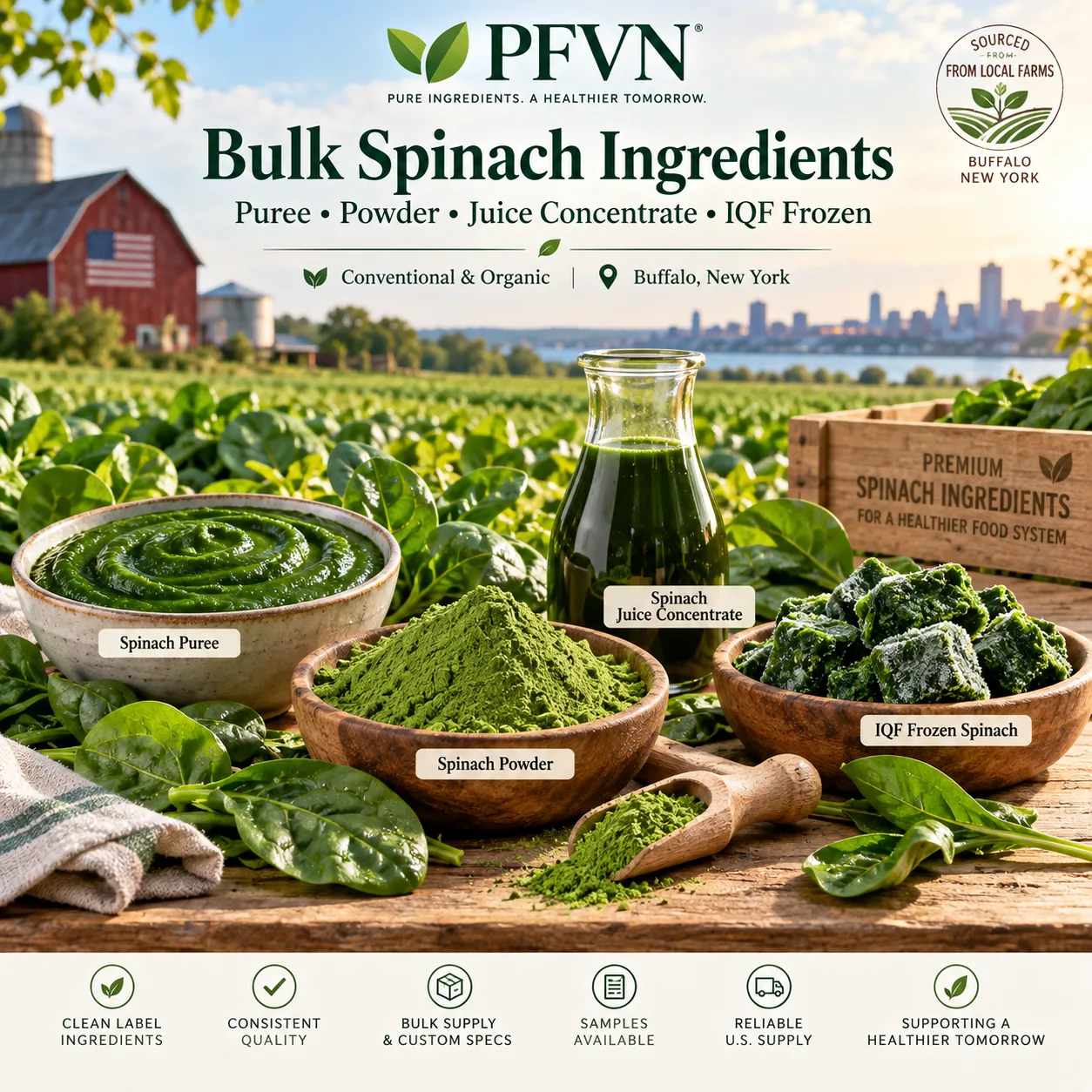
Bulk Spinach Juice Concentrate is produced from spinach leaves (Spinacia oleracea) and provides concentrated leafy vegetable flavor, natural green color and spinach-derived soluble solids in a pumpable liquid format. It is used in green beverages, smoothies, wellness formulations, soups, sauces, pasta and dough systems, savory prepared foods and vegetable blends.

Cloudy concentrate Natural spinach-green color Bulk industrial supply Conventional programs Organic options Documentation on request
Bulk Spinach Juice Concentrate
Vegetable & ingredient profile

Leafy spinach character in concentrated liquid form

Spinach (Spinacia oleracea) is a leafy green vegetable in the Amaranthaceae family. The edible leaves range from smooth to crinkled depending on cultivar and are characterized by a mild vegetal, leafy and slightly earthy flavor profile.

Spinach's strong natural green appearance comes primarily from chlorophyll pigments. These pigments make spinach concentrate useful where manufacturers want both vegetable identity and green coloration, although finished color can change with pH, heat treatment, oxygen exposure and storage.

For juice-concentrate production, spinach leaves are washed, processed and pressed or extracted to obtain vegetable juice. The juice may be screened or filtered before water is removed under controlled conditions. Commercial spinach concentrates commonly retain some suspended vegetable material rather than behaving like a fully clarified fruit concentrate.

Color note: spinach green is naturally process-sensitive. Acidic conditions and intensive heat can shift bright green chlorophyll toward duller olive tones, so beverage and prepared-food manufacturers should evaluate color after the actual commercial heat process and throughout shelf life.
Technical & commercial specifications

Key parameters for industrial qualification

Spinach concentrate is less standardized by Brix than major fruit concentrates. Concentration level, suspended solids, color and flavor depend strongly on the producer and process, so the current technical specification should be reviewed for every program.

Soluble solids

Product-specific Brix

Documented commercial cloudy frozen programs have been produced around 40–44° Brix. Other concentration levels may exist, so buyers should specify the required Brix or spinach-solids target rather than assume one universal standard.

Physical style

Cloudy vegetable concentrate

Spinach concentrate commonly retains fine suspended vegetable material. Buyers should define acceptable sediment, pulp, turbidity or filtration requirements where these affect the finished product or production equipment.

Color

Dark green to olive-green

Color depends on raw material, blanching or extraction conditions, concentration, heat exposure and storage. For color-critical applications, establish an approved visual standard or instrumental color range.

Sensory

Characteristic leafy profile

A suitable concentrate should show clean spinach and green-vegetable character without fermented, excessively cooked, oxidized or other objectionable notes.

Crop chemistry

Nitrate and oxalate considerations

Spinach naturally contains nitrate and oxalate, with levels influenced by variety and growing conditions. Where these parameters are important to the finished product or customer specification, request batch-specific analytical limits or results.

Microbiology

Industrial release criteria

Specifications normally establish limits for total plate count, yeast, mold and relevant pathogens. Exact criteria should be matched to processing method, storage system and intended application.

Specification guidance: commercial examples around 40–44° Brix are useful reference points for cloudy frozen spinach concentrate, not guaranteed PFVN values or a universal industry standard. Confirm current Brix, pH, solids, color, microbiological criteria, storage conditions and other analytical requirements for the product being quoted.
Commercial qualification

Color and sensory performance matter as much as concentration

For spinach ingredients, Brix alone does not adequately describe performance. Two products at similar soluble-solids levels can differ significantly in green color, suspended solids, vegetal flavor strength and heat stability.

Green beverage manufacturers should evaluate the concentrate after dilution and pasteurization, while soup, sauce and prepared-food manufacturers should test the ingredient after the complete cooking process. Processing intensity can influence both chlorophyll color and fresh-versus-cooked spinach flavor.

Industrial buyers should also confirm conventional or organic status, origin, crop or production season, ingredient declaration, packaging, storage temperature, minimum order quantity and required technical documentation before commercial approval.

Industrial applications

Major uses for spinach juice concentrate

Spinach concentrate is principally used where manufacturers need recognizable green-vegetable character, concentrated spinach solids or natural green appearance in a liquid ingredient.

Green beverages

Smoothies, juices & wellness drinks

Used in green smoothies, vegetable juices, wellness shots and functional beverage blends, commonly together with apple, pear, cucumber, celery, kale, lemon, ginger or other fruits and vegetables.

Soups

Vegetable soups & culinary bases

Provides concentrated spinach flavor and green vegetable solids to soups, cream-style spinach products, broths and institutional or foodservice culinary bases.

Sauces & dips

Green sauces, spreads & fillings

Can be incorporated into spinach sauces, dips, savory spreads, vegetable fillings and compound sauces where a consistent liquid spinach component is preferred to fresh-leaf handling.

Pasta & dough

Pasta, noodles & bakery systems

Suitable for formulations requiring spinach identity and green appearance in pasta, noodles, dumpling dough, savory bakery products and related cereal-based foods.

Prepared foods

Ready meals & savory fillings

Applicable to frozen and chilled meals, vegetable fillings, casseroles and prepared-food systems where standardized spinach flavor and liquid dosing simplify production.

Vegetable blends

Flavor & green-vegetable systems

Can be combined with kale, celery, cucumber, broccoli, carrot and other vegetable ingredients to create green juice bases, savory compounds and vegetable concentrates.

Application guides

Related manufacturing pathways

Same ingredient

Other Spinach formats

Choose the spinach format according to the required vegetable texture, solids contribution, color intensity, storage system and manufacturing process.

Packaging & handling

Spinach juice concentrate packaging

Industrial package selection should reflect concentrate solids, annual consumption, production batch size, frozen or chilled storage capability, pumping equipment and sensitivity of green color to processing and storage.

Pilot / smaller production

5-gallon pails

Suitable for product-development trials and lower-volume production where available. Exact net weight depends on concentrate density and supplier packaging.

Commercial drum

52–55 gallon drums

Frozen lined drums or bag-in-drum systems are practical commercial formats for cloudy vegetable concentrates. Exact net weight and liner configuration are supplier-specific.

Tote / IBC

Higher-volume programs

Tote or IBC supply may be available where product stability, storage temperature, annual volume and supplier filling capability support larger-format handling.

High-volume supply

Program-specific bulk formats

Other bulk arrangements may be possible for qualified programs where sanitary transport, temperature control and unloading systems are compatible with the concentrate.

Storage: frozen storage is commonly used for spinach juice concentrate programs because it supports quality retention over extended storage. Exact temperature and shelf life should follow the current supplier specification.
Color protection: minimize unnecessary exposure to heat, oxygen and light after opening. Chlorophyll-rich spinach ingredients can lose bright green color during processing and storage, particularly in acidic or high-temperature formulations.
Handling: cloudy spinach concentrate may contain fine suspended vegetable solids. Thawed material should be adequately mixed before dosing when natural settling or phase separation occurs.
Availability note: package formats above are industrial reference points rather than guaranteed PFVN pack sizes. Confirm current net weight, liner, storage temperature, minimum order quantity and lead time in the quotation.
Request a quote

Tell us what your spinach program needs.

Include your intended application, target Brix or solids level, green-color requirements, suspended-solids tolerance, certification needs, estimated quantity, packaging, delivery location and timing. If nitrate or other crop-specific analytical limits are important, include them in the specification request.

PFVN · Buffalo, New York
info@pfvn.us

We use your details only to respond to this inquiry.