
Approximately 31–45° Brix
Current commercial examples include approximately 31–33° Brix products as well as frozen concentrates standardized around 40° and 45° Brix. Specify the required concentration and tolerance in the RFQ.
Bulk Cucumber Juice Concentrate is produced from fresh cucumber (Cucumis sativus) and concentrates its clean, fresh-green and mildly vegetal flavor into an efficient liquid ingredient. It is used in hydration beverages, wellness drinks, vegetable juice blends, soups, dressings, sauces, dips, marinades and flavor systems where manufacturers require recognizable cucumber character without handling fresh produce.
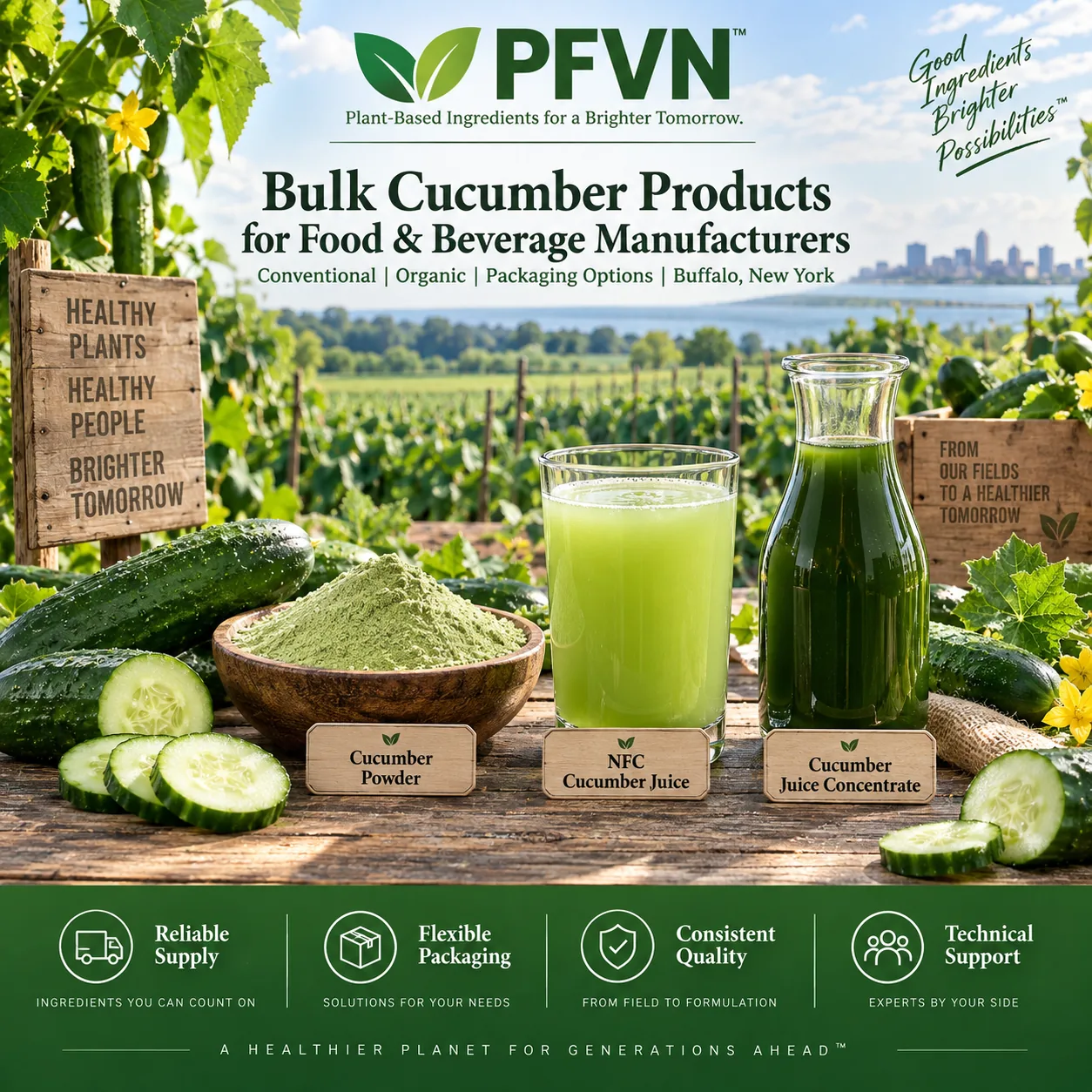
Cucumber (Cucumis sativus) belongs to the Cucurbitaceae family together with melon, watermelon and squash. Botanically it is a fruit, although commercially it is generally treated as a vegetable ingredient. The edible fruit has a very high natural water content and a delicate fresh, green, mildly vegetal aroma.
Commercial cucumber cultivars differ in skin color, bitterness, seed development and aroma intensity. For industrial juice production, processors generally select sound, mature cucumbers with clean flavor and no objectionable bitterness or deterioration.
Cucumber juice concentrate is produced by extracting juice and removing part of the water under controlled conditions. Depending on processing, it may be supplied cloudy or clarified, naturally higher-pH or acidified, and at different concentration levels. These differences can materially affect flavor, color, sediment and finished-product formulation.
Because cucumber is naturally low in soluble solids and relatively low in acidity, commercial concentrate specifications vary substantially by process. Buyers should qualify Brix, pH, acidification, appearance and flavor against the exact supplier program.
Current commercial examples include approximately 31–33° Brix products as well as frozen concentrates standardized around 40° and 45° Brix. Specify the required concentration and tolerance in the RFQ.
Commercial 40–45° Brix programs commonly use approximately 3.0–3.2° Brix as their reconstituted single-strength reference. Actual dilution should follow the supplier's specification.
Acidified cucumber concentrates may be controlled below pH 4.5, while less-acidified commercial products can show substantially higher pH. Confirm both target pH and whether acid has been added.
Naturally mild cucumber concentrates can have relatively low acidity, while acidified programs may specify materially higher titratable acidity. Compare the acid basis and ingredient declaration when evaluating alternatives.
Cloudy concentrate retains more suspended vegetable material, while clarified products are more suitable where low sediment or cleaner visual appearance is required. Natural color is generally pale green to yellow-green.
Commercial specifications typically define limits for total plate count, yeast, mold and applicable pathogens. Exact criteria depend on processing, packaging and storage method.
Cucumber's flavor is relatively delicate, so sensory quality often matters as much as analytical specification. Concentrate should have clean, fresh cucumber character without fermented, scorched, overly cooked, bitter or metallic notes.
For beverage applications, manufacturers should establish whether a natural higher-pH concentrate or an acidified product is required. Acidification can simplify formulation for acidic beverages but may change the flavor balance and ingredient declaration.
Buyers should also confirm cloudy or clarified style, conventional or organic status, country of origin, storage method, packaging, annual volume, minimum order quantity and required certificates before commercial approval.
Cucumber concentrate is primarily used where formulators want fresh green flavor, vegetable identity and a light sensory profile that blends easily with fruit, herbs, citrus and other vegetables.
Cucumber's light, refreshing profile is suited to flavored waters, electrolyte beverages and hydration drinks, often paired with lime, lemon, mint, melon or botanical flavors.
Used in vegetable juices, green drinks and wellness shots together with celery, spinach, kale, apple, pear, lemon, ginger and other fruit or vegetable ingredients.
Provides fresh green character in mixed juice systems without the stronger flavor intensity associated with many leafy vegetables or herbs.
Suitable for chilled cucumber soups, gazpacho-style products and culinary bases where standardized cucumber flavor is required without fresh-produce preparation.
Applicable to green-goddess-style dressings, yogurt-based dips, cucumber sauces and related savory systems combined with herbs, dairy or plant-based ingredients.
Can be used in beverage compounds, marinades, chilled sauces and flavor systems where manufacturers require consistent cucumber character in a liquid format.
Choose the cucumber format according to required flavor freshness, concentration, storage system and finished-product application.
Package selection should reflect concentrate Brix, annual volume, frozen or aseptic storage capability, production batch size, pumping requirements and line rate.
Frozen 40–45° Brix cucumber concentrates are commercially available in pails for development trials and smaller production runs. Exact fill weight is product-specific.
Lined steel drums are a common industrial format. Commercial examples range from approximately 220 kg to 230 kg net per drum depending on concentration and density.
Aseptic and frozen bag-in-box or bag-in-drum supply may be available depending on the concentrate specification and processor.
IBC or larger bulk formats may be available for qualified programs where product stability, annual demand and supplier filling capability support larger-volume handling.
Include your application, target Brix, cloudy or clarified style, pH or acidification requirements, certification needs, estimated quantity, packaging, delivery location and timing. These details help us identify the most suitable cucumber concentrate program.