
Commercially about 60–65° Brix
High-solids programs commonly fall near this range, while lower concentration products also exist. Confirm acid-corrected or uncorrected Brix methodology when comparing supplier specifications.
Bulk Mandarin Orange Juice Concentrate is produced from ripe mandarins and related Citrus reticulata cultivars, providing concentrated citrus aroma, natural sweetness, citric acidity and bright orange color. It is used in juices, soft drinks, functional beverages, dairy products, frozen desserts, confectionery, bakery, fruit preparations and flavor systems.
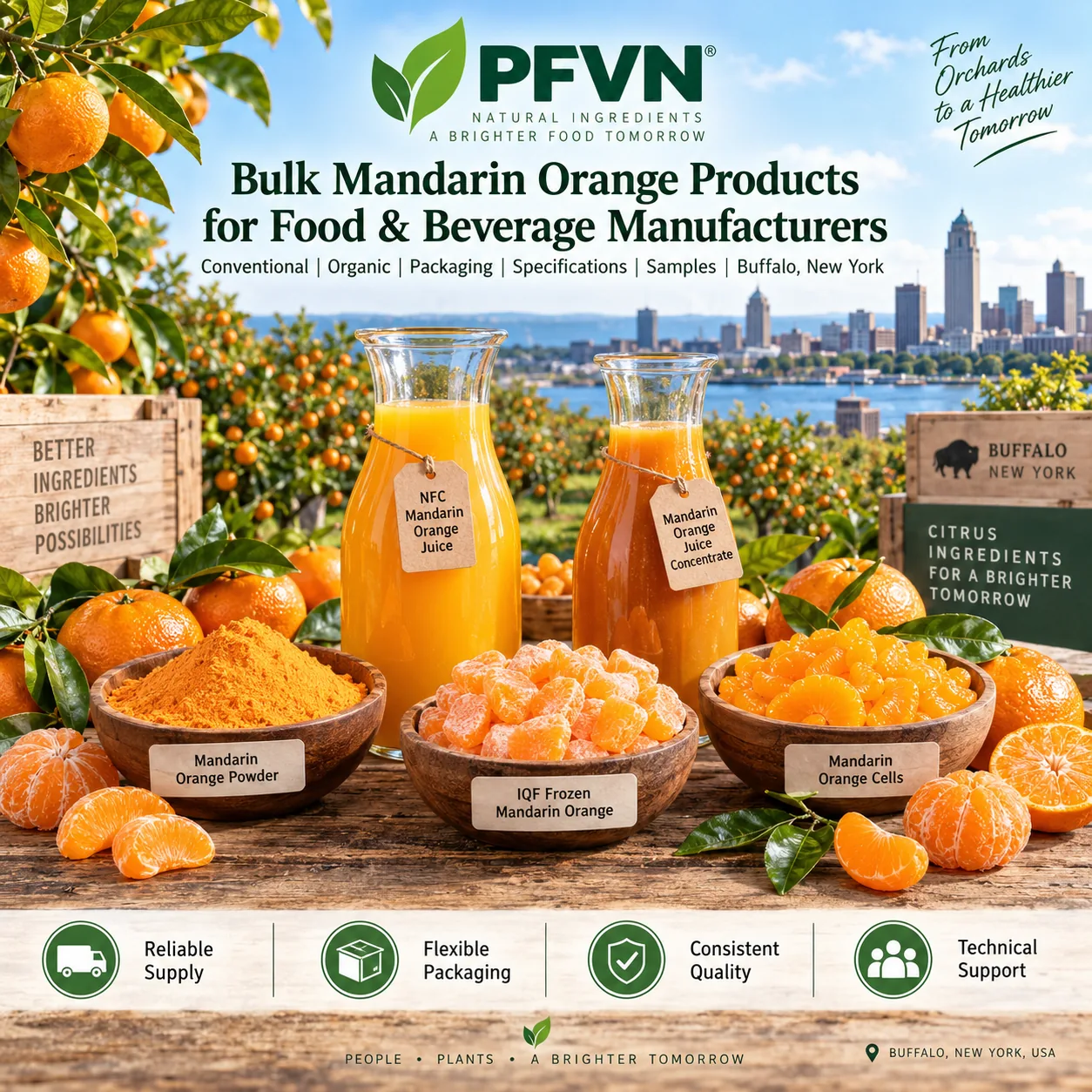
Mandarin oranges belong mainly to Citrus reticulata and related cultivar groups that include familiar types such as clementines, satsumas and tangerines. Compared with many standard sweet oranges, mandarins are generally smaller, easy-peeling fruits with an aromatic, sweet citrus profile and balanced acidity.
Fruit variety, maturity, growing region and season influence soluble solids, acidity, peel-oil character and juice color. Commercial mandarin juice is typically bright orange with a sweeter, floral citrus aroma that can provide a distinct profile compared with conventional orange juice.
Concentrate production generally involves juice extraction, screening or pulp adjustment and vacuum evaporation to remove water. Some programs retain controlled citrus pulp or cloud, while others are processed toward a smoother concentrate for beverage and flavor-system applications.
Mandarin juice concentrate is commercially available at several concentration levels, with high-solids programs commonly around 60–65° Brix. Buyers should also qualify acidity, pulp, cloud, color and aroma because these parameters strongly influence finished beverage performance.
High-solids programs commonly fall near this range, while lower concentration products also exist. Confirm acid-corrected or uncorrected Brix methodology when comparing supplier specifications.
U.S. regulations use 11.8° Brix as the minimum single-strength reference for tangerine juice when calculating percentage juice from concentrate.
Mandarin concentrates have a characteristic citric-acid profile. Titratable acidity is generally reported as citric acid and should be reviewed together with Brix to evaluate sweetness-to-acid balance.
Pulp level and natural cloud influence mouthfeel and visual appearance. Commercial programs range from relatively smooth concentrate to products retaining measurable citrus pulp.
Variety, maturity, concentration temperature and storage influence color and fresh mandarin aroma. Aroma-sensitive applications should evaluate the concentrate after reconstitution and pasteurization.
Specifications normally establish limits for total plate count, yeast, mold and relevant pathogens together with customer-specific quality and documentation requirements.
Mandarin concentrate is used where manufacturers need a sweeter, aromatic citrus profile with concentrated fruit solids and orange color in an efficient liquid ingredient.
Used in mandarin drinks, juice blends, carbonated beverages, flavored waters and functional drinks, either as the primary citrus flavor or blended with orange, lemon, peach and tropical fruits.
Suitable for yogurt fruit preparations, cultured beverages, ice cream, sorbet and frozen desserts where sweet citrus flavor and orange color are desired.
Provides concentrated mandarin flavor and acidity to gummies, fruit jellies, hard candy, chews and other confectionery systems.
Used in bakery fillings, citrus creams, glazes, cakes, pastries and dessert sauces where a recognizable mandarin profile is required without excessive added water.
Applicable to marmalades, jams, fruit preparations, dessert toppings and syrups, often in combination with citrus peel, cells or other fruit ingredients.
Used by flavor houses and beverage-base manufacturers where standardized mandarin sweetness, acidity, aroma and color are required in compound systems.
Choose the mandarin orange format according to required citrus texture, juice strength, dry-solids format and finished-product application.
Select package size around annual volume, concentrate Brix, frozen or aseptic storage requirements, batch size, pumping needs and unloading equipment.
Useful for development work and smaller production runs where available; exact net weight depends on product density and concentration.
Frozen or aseptic bag-in-drum systems are common for citrus concentrates. Commercial mandarin programs are also available around 250–275 kg per drum.
Suitable for higher-throughput programs where concentrate stability, annual volume and supplier filling capability support tote handling.
May be available for selected high-volume programs where sanitary transport, storage conditions and unloading infrastructure permit.
Include your application, target °Brix, acidity, pulp or cloud requirements, color and aroma targets, certification, estimated quantity, packaging, storage condition, delivery location and timing.