
5-gallon pails
Often suitable for trials and smaller manufacturing runs; exact net weight varies with product density and solids concentration.
Bulk sweet potato juice concentrate for industrial manufacturers seeking concentrated sweet potato solids, mild earthy-sweet flavor and vegetable color in a pumpable liquid format. PFVN supports specification-based sourcing for sauces, soups, prepared foods, plant-based products, baby food, culinary bases and related manufacturing programs.
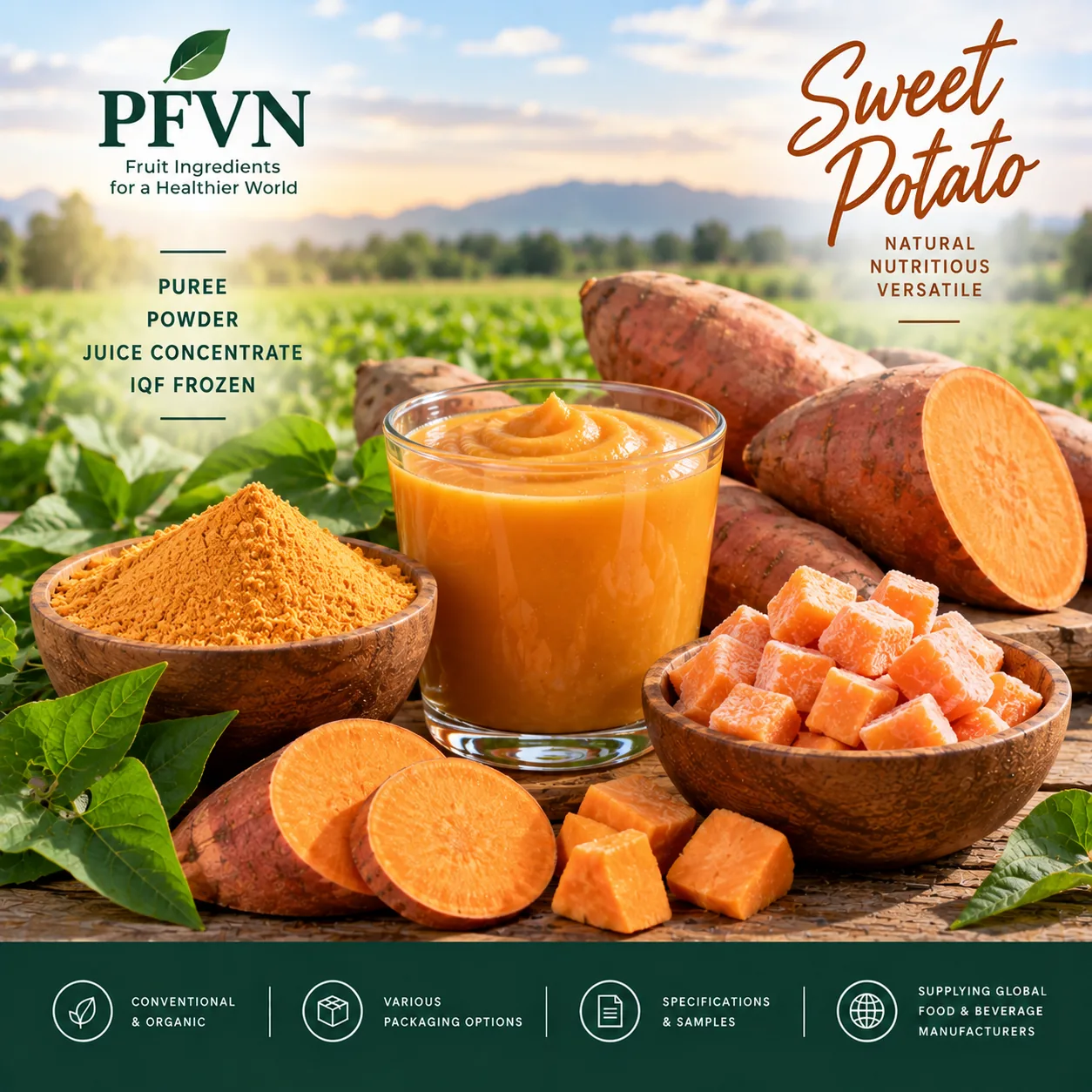
Sweet potato (Ipomoea batatas) is a storage root used globally in food manufacturing. Commercial cultivars vary widely in flesh color, dry-matter content, sweetness, starch profile and flavor. White- and cream-fleshed roots tend to provide lighter color, while yellow and orange cultivars can deliver warmer golden-to-orange tones. Purple cultivars have a distinctly different pigment profile and should be specified separately when relevant.
During processing, part of the root's carbohydrate system contributes soluble solids and natural sweetness to the liquid ingredient. The exact flavor can range from mild and starchy to sweeter, cooked and caramel-like depending on cultivar, processing conditions and concentration.
Juice concentrate provides a different functionality from sweet potato puree. It is better suited where manufacturers want soluble vegetable solids and flavor in a more fluid format without the full fiber and body associated with a puree.
Commercial qualification should focus on the properties that influence formulation solids, color, viscosity, flavor and process consistency.
Confirm the actual commercial °Brix or solids range because it determines ingredient concentration, use level and effective solids contribution.
pH should be defined for the supplied ingredient and considered together with the complete finished-product formulation and validated manufacturing process.
Color can vary from light cream or yellow to deeper orange depending on cultivar and processing. Define a target where visual consistency is important.
Specify the acceptable level of suspended material, haze or sediment according to whether the product is used in a smooth sauce, beverage-style system or culinary base.
Concentration, suspended solids and temperature can affect flow. Where pumping or automated dosing is critical, qualify viscosity under defined test conditions.
Approve a representative profile for characteristic sweet-potato flavor and absence of excessive scorched, fermented, oxidized or otherwise atypical notes.
Microbiological requirements should match the commercial supply format and the validated process used for the final food product.
Confirm whether the concentrate contains measurable suspended material because this can influence sedimentation, texture and formulation behavior.
Sweet potato juice concentrate can provide vegetable solids, mild sweetness and characteristic cooked-root flavor without introducing the full fiber and viscosity of sweet potato puree. This can be useful where a smoother liquid system is preferred.
The ingredient may also contribute warm yellow-to-orange color depending on cultivar and processing. In savory systems, its sweetness can balance salt, acid, spices and roasted flavors; in plant-based or prepared foods it can help build a rounded vegetable base.
Sweet potato concentrate is most useful in formulated foods where manufacturers want vegetable-derived solids, mild sweetness, color and flavor in a concentrated liquid form.
Provides sweet-potato solids and mild roasted-root character in soups, bisques, vegetable bases, seasoning systems and concentrated culinary preparations.
Application guide → Sauces Sauces & CondimentsCan contribute sweetness, vegetable depth and warm color to dipping sauces, cooking sauces, dressings and specialty condiments.
Application guide → Prepared foods Ready Meals & Prepared FoodsUseful in vegetable sides, meal components, fillings and prepared-food systems where standardized liquid dosing is preferred.
Application guide → Plant based Plant-Based Food FormulationSweet potato concentrate can provide vegetable solids, natural sweetness and color in plant-based soups, sauces, fillings and blended products.
Application guide → Nutrition Baby & Toddler FoodCan be evaluated for smooth vegetable formulations where controlled solids and liquid handling are required, subject to the manufacturer's product and safety specifications.
Application guide → Culinary Marinades & GlazesIts mild sweetness and color can support savory-sweet glazes, roasted flavor profiles and selected marinade systems.
Application guide →Sweet potato concentrate should be evaluated under the intended manufacturing conditions because heating, concentration and mixing can influence viscosity, color and sensory character.
Add under sufficient agitation to distribute concentrated solids evenly through sauces, soups or other formulations.
Product temperature can affect viscosity and pumping. Validate transfer conditions for the actual packaging and production equipment.
Thermal processing can intensify roasted or caramel-like characteristics. Evaluate the final flavor after the complete commercial heat process.
Heat and formulation conditions can shift vegetable color, so approve appearance after processing rather than from the concentrate alone.
Include concentrate solids when calculating total formulation solids, sweetness and finished-product yield.
Document ingredient lot, solids, use level, process temperature and finished-product results during successful trials.
Sweet potato cultivars can differ substantially in flesh color, dry matter, sweetness and flavor. Commercial programs should therefore define the finished ingredient characteristics that matter most rather than purchasing only against the generic name “sweet potato concentrate.”
For recurring supply, buyers should also confirm origin, crop availability, processing season, packaging, storage requirements and annual demand. Alternate sources can be qualified against the same analytical and sensory specification where supply continuity is important.
Supplier documentation should correspond to the exact sweet potato concentrate and production source being offered. The commercial specification should emphasize the properties that materially affect the customer's process.
Review °Brix or solids, pH, color, viscosity or turbidity where relevant, sensory profile, storage conditions and shelf life.
Where applicable, define the analytical values that should be reported for each commercial lot.
Confirm the exact composition of the supplied concentrate and any processing-related declarations relevant to the final product.
Align the supplier microbiological specification with the buyer's validated food-manufacturing process and finished-product requirements.
Confirm country-of-origin and lot-traceability documentation where required by the purchasing or quality program.
Request organic, allergen, GMO-status or other applicable documentation according to the intended customer and market requirements.
Commercial packaging should be selected around batch volume, product viscosity, storage condition, pumping requirements, line rate and unloading equipment.
Often suitable for trials and smaller manufacturing runs; exact net weight varies with product density and solids concentration.
Common industrial scale for concentrated liquid ingredients; exact fill weight, liner and storage condition are product-specific.
Potential option for higher-throughput programs where product stability, viscosity and supplier capabilities support tote filling.
May be available for selected high-volume programs where transport stability, storage and unloading equipment are suitable.
Include the application, target solids or other critical specification, color requirement, quantity, packaging, certifications, delivery location and timing. We’ll use those details to route your inquiry efficiently.