
Typically 70 ±1° Brix
70° Brix is a widely traded concentration for industrial apple juice concentrate. Brix is used for dilution, yield calculations, formulation control and comparison of delivered fruit solids.
Bulk Apple Juice Concentrate is produced from sound mature apples (Malus domestica) and provides concentrated fruit solids, natural sweetness, mild malic acidity and characteristic apple flavor in an efficient liquid format. It is widely used in juices, beverage blends, cider and fermentation, bakery fillings, confectionery, dairy preparations, fruit snacks and other formulated foods.
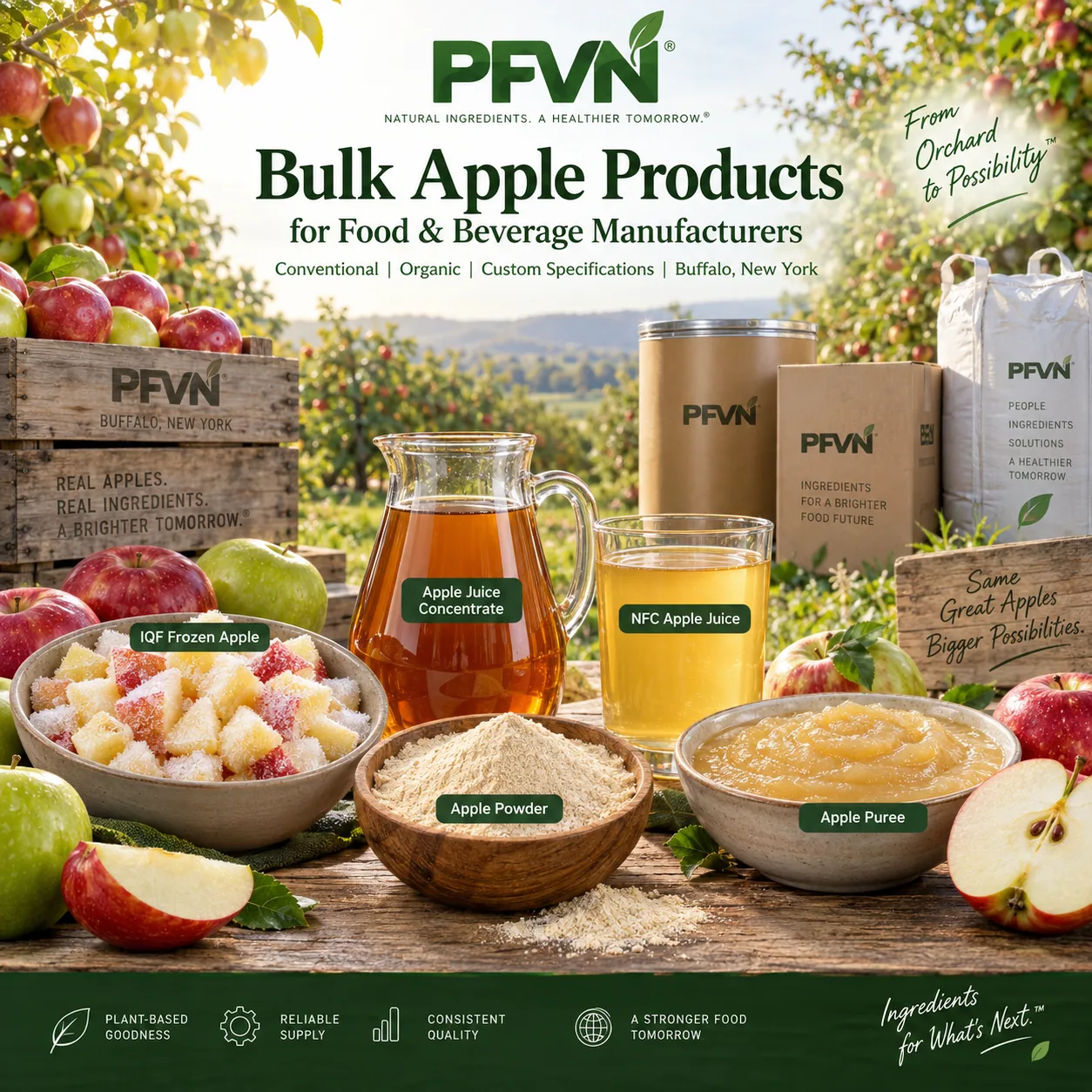
Apple (Malus domestica) is a pome fruit in the Rosaceae family. Commercial processing apples vary substantially in sugar level, acidity, aroma and color, allowing processors to blend cultivars and origins to achieve a consistent juice profile.
The flavor of apple juice is generally sweet to sweet-tart, with malic acid providing most of its characteristic natural acidity. Because apple has a relatively mild flavor compared with berries, citrus and many tropical fruits, apple concentrate can function either as the principal fruit ingredient or as a supporting base in multi-fruit formulations.
Industrial concentrate production typically includes washing, milling, pressing, enzymatic treatment where required, clarification or filtration and vacuum concentration. The selected process determines clarity, color, aroma retention and the amount of suspended fruit material in the finished concentrate.
Approximately 70° Brix is the dominant commercial high-solids format for clarified apple juice concentrate, but acidity, pH, color, clarity and sensory characteristics vary by crop, origin and grade. Final purchasing should always use the current supplier specification and lot documentation.
70° Brix is a widely traded concentration for industrial apple juice concentrate. Brix is used for dilution, yield calculations, formulation control and comparison of delivered fruit solids.
FDA uses 11.5° Brix as the minimum single-strength apple-juice reference when calculating percentage juice from concentrate for U.S. beverage labeling.
Commercial 70° Brix specifications commonly show pH around 3.0–4.2. Titratable acidity is normally expressed as malic acid and should be qualified to the required sweet-tart profile.
Clarified concentrate is designed for low turbidity and minimal sediment, while cloudy grades retain more suspended fruit material. Specify clarity, NTU, haze or pulp requirements where these affect the finished product.
Apple variety, crop maturity, oxidation, concentration conditions and storage influence color and aroma. Sensitive applications should establish an approved color and reconstituted sensory standard.
Programs typically specify total count, yeast and mold together with relevant pathogen limits. Patulin, pesticide residues, authenticity and other quality criteria may also be included in buyer specifications.
Apple concentrate is valued for its combination of fermentable fruit sugars, mild acidity, familiar flavor and relatively neutral blending profile, allowing it to serve both as a primary apple ingredient and as a supporting fruit-solids base.
Used in apple juice, nectars, still and carbonated fruit drinks, smoothies and multi-fruit blends. Its mild profile pairs easily with berries, citrus, stone fruit and tropical flavors.
Provides fermentable sugars and apple character for cider, fruit beer, wine-style beverages and other fermentation systems where sugar, acidity and preservative status are controlled.
Used in pie and pastry fillings, bakery fruit layers, glazes and cereal preparations where concentrated apple solids and sweetness are required without adding excessive water.
Suitable for gummies, fruit bars, jellies, chews and snack systems where apple contributes fruit solids, sweetness and a compatible background flavor.
Can be incorporated into yogurt preparations, cultured products, ice cream, sorbet, dessert sauces and fruit compounds either as the primary fruit or part of a blend.
Apple concentrate can support sauces, marinades, baby-food formulations and specialty flavor systems where controlled fruit-derived sweetness and soluble solids are useful.
Choose the apple format according to required fruit texture, solids contribution, sensory profile, storage system and manufacturing process.
Package selection should reflect annual volume, concentrate Brix, storage method, batch size, pumping requirements and the manufacturing plant's unloading capabilities.
Suitable for development work and lower-volume production where available. Exact fill weight depends on supplier format and concentrate density.
Aseptic bag-in-drum and lined steel drums are widely used for 70° Brix apple concentrate. Exact net weight and pallet configuration are supplier-specific.
IBCs and similar bulk containers can support higher-throughput plants where product stability, annual demand and supplier filling capability allow.
Large commercial programs may use food-grade tankers, flexitanks or other bulk systems where sanitary transport, storage and unloading infrastructure are suitable.
Include your application, target °Brix, acidity, clear or cloudy style, color requirements, certification, estimated quantity, packaging, storage condition, delivery location and timing. These details help us match the inquiry to the appropriate apple concentrate program.