
10 kg PE-lined carton
A widely used bulk IQF format that protects frozen pieces while remaining manageable for production teams.
Bulk IQF Frozen Apple for industrial buyers seeking individually frozen apple pieces for bakery, dairy, dessert, prepared-food, foodservice and specialty manufacturing programs. PFVN helps industrial buyers match ingredient specifications, documentation, packaging and supply requirements to the needs of their manufacturing programs.
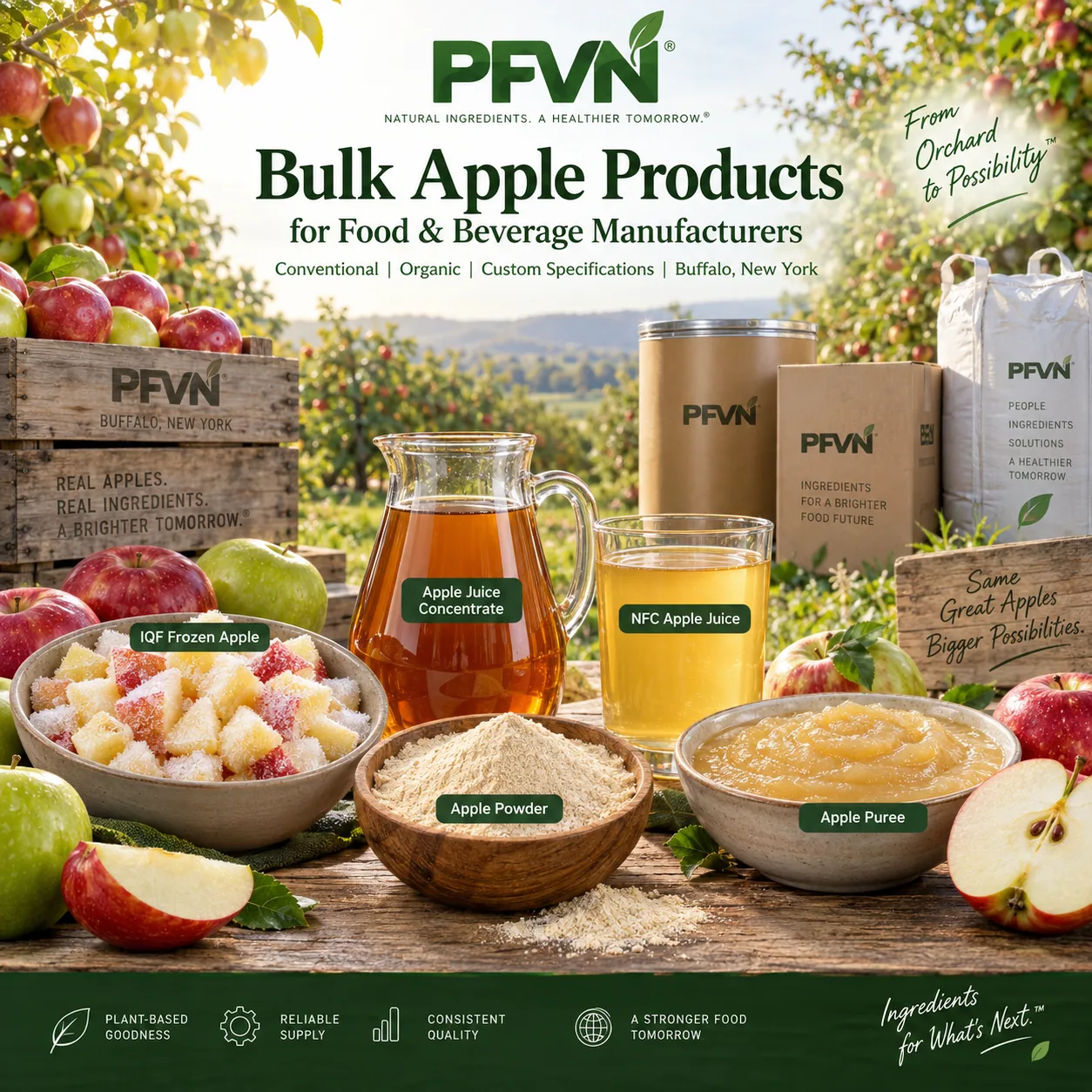
PFVN supplies apple in IQF and frozen formats for qualified food, beverage, foodservice and ingredient programs. Individually quick frozen pieces allow manufacturers to work with recognizable fruit portions while maintaining efficient frozen storage and portion control.
Commercial IQF apple can be supplied in different cut styles such as dices, cubes, slices, segments or other customer-specific formats depending on source availability. Variety, dimensions, peel specification, color, firmness and permitted anti-browning treatment can all affect finished-product performance.
For industrial qualification, buyers should review cut dimensions, size tolerances, piece integrity, color, firmness, defect limits, foreign-material standards, microbiological criteria, packaging configuration, storage temperature and shelf life.
Exact tolerances depend on the source, but these characteristics are commonly reviewed when specifying frozen apple pieces for industrial processing.
Apple may be supplied as dices, cubes, slices, wedges or other cuts. Size consistency affects portioning, thaw behavior, appearance and processing performance.
Variety, maturity and processing conditions influence firmness. Buyers should evaluate whether pieces retain the desired structure through thawing, mixing, baking or thermal processing.
Fresh-cut apple is naturally susceptible to enzymatic browning. Commercial programs may use permitted processing or anti-browning treatments where appropriate, and requirements should be specified during qualification.
Specifications may establish limits for peel, core material, bruising, discoloration, broken pieces, undersize or oversize pieces and other defects relevant to the intended application.
IQF processing is intended to freeze individual pieces rapidly so they remain substantially separate rather than forming a solid frozen block. This can improve dosing, portion control and processing flexibility compared with block-frozen fruit.
Final product quality depends on raw-material condition, cut preparation, freezing rate and cold-chain management. Piece size and surface area can also affect freezing and thawing behavior, which is especially important for bakery, dairy and prepared-food applications.
Industrial users should confirm whether the product is designed to be used directly from frozen, partially thawed or fully thawed before incorporation into the finished product.
IQF apple requires controlled frozen handling from production through delivery and warehouse storage. The exact storage temperature and shelf life should always follow the current supplier specification.
IQF fruit is commonly maintained at approximately -18°C / 0°F or colder, subject to the specific product specification. Temperature fluctuations can contribute to ice-crystal growth and quality loss.
Reefer transport and frozen receiving procedures should minimize temperature excursions. Buyers should define delivery requirements and acceptable receiving conditions before shipment.
Thawing can soften fruit tissue and release juice. Manufacturers should establish controlled thaw procedures where product is not incorporated directly from frozen.
Receiving teams should verify lot identity, package integrity, product condition and remaining shelf life before material is released for production.
IQF apple is used where identifiable fruit pieces are desirable in the finished product. Typical uses can include bakery fillings, dairy inclusions, desserts, foodservice preparations, prepared meals, fruit toppings and snack applications.
Piece firmness can change during thawing, heating, baking or prolonged mixing. Applications that require visible fruit identity should therefore evaluate size retention, moisture release and texture after the actual manufacturing process.
For bakery and filling systems, manufacturers may evaluate how the apple pieces interact with sugar, starches, gums or other binders. In chilled and dairy applications, color stability, syneresis and piece integrity may be especially important.
IQF apple can be used where manufacturers need recognizable fruit pieces, controlled portioning and frozen stability. Final suitability depends on cut size, variety, formulation, processing conditions and the supplied specification.
Microbiological requirements vary according to product, processing method and end use. Depending on the program, specifications may address total plate count, yeast and mold, coliforms, Enterobacteriaceae or other indicators together with criteria concerning specified pathogens.
Physical quality specifications may also define foreign-material limits, peel or core tolerance, damaged pieces, discoloration, undersized or oversized pieces and other defects relevant to the intended finished product.
Buyers with specific microbiological methods, defect standards or customer requirements should provide them during qualification so the commercial source can be matched appropriately.
Depending on the formulation, apple may also be sourced as juice concentrate, NFC juice, puree or powder when a liquid, concentrated, smooth or dry-format ingredient is better suited to the manufacturing process.
Common lined-carton and bag formats for individually quick-frozen fruit and vegetables for Bulk IQF Frozen Apple. Select package size around batch volume, storage, thawing or pumping needs, line rate and unloading equipment.
A widely used bulk IQF format that protects frozen pieces while remaining manageable for production teams.
Separates a 10 kg case into smaller inner units to reduce open-case handling and improve portion control.
Used by some suppliers and products for high-throughput plants with suitable frozen handling systems.
Common multi-bag case configurations can support foodservice, institutional and controlled-use programs.
Include the cut style, target dimensions, defect tolerance, color or treatment requirements, certification, quantity, packaging, delivery location and timing. We’ll use those details to route your inquiry efficiently.