
Typically 65–68° Brix
Current commercial programs commonly include 65° and 68° Brix concentrates. Brix should be confirmed for yield calculations, dilution ratios, solids contribution and purchasing comparisons.
Bulk Aronia Juice Concentrate is produced from black chokeberry (Aronia melanocarpa) and provides intense red-purple color, concentrated berry solids, pronounced tartness and characteristic astringency. It is used in juice blends, functional beverages, fermented drinks, dairy preparations, confectionery, bakery fillings, fruit snacks and specialty fruit systems.
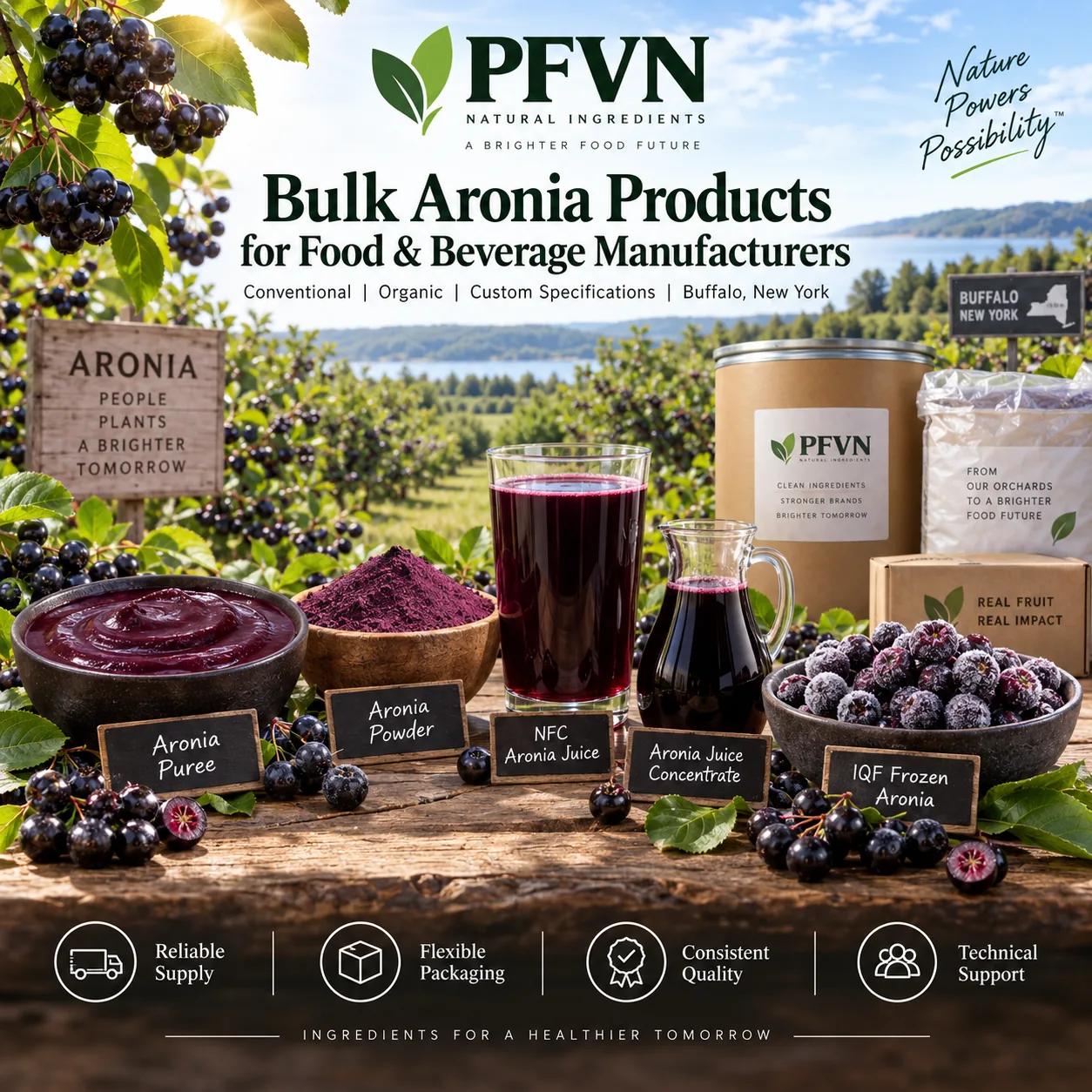
Aronia, commonly known as black chokeberry, is the fruit of Aronia melanocarpa, a deciduous shrub in the Rosaceae family. The small dark berries mature to deep purple-black and are processed primarily for juice, concentrate, puree, powder and other fruit ingredients.
Fresh aronia has a strongly tart and astringent sensory profile compared with sweeter berries. In formulated products it is therefore frequently blended with apple, grape, cherry, blueberry or other fruits that soften its tannic character while retaining its recognizable dark-berry flavor and color.
The intense red-purple color is associated with naturally occurring anthocyanin pigments. Variety, fruit maturity, pressing conditions, clarification, concentration, oxygen exposure and storage can all influence final color density and sensory character.
Commercial aronia concentrate is commonly supplied as a high-solids fruit concentrate, but Brix, acidity, color density and clarification level vary by processor. Final purchasing should be based on the approved supplier specification and lot documentation.
Current commercial programs commonly include 65° and 68° Brix concentrates. Brix should be confirmed for yield calculations, dilution ratios, solids contribution and purchasing comparisons.
Commercial specifications commonly show pH roughly between 2.7 and 3.9, with titratable acidity often expressed as malic acid. Exact acidity materially affects flavor balance and blending.
Color density is one of aronia's key functional characteristics. Anthocyanin-rich color can change with heat, oxygen, pH and storage, so color-sensitive applications should qualify an approved sample.
Clarified concentrate is suitable where lower turbidity is required, while cloudy grades retain more suspended fruit material. Specify haze, sediment or pulp tolerance where these affect processing.
Suitable material should show clean characteristic aronia flavor without fermented, scorched or caramelized notes. Astringency and flavor intensity should be evaluated in the finished formulation.
Commercial specifications generally establish limits for total plate count, yeast and mold together with applicable pathogen requirements and other customer-specific quality criteria.
Aronia concentrate is especially useful where manufacturers need strong dark-berry character, acidity and deep natural fruit color at controlled inclusion levels.
Used in berry juices, multi-fruit beverages, wellness drinks and beverage bases, commonly blended with apple, grape, cherry, cranberry or other fruits to balance astringency.
Aronia can add color, acidity and berry character to fermented beverages where sugar balance, preservative status and fermentation compatibility are properly managed.
Applicable to yogurt fruit preparations, cultured drinks and plant-based alternatives where a pronounced berry profile and dark-purple appearance are desired.
Used in gummies, jellies, fruit chews and confectionery centers where its tartness and color can complement sweeter berry and fruit flavor systems.
Suitable for bakery fillings, dessert sauces, glazes and fruit layers either alone or in combination with apple, cherry and other berries.
Can contribute concentrated berry flavor and color to fruit bars, snack preparations, syrups, compounds and other industrial fruit systems.
Choose the aronia format according to required fruit body, concentration, color intensity, storage system and finished-product application.
Select packaging according to concentrate Brix, annual volume, production batch size, storage conditions and the plant's thawing, pumping and unloading capabilities.
Commercial 65° Brix aronia concentrate is available in pail formats suitable for development work and smaller production runs. Exact fill weight is supplier-specific.
Frozen or aseptic bag-in-drum systems are common industrial formats. Exact net weight depends on concentration, density and supplier configuration.
Tote supply may be available for higher-throughput programs where product stability, annual volume and supplier filling capability support larger formats.
Larger bulk formats may be possible for qualified programs where sanitary transport, temperature control and unloading infrastructure are appropriate.
Include your application, target °Brix, acidity, clarified or cloudy style, color requirements, certification, estimated quantity, packaging, storage condition, delivery location and timing. These details help us identify the appropriate aronia concentrate program.