
Supplier-specific °Brix
Concentration level can vary by processor and product style. Specify the target °Brix or total-solids requirement so inclusion rate, yield and freight economics can be evaluated correctly.
Bulk Butternut Squash Juice Concentrate is produced from ripe butternut squash (Cucurbita moschata) and provides concentrated squash flavor, mild natural sweetness and orange vegetable character in a liquid format. It is used in soups, sauces, prepared foods, baby food, plant-based products and selected vegetable beverage formulations.
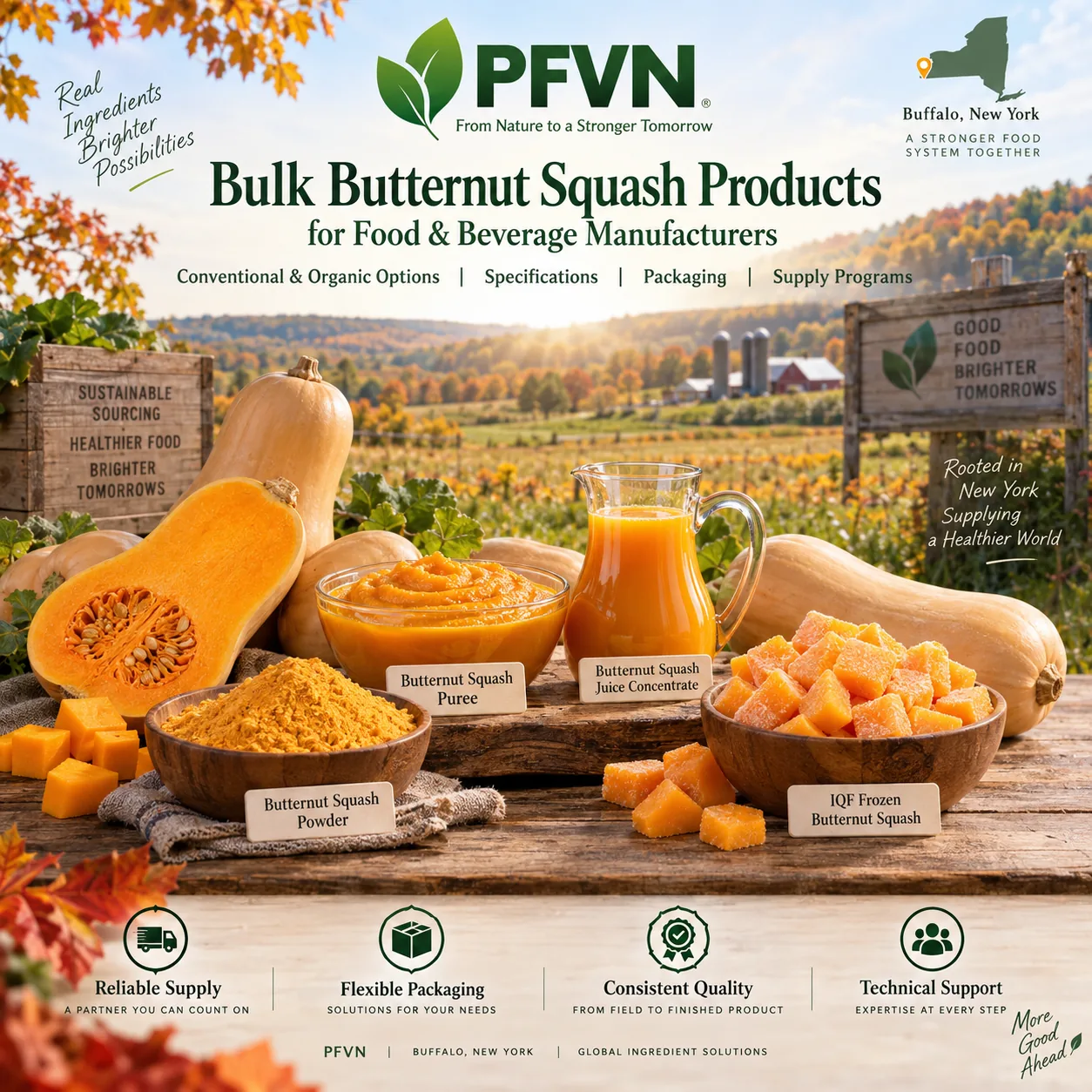
Butternut squash is a winter squash belonging to Cucurbita moschata. Botanically it is a fruit, although commercially it is generally treated as a vegetable. Mature fruit has tan skin, dense orange flesh and a mild sweet, nutty flavor that becomes more pronounced as the squash ripens.
Its characteristic yellow-orange to deep-orange flesh is associated with naturally occurring carotenoid pigments, particularly alpha- and beta-carotene. Variety, maturity, growing conditions and thermal processing can all influence the final color of a processed butternut squash ingredient.
For juice-concentrate production, prepared squash is reduced to a liquid juice stream, screened or clarified as required and concentrated by removing part of the water. Commercial products may differ substantially in soluble solids, cloudiness and viscosity depending on how much suspended vegetable material is retained.
Butternut squash concentrate is not standardized around one universal Brix or physical specification. Soluble solids, pH, suspended solids, color and viscosity should therefore be qualified against the actual product being offered.
Concentration level can vary by processor and product style. Specify the target °Brix or total-solids requirement so inclusion rate, yield and freight economics can be evaluated correctly.
Butternut squash is less acidic than many fruit juices. Confirm the supplied pH and titratable acidity where they influence thermal processing, preservation strategy or finished-product flavor balance.
Color varies with cultivar, maturity and processing history. Where the concentrate is expected to contribute visible orange color, approve a representative sample or instrumental color target.
Clarified material offers lower suspended solids, while cloudy concentrate can retain more characteristic squash material. Specify pulp, turbidity or sediment tolerance when these affect the application.
Higher-solids or cloudier concentrates can become more viscous at lower temperatures. Pumping, metering, thawing and mixing requirements should be evaluated before scale-up.
Commercial specifications normally establish limits for total count, yeast, mold and relevant pathogens. Exact requirements depend on processing method, packaging and intended end use.
Butternut squash concentrate is most useful where manufacturers want standardized squash flavor, mild sweetness, orange vegetable character and liquid solids without handling whole squash or a high-pulp puree.
Used in butternut squash soups, creamy vegetable soups, broths and culinary bases where consistent squash flavor and color are required.
Suitable for vegetable sauces, pasta sauces, dips, spreads and seasonal culinary formulations requiring mild sweetness and orange vegetable character.
Applicable to chilled and frozen meals, vegetable fillings, casseroles and prepared-food systems where a standardized liquid squash ingredient simplifies production.
Qualified programs can be used in baby-food formulations. These applications may require additional controls for residues, contaminants, microbiology, traceability and documentation.
Can contribute vegetable flavor, color and solids to plant-based sauces, soups, fillings, spreads and ready meals.
Used at controlled inclusion levels in blended vegetable beverages and nutrition formulations together with carrot, sweet potato, beet, celery, spinach and other juice concentrates.
Choose the butternut squash format according to required texture, solids contribution, storage system and finished-product application.
Select packaging according to concentration, annual usage, production batch size, storage conditions and the plant's pumping and unloading capabilities.
5-gallon pails and smaller aseptic bag-in-box formats can support product development, pilot production and lower-volume manufacturing where available.
Aseptic bag-in-drum and frozen drum formats are common industrial options. Exact net weight depends on concentrate density, solids and the supplier program.
Larger totes or IBCs can be suitable for high-throughput production where product stability, storage requirements and supplier filling capability support bulk handling.
Selected programs may support larger bulk shipments where sanitary transport, temperature management and unloading equipment are appropriate.
Include your application, target Brix or total solids, pH or acidity requirements, clarified or cloudy style, color and viscosity targets, certification needs, estimated quantity, packaging, delivery location and timing.