
Commercial 40° Brix programs
Cloudy kale juice concentrate is commercially available around 40° Brix. Other concentration levels may exist, so the required solids target and tolerance should be specified in the RFQ.
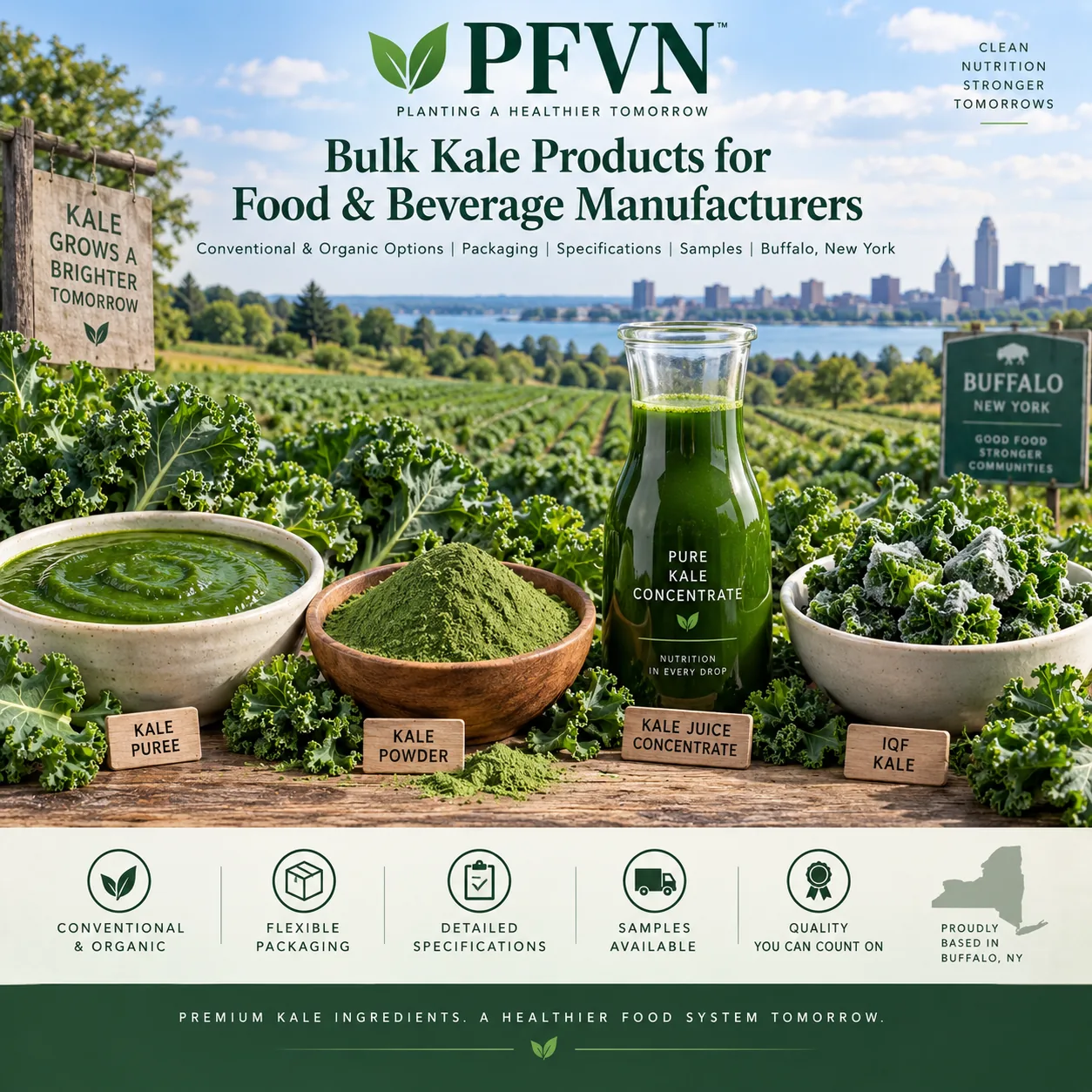
Bulk Kale Juice Concentrate is produced from kale leaves (Brassica oleracea var. sabellica) and provides concentrated leafy-green flavor, vegetable solids and deep natural green color in a liquid format. It is used in functional beverages, smoothies, green juice blends, wellness shots, soups, sauces, plant-based foods and other formulations requiring recognizable kale character.
Kale is a leafy member of the Brassica vegetable group and is closely related to cabbage, broccoli and collard greens. Commercial cultivars range from curly green kale to flatter-leaf and darker varieties, with differences in leaf texture, bitterness, green intensity and overall flavor.
Fresh kale has a distinctly vegetal, leafy and mildly brassica-like flavor. Its green appearance comes largely from chlorophyll pigments, while processing conditions, oxygen exposure, pH and storage can influence the color retained in the finished concentrate.
For concentrate production, sound kale leaves are washed, processed and pressed or extracted to obtain juice. The liquid is typically screened and then concentrated, with commercial products often remaining cloudy because fine vegetable solids are retained.
Kale juice concentrate is less standardized than major fruit concentrates. Commercial programs should therefore be approved against the actual supplier specification, particularly for Brix, pH, acidification, color and suspended-solids content.
Cloudy kale juice concentrate is commercially available around 40° Brix. Other concentration levels may exist, so the required solids target and tolerance should be specified in the RFQ.
Commercial kale NFC juice specifications may begin around 5° Brix, illustrating the substantial difference between single-strength kale juice and concentrated product.
Kale juice may naturally have a relatively high pH compared with fruit juices. Some commercial products are acidified with lemon juice or another permitted acid source to achieve a lower processing pH.
Color is a key qualification parameter. Chlorophyll-rich kale ingredients can become duller or more olive in appearance under prolonged heat, acidic conditions, oxygen exposure or extended storage.
Kale concentrate may contain fine suspended leaf material. Buyers should define acceptable settling, pulp, filtration or turbidity requirements where line performance or finished-product appearance is important.
Specifications normally establish limits for total viable count, yeast, mold and relevant pathogens. Final limits depend on processing method, packaging, storage and intended application.
For kale ingredients, analytical concentration alone does not determine finished-product performance. Two concentrates at similar Brix can differ substantially in leafy flavor intensity, bitterness, green color and suspended-solids behavior.
Beverage manufacturers should evaluate the concentrate after dilution and final heat processing. In green smoothies and wellness drinks, kale is commonly balanced with sweeter or brighter ingredients such as apple, pear, pineapple, lemon, cucumber or ginger.
Industrial buyers should also confirm conventional or organic status, ingredient declaration, origin, storage temperature, packaging, annual volume and required certificates before approving a commercial program.
Kale concentrate is most useful in products where manufacturers want recognizable leafy-green character, vegetable solids and natural green appearance from a standardized liquid ingredient.
Used in functional beverages and green juice products where kale is combined with fruit or other vegetable ingredients to create a balanced flavor profile.
Cloudy kale concentrate works well in opaque smoothie formulations where suspended vegetable solids and strong green character are acceptable.
Suitable for small-format wellness drinks combined with ginger, lemon, apple, celery, cucumber, spinach or other strongly flavored ingredients.
Provides consistent kale flavor and vegetable solids to soups, green sauces, dips and prepared culinary bases without requiring fresh-leaf handling.
Applicable to plant-based meals, vegetable fillings, pasta sauces and savory preparations where leafy-green flavor and color are required.
Can be blended with spinach, cucumber, celery, broccoli and other vegetables to create green juice bases and standardized vegetable flavor systems.
Choose the kale format according to required vegetable texture, green intensity, solids contribution, handling system and finished-product application.
Package selection should reflect concentrate solids, annual volume, frozen or chilled storage capacity, batch size, pumping requirements and production-line handling.
Suitable for product development and lower-volume production where available. Exact package size and net weight are supplier-specific.
Commercial 40° Brix cloudy kale concentrate is available in frozen drum programs. Exact net weight, liner construction and pallet configuration depend on the supplier.
Selected kale juice programs may also use aseptic packaging, including approximately 200 kg drums and smaller bag-in-box formats, depending on concentration and processing.
Larger packaging may be available for qualified volumes where product stability, temperature control and supplier filling capability support bulk handling.
Include your application, target Brix or solids level, color and suspended-solids requirements, pH or acidification target, certification needs, estimated quantity, packaging, delivery location and timing. These details help us identify the most suitable kale concentrate program.