
5-gallon pails
Often suitable for trials and smaller manufacturing runs; exact net weight varies with product density and °Brix.
Bulk kiwi juice concentrate for industrial manufacturers seeking concentrated sweet-tart kiwi flavor, fruit solids and characteristic color in an efficient liquid format. PFVN supports specification-based sourcing for beverage, fruit-preparation, flavor-system, confectionery, bakery and fruit-snack programs.
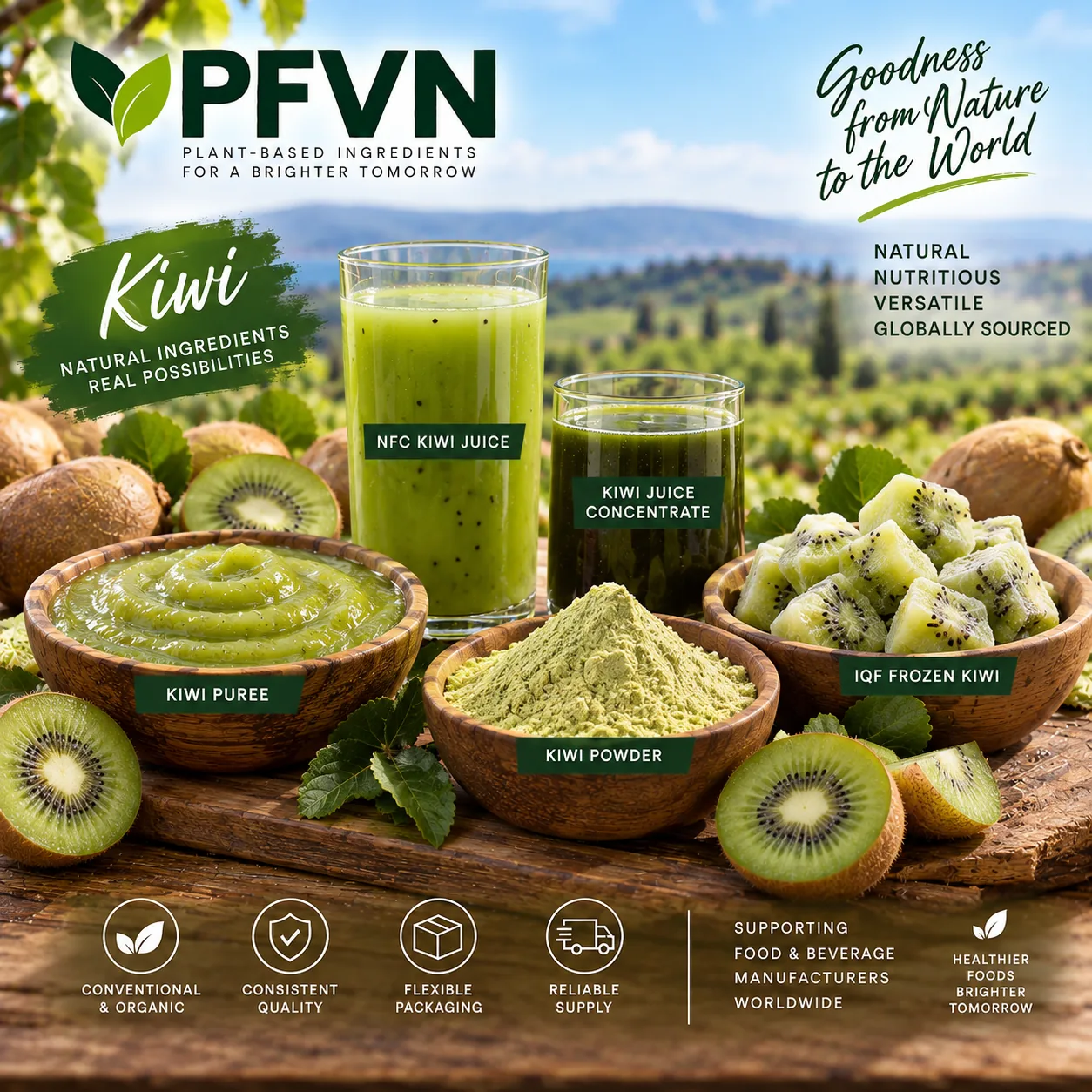
Kiwifruit is valued for its fresh sweet-tart flavor, green or golden flesh and recognizable tropical-fruit aroma. Green kiwifruit generally provides a sharper acid profile and green fruit character, while gold-fleshed cultivars are typically sweeter and milder with yellow-gold color.
Ripeness has a strong influence on flavor. As the fruit matures, starch is converted into sugars, acidity becomes more balanced and aroma develops. These changes make maturity and cultivar relevant when qualifying commercial kiwi ingredients.
Fresh kiwi also contains fine pulp and numerous small seeds. Juice processing, screening and clarification determine how much suspended material remains in the concentrate, so buyers should distinguish clearly between clarified juice concentrate and puree-style kiwi products.
A practical commercial specification should control the properties that influence dilution, flavor balance, appearance and production consistency.
Confirm commercial °Brix because it determines fruit-solids contribution, dilution ratio, formulation yield and effective cost at use.
Kiwi's characteristic tartness makes acid control important. Both pH and titratable acidity can help maintain consistent sweet-acid balance between lots.
Color varies with cultivar and processing. Green and gold kiwi concentrates should be qualified separately where the ingredient contributes visibly to the finished product.
Specify clarified or cloudy style and acceptable suspended solids according to the beverage, fruit preparation or flavor system.
Approve representative material for characteristic kiwi flavor and absence of excessive fermented, oxidized, overcooked or otherwise atypical notes.
Solids concentration, temperature and residual pulp affect pumping, metering, blending and practical container evacuation.
Define microbiological requirements appropriate to the supplied format, storage condition and validated finished-product process.
Where relevant, define acceptable pulp or sediment because kiwi's natural tissue can influence physical stability and finished appearance.
Kiwi concentrate can deliver recognizable fruit character at lower water addition than single-strength juice. Its relatively bright acidity makes it useful in both single-fruit and blended formulations where a fresh, sharp fruit profile is desired.
Kiwi combines well with apple, pear, grape, strawberry, mango, pineapple, citrus and other tropical fruits. The concentrate's soluble solids and acidity should be included when calculating the finished sweetness and acid system rather than treated as flavor alone.
Use the supplier's measured concentration when setting dilution or inclusion levels and comparing alternative sources.
Kiwi's natural tartness can reduce the need for additional acid in some formulations or require extra sweetness in others.
Excessive thermal exposure can reduce fresh kiwi character and move the sensory profile toward more cooked fruit notes.
Natural green or yellow tones may shift during heat treatment and storage, so approve color in the finished product rather than the concentrate alone.
Kiwi can sharpen sweeter fruit blends and add recognizable tropical acidity without dominating when used at a controlled inclusion level.
Document concentrate lot, Brix, acidity, use level and finished-product results during successful plant trials.
Kiwi concentrate is useful where manufacturers need recognizable kiwi flavor, acidity and fruit solids in a concentrated liquid form.
Used in kiwi beverages and multi-fruit blends where its bright sweet-tart profile provides freshness and flavor differentiation.
Application guide → Beverages Functional & Wellness BeveragesKiwi concentrate can provide fruit flavor and acidity in functional drinks, wellness beverages and specialty juice formulations.
Application guide → Flavor systems Fruit Bases, Syrups & CompoundsIts distinctive aroma and acid profile make it suitable for beverage bases, syrups and customized tropical-fruit flavor systems.
Application guide → Confectionery Gummies, Jellies & Fruit CandyKiwi concentrate can contribute tart fruit flavor, soluble solids and color to gummies, jellies, chews and other confectionery systems.
Application guide → Bakery Fillings & Fruit PreparationsSuitable for bakery fillings, dessert preparations and fruit layers requiring concentrated kiwi character with controlled water addition.
Application guide → Snacks Fruit Snacks, Bars & BitesCan provide kiwi flavor and acidity in fruit sheets, bars, bites and blended high-solids snack formulations.
Application guide →Kiwi concentrate can vary with cultivar, maturity, crop, origin and processing method. Green and gold kiwi programs may differ materially in flavor, acidity and color, so buyers should define the desired profile during qualification.
For recurring programs, specify the critical analytical limits, acceptable origins, packaging, storage condition, certifications and expected annual volume. Alternate sources can be approved against the same technical and sensory benchmark where supply continuity is important.
Select package size around batch volume, concentrate viscosity, storage condition, thawing or pumping requirements, line rate and unloading equipment.
Often suitable for trials and smaller manufacturing runs; exact net weight varies with product density and °Brix.
Common frozen or aseptic bag-in-drum scale for concentrated fruit ingredients; exact fill weight and storage condition are product-specific.
Potential option for higher-throughput programs where product stability, viscosity and supplier capabilities support tote supply.
May be available for selected high-volume programs where transport stability, storage and unloading systems permit.
Include the application, green or gold kiwi preference, target °Brix or acidity, color or clarity requirement, quantity, packaging, certifications, delivery location and timing.