Fruit & Vegetable Purees · Bulk B2B ingredients

Bulk Kiwi Puree

Bulk kiwi puree is a distinctive fruit ingredient used for its fresh sweet-tart flavor, natural acidity, characteristic green or golden color and smooth fruit body. It is suitable for beverages, smoothies, yogurt preparations, baby food, bakery fillings, frozen desserts, fruit spreads and multi-fruit formulations where recognizable kiwifruit character is required.

Bulk supply Green / gold programs Conventional & organic options Aseptic / frozen options Documentation on request
Bulk Kiwi Puree
Ingredient profile

About kiwifruit and kiwi puree

Kiwifruit is produced from species within the genus Actinidia. Commercial programs commonly include green kiwifruit, typically associated with Actinidia deliciosa, and gold-fleshed cultivars associated primarily with Actinidia chinensis. These types differ in flesh color, sweetness, acidity and aroma.

Green kiwifruit typically has bright green flesh, numerous small black edible seeds and a pronounced sweet-tart profile. Gold kiwifruit generally provides yellow-gold flesh, lower perceived tartness and a sweeter, more tropical sensory character. Variety and maturity can materially affect soluble solids, acidity, color and puree flavor.

For industrial puree production, ripe fruit is normally washed, peeled or otherwise prepared, pulped and refined to the required consistency. Small seeds may remain in the puree depending on the finishing specification, making seed content and particle size relevant qualification points for smooth consumer products.

Technical & commercial profile

Key specification points for industrial kiwi puree

Kiwi puree should be qualified by cultivar or color type where relevant, together with soluble solids, acidity, puree finish and sensory profile. Green and gold kiwifruit can behave differently in the same formulation, particularly where color and sugar-acid balance are important.

Composition

Single-strength fruit puree

Confirm fruit content, green or gold kiwifruit type where required, ingredient declaration and conventional or organic status. Any permitted acidulants, antioxidants or other processing aids should be identified on the current specification.

Physical & chemical

°Brix, pH & acidity

Commercial qualification commonly includes soluble solids / °Brix, pH and titratable acidity. The sugar-to-acid balance strongly influences perceived ripeness, tartness and formulation requirements.

Texture

Seeds, particle size & viscosity

Kiwi seeds are small and edible but remain visually noticeable. Buyers should define whether visible seed content is acceptable and confirm the sieve / finish, consistency and viscosity required for the intended product.

Sensory

Color, flavor & aroma

Approval typically considers characteristic kiwi aroma, sweetness, acidity, color, freshness, seed appearance and the absence of undesirable fermented, oxidized or excessively cooked notes.

Specification note: °Brix, pH, titratable acidity, viscosity, seed content, sieve / finish, color, microbiological limits, storage conditions and shelf life vary by cultivar, maturity, origin and processor. PFVN confirms these parameters against the current supplier specification rather than publishing one universal kiwi puree specification.
Processing & functionality

Color, enzymes and formulation behavior

Kiwi color requires particular attention during processing. Green kiwifruit contains chlorophyll-related pigments that can become duller during heat processing or storage, while gold kiwifruit follows a different color profile. Manufacturers with strict visual targets should evaluate the puree after the same thermal process and storage conditions planned for the finished product.

Kiwifruit also naturally contains proteolytic enzyme activity, commonly associated with actinidin. Depending on the supplied puree and processing history, residual enzyme activity may affect proteins in dairy or other protein-containing formulations and can interfere with certain gelatin-based systems.

Thermal processing can reduce enzyme activity, but manufacturers using kiwi in dairy, gelatin, protein beverages or similar products should validate the actual puree in the intended process rather than assuming all commercial purees behave identically.

Industrial applications

Major uses for bulk kiwi puree

Kiwi puree provides stronger whole-fruit identity and body than clarified juice, making it useful in formulations where visible fruit character, acidity and natural pulp are desirable.

Additional applications

Confectionery, dessert sauces & fruit blends

Kiwi puree can be incorporated into fruit fillings, dessert sauces, confectionery centers and specialty fruit preparations where a bright sweet-tart profile is required. Its visual character can also differentiate layered desserts and premium fruit systems.

In blended formulations, kiwi pairs well with apple, pear, strawberry, blueberry, mango, pineapple and citrus. Green kiwi can bring sharper acidity and a distinctive color, while gold kiwi can support sweeter tropical profiles.

Commercial purchasing

Qualifying kiwi puree for production

Buyers should first establish whether green or gold kiwifruit is required, particularly where color and flavor are central to the finished product. The two types can differ substantially in sweetness, acidity and visual appearance.

Seed content and finishing should also be clearly specified. Visible black seeds may be desirable in some consumer products because they reinforce natural kiwi identity, while smooth beverages, baby food or dairy preparations may require tighter particle control.

Commercial planning should also consider crop origin, conventional or organic status, harvest season, annual volume, packaging format, storage capacity and shipment timing. Programs with repeat production benefit from agreed analytical tolerances and approved sensory references.

Quality & documentation

Common commercial approval documents

Technical and compliance requirements vary according to buyer, end use and destination market. Documentation should be confirmed for the specific kiwi puree and producing facility being considered.

Technical

Product specification

The specification commonly identifies kiwi type, composition, °Brix, pH, acidity, consistency, seed or particle profile, sensory criteria, microbiological limits, packaging and shelf life.

Lot control

Certificate of analysis

Where included in the supply program, lot documentation may provide selected physical, chemical and microbiological results against the approved specification.

Compliance

Ingredient & program statements

Depending on customer requirements, documentation may include ingredient, allergen, GMO, country-of-origin, traceability and organic certification information where applicable.

Supplier approval

Food-safety documentation

Facility certification, quality-system information and food-safety documentation may be requested as part of supplier qualification and should be confirmed for the relevant processor.

Same ingredient

Other Kiwi formats

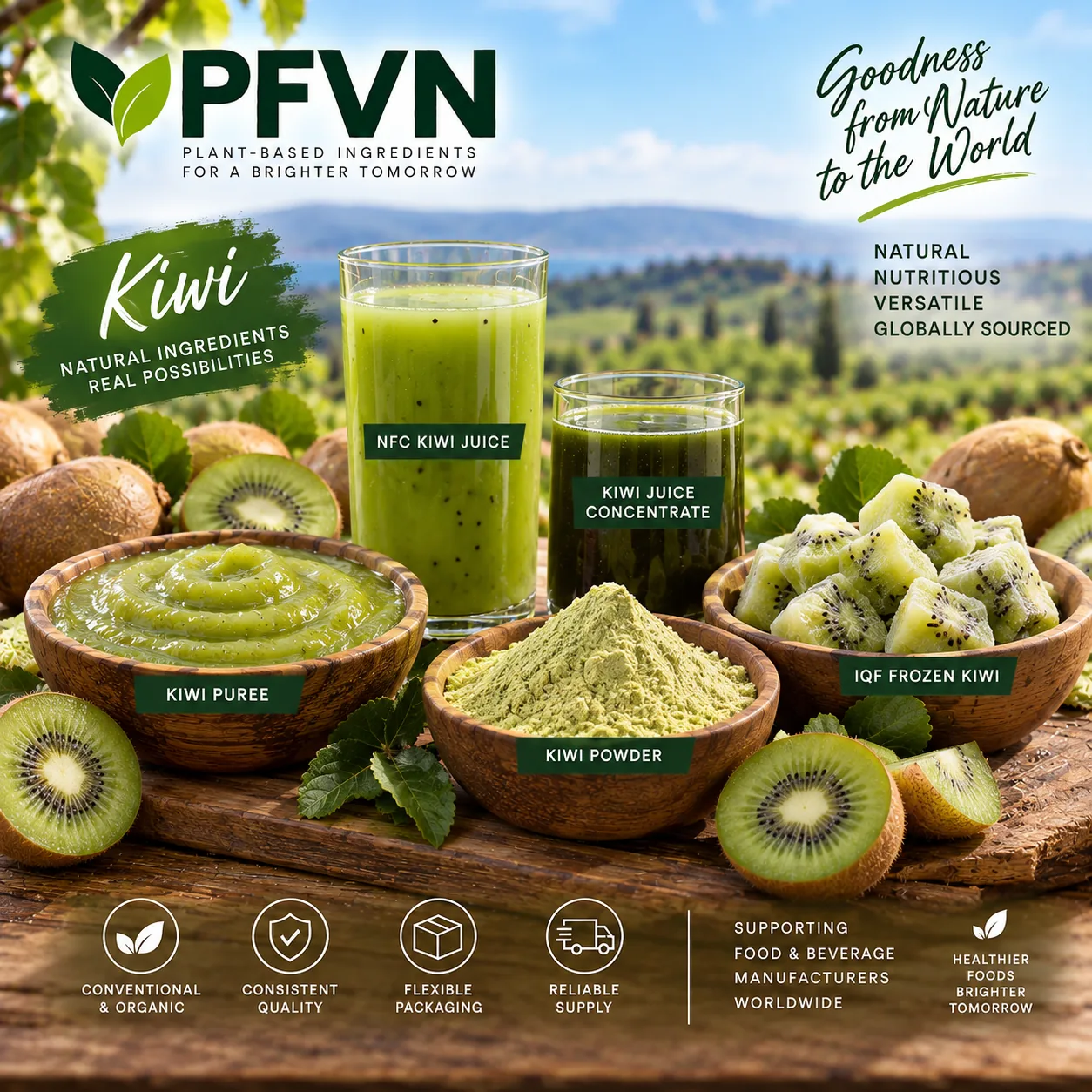
Select the kiwi format according to whether the manufacturing process requires intact fruit pieces, complete puree body, concentrated soluble solids or a low-moisture dry ingredient.

Packaging & handling

Industrial kiwi puree packaging

Kiwi puree may be supplied in aseptic or frozen formats depending on processor capability and product specification. Packaging should be selected around batch size, storage conditions, puree consistency, product turnover, pumping requirements and production-line configuration.

Pilot / smaller batch

5-gallon or roughly 15–25 kg pails

Useful for laboratory trials, product development, pilot production and smaller manufacturing runs. Availability may be frozen or aseptic depending on the supply program.

Commercial drum

Roughly 180–225 kg bag-in-drum

A common industrial format for fruit puree supply. Lined drums support palletized handling and may be used for aseptic or frozen kiwi puree programs.

Tote / IBC

About 275 gallons / around 1,000 L

Potentially suitable for higher-volume manufacturing where puree consistency, processor filling capability and plant pumping equipment support bulk tote handling.

Smaller bulk / foodservice

Bag-in-box or block formats

Selected kiwi puree programs may use smaller bag-in-box, lined-carton or frozen block formats where easier portioning, thawing or lower batch consumption is preferred.

Availability note: The formats shown above are common industrial reference points rather than guaranteed packaging options for every kiwi puree source. Confirm current net weight, liner type, pallet configuration, storage temperature, shelf life, minimum order quantity and lead time in the quotation.
Request a quote

Tell us what your kiwi program needs.

Include whether you require green or gold kiwi, the application, target °Brix or acidity, seed and puree-finish requirements, quantity, packaging, delivery location and timing. These details help us evaluate the appropriate kiwi puree supply program for your manufacturing requirements.

PFVN · Buffalo, New York
info@pfvn.us

We use your details only to respond to this inquiry.