
5-gallon or roughly 15–25 kg pails
Useful for product-development trials and smaller production runs. Frozen lychee puree programs may use pails or similar smaller bulk formats depending on supplier availability.
Bulk lychee puree is a tropical fruit ingredient valued for its delicate floral aroma, sweet fruit character, pale translucent-to-cream appearance and smooth fruit body. It is used in beverages, smoothies, dairy preparations, frozen desserts, bakery, fruit preparations, confectionery and specialty-food applications. PFVN supports industrial buyers with conventional and, where available, organic programs, technical specifications, packaging, documentation and commercial supply options.
Lychee, botanically Litchi chinensis, is a subtropical fruit with a textured red outer pericarp surrounding a translucent white edible aril and a large brown seed. Commercial puree is produced from the edible aril after the outer peel and seed have been removed.
The edible flesh is naturally juicy and has a distinctive sweet, lightly tart and highly aromatic profile often described as floral or rose-like. This delicate aroma is one of lychee's main advantages in beverages and desserts, but it also means that fruit quality and processing conditions can materially influence the finished flavor.
Lychee is a non-climacteric fruit, meaning that it should be harvested at appropriate eating maturity rather than relying on substantial ripening after harvest. Cultivar and harvest maturity affect soluble solids, acidity, aroma, edible yield and the balance between sweetness and freshness.
Lychee puree provides a different sensory profile from common apple, berry or citrus ingredients. Its value is primarily in recognizable tropical-floral flavor, natural sweetness and fruit body rather than intense acidity or dark color.
Lychee has a recognizable fragrant aroma that can remain identifiable even when blended with other tropical fruits. Excessive heat or oxidation, however, may reduce delicate fresh-fruit notes.
The edible aril is translucent white to cream rather than red. Commercial puree should therefore be assessed for characteristic pale coloration and freedom from excessive browning or discoloration.
Unlike clarified lychee juice, puree retains suspended fruit material that can contribute body, opacity and mouthfeel to beverages, dairy products, desserts and fruit preparations.
Commercial puree eliminates the need for manufacturers to peel and deseed fresh lychee fruit, operations that can otherwise be labor-intensive because of the leathery outer skin and central seed.
Commercial lychee puree specifications vary by cultivar, origin, processing method and whether the material is natural-strength or concentrated. Buyers should review analytical and sensory parameters together rather than qualifying the ingredient on °Brix alone.
°Brix reflects soluble-solids concentration and is useful for controlling fruit loading, sweetness and formulation yield. Published fresh-fruit data show substantial cultivar variation, while one commercial natural-strength lychee puree/NFC program specifies approximately 15 ± 1°Brix. The exact offered product should always be confirmed.
Lychee is relatively low in acidity compared with many berry and citrus ingredients. One commercial puree reference specifies pH 4.0–5.8, while other lychee products can fall outside that range. Because pH can be process-critical, manufacturers should use the actual supplier specification.
Pulp percentage and screen size influence mouthfeel and visual appearance. A commercial natural-strength reference lists approximately 5–10% pulp, although smoother or heavier finishes may be available depending on the processor and intended application.
Consistency affects pumping, mixing, dosing and finished-product body. When viscosity is critical, buyers should specify the measurement method, test temperature and acceptable range rather than relying only on terms such as “smooth puree.”
Lychee puree should retain a characteristic pale cream-to-translucent fruit appearance. Browning or excessive darkening may indicate oxidation, thermal impact or storage-related deterioration and should be evaluated against the agreed specification.
Industrial qualification should confirm characteristic sweet, floral lychee aroma without fermented, scorched, oxidized or otherwise objectionable notes. Sensory evaluation is particularly important because aroma is a major part of lychee's commercial value.
Specifications may define limits for aerobic plate count, yeast and mold, coliforms and relevant pathogens. Required limits depend on processing method, packaging, storage format and intended end use.
Confirm whether the material is 100% lychee puree or contains water, sweeteners, acidulants, antioxidants or other ingredients. Pure lychee ingredient should be distinguished from retail-style lychee preparations or beverage compounds.
Lychee is particularly valued for its fresh floral aroma, but these delicate sensory characteristics can be reduced by excessive heat exposure. Processing severity should therefore balance microbiological and shelf-life requirements with preservation of the desired fruit character.
Oxidation and enzymatic browning are also important considerations when fresh lychee tissue is exposed during processing. Rapid handling, appropriate thermal treatment and controlled storage can help limit discoloration and loss of fresh-fruit quality.
Formulators should evaluate puree after the actual pasteurization, hot-fill, freezing, thawing or other process used in the finished product. Lychee aroma that is strong in the incoming ingredient may become more subtle after thermal processing or long storage.
Lychee puree is primarily selected for formulations that benefit from its distinctive tropical-floral aroma, natural sweetness and smooth fruit body. Major commercial pathways include beverages, dairy, frozen desserts, fruit preparations, bakery, confectionery and specialty nutrition products.
One of the strongest applications for lychee puree. It can provide tropical aroma and fruit body to smoothies, juice drinks, lemonades, teas, mocktails and blended beverage bases.
Application guide → Purees Fruit Pouches & Blended PureesFine-finish lychee puree can be incorporated into blended fruit formulations where sweetness, particle size, microbiological criteria and final process requirements are appropriate.
Application guide → Dairy Fruit Preparations for YogurtLychee's floral profile can differentiate yogurt, cultured dairy and plant-based dairy alternatives, either alone or paired with mango, raspberry, rose, peach or other complementary flavors.
Application guide → Bakery Bakery Fillings & InclusionsPuree may be incorporated into pastry creams, fruit layers, fillings and dessert components. Heat stability and retention of delicate lychee aroma should be evaluated during product development.
Application guide → Frozen desserts Frozen Dessert ManufacturingLychee is well suited to sorbet, gelato, ice cream, frozen fruit desserts and novelty products where its floral sweetness provides a recognizable tropical flavor.
Application guide → Fruit preparations Jams, Preserves & Fruit SpreadsPuree can provide lychee flavor and fruit solids in spreads, dessert preparations and tropical fruit blends, generally with formulation adjustment to achieve the desired acidity and gel structure.
Application guide →Lychee's distinctive aroma makes it useful beyond traditional juice and puree applications, particularly in products where a premium or exotic flavor profile is desired.
Lychee puree can be used in fruit gels, confectionery centers, soft fillings and layered desserts where its floral aroma pairs well with sugar, chocolate or other tropical fruits.
Puree can provide authentic fruit body and aroma to frozen drinks, cocktail bases, mocktails, bubble-tea style beverages and foodservice beverage systems.
Lychee puree can be formulated into dessert sauces, fruit coulis and toppings for dairy desserts, cheesecakes, plated desserts and pastry applications.
Lychee combines particularly well with mango, passion fruit, pineapple, peach, raspberry, strawberry, pear, citrus and floral flavor systems where a distinctive aromatic top note is desired.
Lychee is grown commercially in several tropical and subtropical regions, including major production areas in Asia and other suitable climates. Cultivar and origin can influence sweetness, acidity, edible aril percentage, seed size and aroma, so apparently similar purees are not always technically or sensorially equivalent.
Processing yield is also commercially important because only the aril becomes the principal puree ingredient after peel and seed removal. Fruit varieties with a greater edible portion or smaller seed may therefore differ in processing economics from large-seeded cultivars.
Buyers should identify whether they need natural-strength puree, concentrated product, conventional or organic certification, a specific origin, or an aseptic versus frozen format. Annual volume and delivery schedule are useful for assessing crop-season coverage and supply continuity.
Commercial lychee puree may be supplied frozen, aseptic or under another validated preservation system depending on processor and specification. Package format should be selected around warehouse conditions, batch volume, thawing capacity, pumping requirements and inventory turnover.
Frozen puree requires temperature-controlled storage and distribution. Commercial examples use deep-frozen storage at approximately -18°C or below. Buyers should follow the exact supplier's storage and thawing instructions.
Where available, aseptic processing provides an alternative handling profile to frozen supply. Storage temperature, unopened shelf life and post-opening conditions depend on the processor and package system.
Industrial receiving teams may verify lot identity, package integrity, net weight, product condition, storage temperature where relevant and required documentation before release.
Packaging should match production batch size so opened or thawed puree can be used efficiently within the supplier's recommended handling period while protecting aroma and product quality.
Microbiological requirements vary according to process, package format, storage and intended use. Commercial specifications may establish limits for aerobic plate count, yeast and mold, coliforms and relevant pathogens together with customer-specific analytical requirements.
Physical criteria can include freedom from peel and seed fragments, foreign material, unacceptable browning or discoloration, excessive fibers and other defects. These criteria are particularly important for smooth beverages, dairy systems and premium desserts.
Because lychee is an agricultural ingredient, normal variation in soluble solids, acidity and aroma can occur between cultivars, seasons and origins. Agreed commercial tolerance ranges help establish consistent receiving standards while allowing for normal fruit variation.
Lychee's commercial value depends strongly on aroma, so sensory performance should be tested after the full manufacturing process rather than evaluating only fresh puree. Heat, storage time and interaction with other ingredients can change perceived floral intensity.
In beverages, manufacturers may evaluate pulp suspension, settling, flavor release and acidity balance. In dairy products, protein interaction and flavor perception should be checked. Frozen applications should be evaluated for texture and aroma after freezing and thawing.
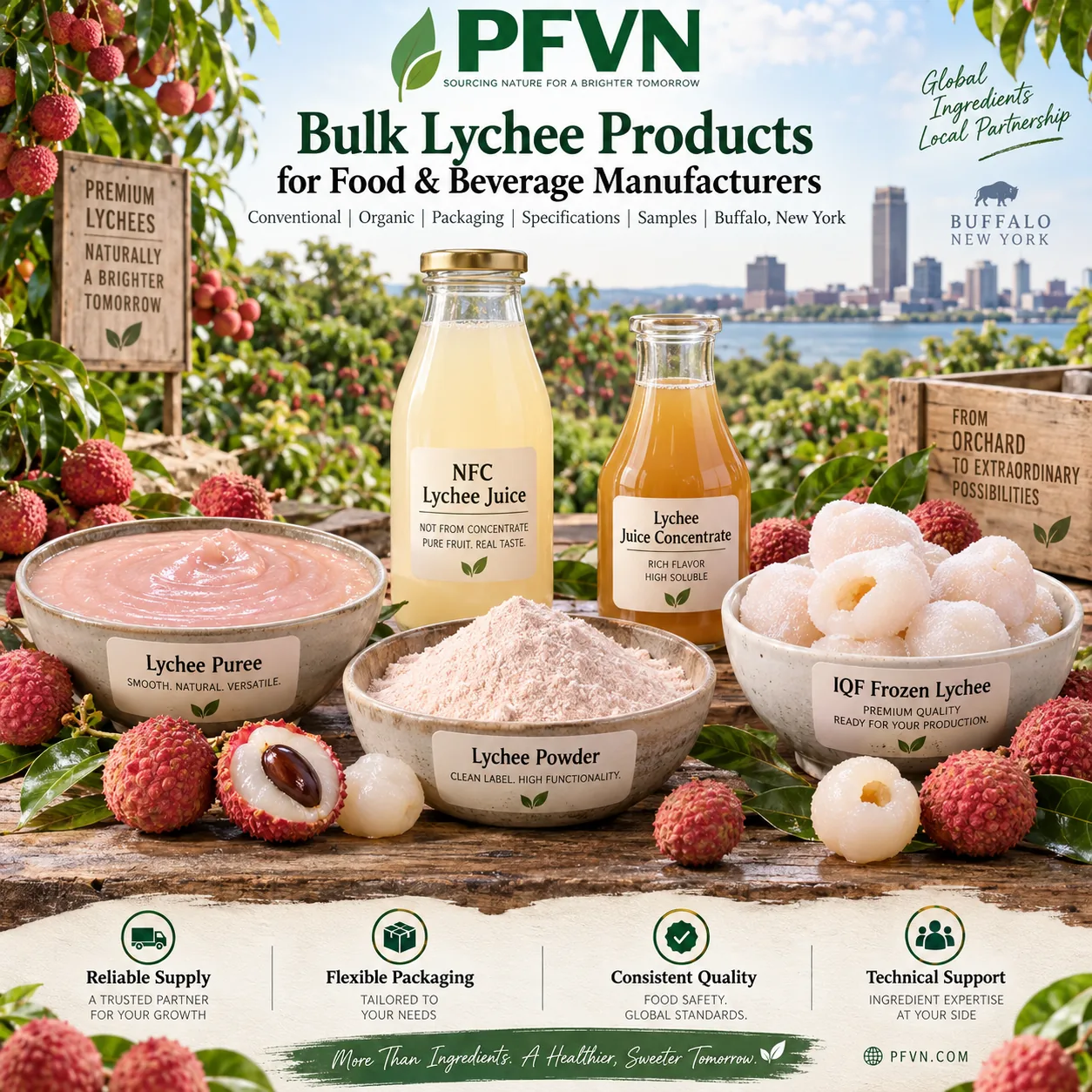
Depending on the application, lychee may also be sourced as IQF frozen fruit, juice concentrate, NFC juice or powder when a piece-form, concentrated liquid, single-strength juice or dry-format ingredient better suits the manufacturing process.
Select package size around manufacturing batch volume, storage conditions, thawing or pumping requirements, line rate and inventory turnover. Exact formats depend on processor, preservation method and commercial program.
Useful for product-development trials and smaller production runs. Frozen lychee puree programs may use pails or similar smaller bulk formats depending on supplier availability.
A common industrial scale for fruit puree. Aseptic liners within steel drums or frozen drum formats may be available depending on the processor, with exact net weights confirmed in the quotation.
Potentially suitable for higher-volume, pumpable programs where product viscosity, processing system and filling technology support bulk tote supply. Availability should be confirmed for the specific lychee source.
Selected lychee programs may use smaller bag-in-box, carton or other lined bulk formats where manageable portions and easier thawing or dispensing are preferred.
Include the intended application, target °Brix, pH or acidity where critical, pulp or consistency requirement, conventional or organic program, estimated quantity, packaging, delivery location and timing. If aroma intensity or origin is particularly important, include those requirements as well.