
°Brix / concentration
Commercial beetroot concentrates are commonly offered as high-solids products, with many programs falling roughly within the 60–70° Brix range. Exact target, tolerance and test method should be stated in the RFQ.
Red Beet Juice Concentrate is a concentrated liquid ingredient produced from red beetroot (Beta vulgaris) and valued for its naturally deep red-violet color, characteristic earthy-sweet vegetable profile and concentrated soluble solids. It is used commercially in beverage blends, wellness products, natural color systems, dairy and frozen desserts, confectionery, fruit preparations and selected savory formulations.
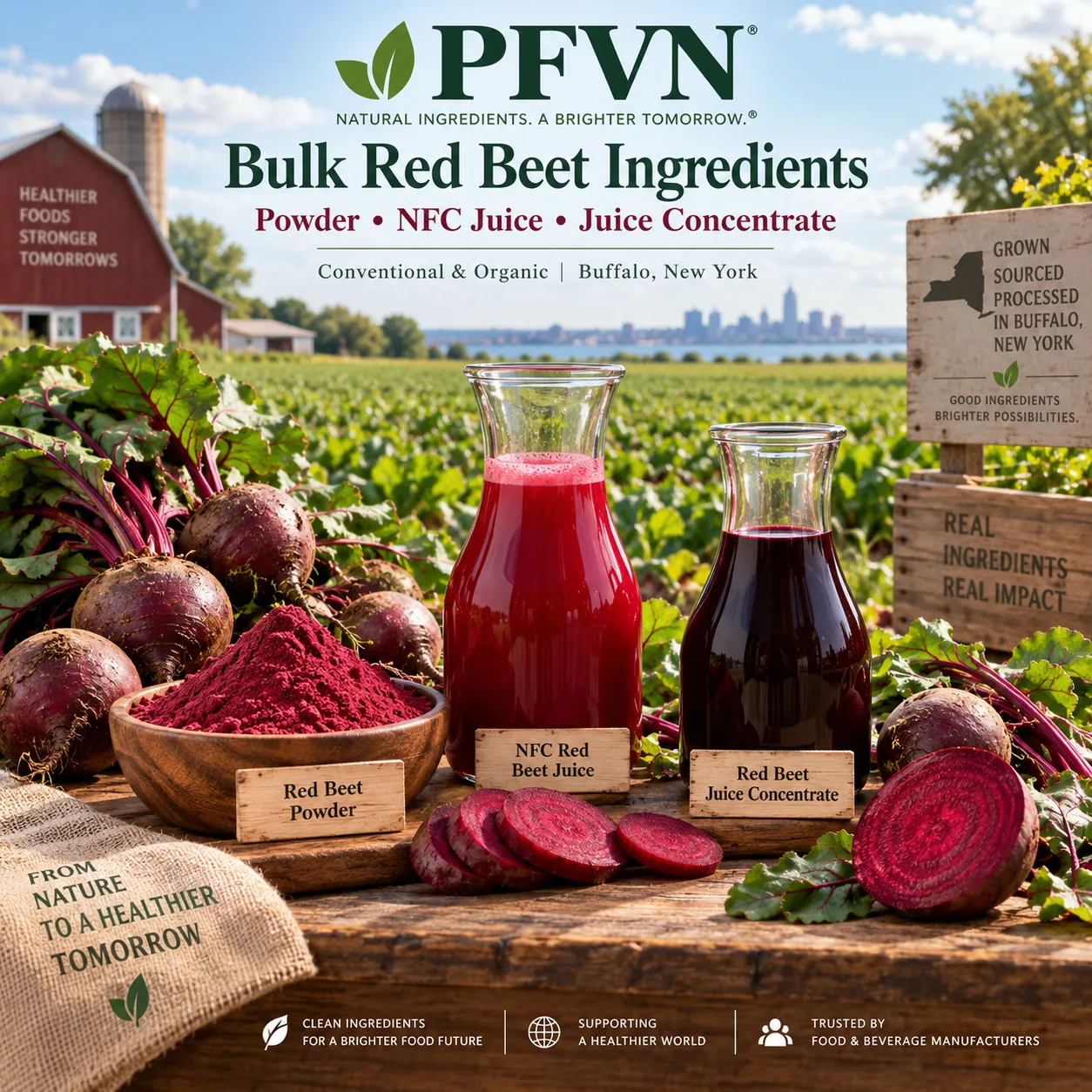
Red beet, commonly known as beetroot, is the swollen root of Beta vulgaris. Unlike many red fruit ingredients whose color is based primarily on anthocyanins, red beet obtains its distinctive red to purple appearance from naturally occurring betalain pigments. Betacyanins provide the dominant red-violet tones, while betaxanthins contribute yellow-orange components to the overall pigment system.
The raw vegetable has a naturally sweet, earthy and mildly vegetal sensory profile. Concentration removes part of the naturally occurring water and increases soluble solids, allowing manufacturers to use a smaller quantity of ingredient than would normally be required with single-strength juice. Depending on the process and specification, concentrate may be supplied in clarified, cloudy, acidified, conventional, organic or other customer-specific formats.
Red beet concentrate can perform several roles in a formulation at the same time. It may contribute vegetable solids and characteristic beet flavor, support a concentrated juice or vegetable positioning, or provide a naturally derived red hue when the finished product and processing conditions are suitable.
Red beet juice concentrate specifications differ by producer, crop, concentration process and intended use. The values below describe common commercial reference points rather than a guaranteed PFVN specification. The supplier specification and lot-specific Certificate of Analysis should always control purchasing and formulation decisions.
Commercial beetroot concentrates are commonly offered as high-solids products, with many programs falling roughly within the 60–70° Brix range. Exact target, tolerance and test method should be stated in the RFQ.
pH is supplier- and process-dependent, with many commercial products in a mildly acidic range. Some concentrates are acidified for processing or stability, so buyers should confirm whether citric acid or another permitted ingredient is present.
Color normally ranges from deep red to red-violet. Programs intended primarily for natural color use may also require pigment strength, absorbance, betanin or color-value criteria in addition to standard juice specifications.
The expected profile is characteristic of sound red beet, with earthy, sweet and vegetal notes and without fermented, scorched, excessively cooked or other undesirable flavors.
Clarified and less-clarified styles may be available. Concentration increases viscosity relative to single-strength juice, making product temperature, pumping conditions and dilution procedures relevant to plant handling.
Industrial specifications commonly establish limits for total plate count, yeast, mold and relevant pathogens. Required limits, test methods and release documentation should be agreed during supplier qualification.
Successful qualification involves more than matching Brix. Buyers should identify whether the concentrate is being purchased mainly as a vegetable juice ingredient, a flavor component, a source of vegetable solids or a natural red color contributor. The intended function determines which specification points deserve the most attention.
For beverage and juice applications, soluble solids, acidity, flavor and reconstitution performance are usually central. For color-focused applications, pigment strength and stability in the finished matrix may be more important. Savory formulations may place greater emphasis on flavor contribution, salt interaction, thermal process tolerance and batch-to-batch color consistency.
Commercial programs can also differ by origin, crop year, certification status, production method, packaging system, minimum order quantity and storage temperature. These factors should be aligned with the manufacturer's procurement and production plan before approval.
Red beet concentrate is most useful where manufacturers want concentrated vegetable character, naturally derived red-purple color or both. Final suitability depends on dosage, desired flavor impact, finished-product pH, thermal process, oxygen exposure and storage conditions.
Used in vegetable juices, mixed fruit-and-vegetable beverages, smoothies, functional beverages and concentrated beverage bases where beet flavor and color complement the formula.
A common ingredient in beet-based wellness shots, sports-oriented beverages and functional drink systems requiring a concentrated beetroot component in liquid form.
Can contribute naturally derived red to purple coloration in suitable formulations, including beverage bases, fruit preparations, desserts and other foods where characteristic beet notes are acceptable.
Used in selected dairy and plant-based dairy alternatives to provide color and vegetable-based positioning. Finished-product stability trials are important because pigment performance depends on process and storage conditions.
Applicable to selected confectionery, fruit-style preparations, fillings, icings, dessert components and bakery systems where natural red color and a mild beet contribution fit the desired sensory profile.
May be incorporated into sauces, soups, vegetable bases, marinades, prepared foods and plant-based products for color, vegetable solids or distinctive beet character.
Because beetroot concentrate combines color, flavor and soluble solids, the correct addition level depends strongly on the manufacturer's objective. A relatively low inclusion rate may provide visible red coloration, while a higher level may introduce a much more noticeable earthy beet flavor and additional soluble solids.
When color retention is important, excessive heat exposure and unnecessary contact with light or oxygen should be minimized where the production process allows. Manufacturers should evaluate the concentrate through the complete process—including blending, pasteurization or other heat treatment, filling, packaging and shelf-life testing—rather than relying only on the appearance of the raw ingredient.
Red beet can also be blended with apple, berry, pomegranate, carrot, black carrot, citrus or other fruit and vegetable ingredients to balance sweetness, acidity, flavor and color. The appropriate combination depends on label requirements and the desired finished sensory profile.
Documentation availability depends on the producer and supply program. Buyers should identify mandatory documents during the RFQ stage so that technical and regulatory review can be completed before commercial ordering.
Current physical, chemical, sensory, microbiological, packaging, storage and shelf-life criteria for the offered product.
Lot-specific analytical results for the parameters included in the supplier's release specification.
Ingredient declaration, allergen information, GMO statement, country of origin and other regulatory documents where applicable.
Organic, kosher, halal, food-safety or other certificates may be available depending on the selected producer and product program.
Choose the format according to the required solids level, flavor impact, processing system, storage conditions and handling requirements.
Industrial package selection should account for annual consumption, batch size, storage temperature, thawing requirements, concentrate viscosity, pumping equipment, line rate and unloading capability. Packaging availability varies by producer and specification.
Often practical for product development, trials and lower-volume production. Exact net weight varies according to concentrate density and Brix.
A common industrial scale for juice concentrates, including frozen or aseptic bag-in-drum configurations. Exact fill weight and liner system are supplier-specific.
Suitable for higher-throughput programs where product stability, storage conditions and the supplier's filling system support tote or IBC supply.
Potentially available for selected large-volume programs where product handling, transport temperature, sanitation and unloading systems are suitable.
Include your intended application, required Brix, color or sensory targets, certification requirements, estimated quantity, packaging, delivery location and timing. If red beet is being evaluated primarily as a natural color ingredient, tell us about the finished product and processing conditions as well.