
Typically 65 ±1° Brix
Approximately 65° Brix is a common commercial concentration for peach juice concentrate. Other programs, including lower-Brix products, may also be available for specific applications.
Bulk Peach Juice Concentrate is a high-solids fruit ingredient produced from ripe peaches (Prunus persica). It provides concentrated stone-fruit flavor, natural sweetness and pale yellow-to-amber fruit color for juice and nectar production, dairy preparations, bakery fillings, confectionery, frozen desserts, fruit snacks and industrial flavor systems.
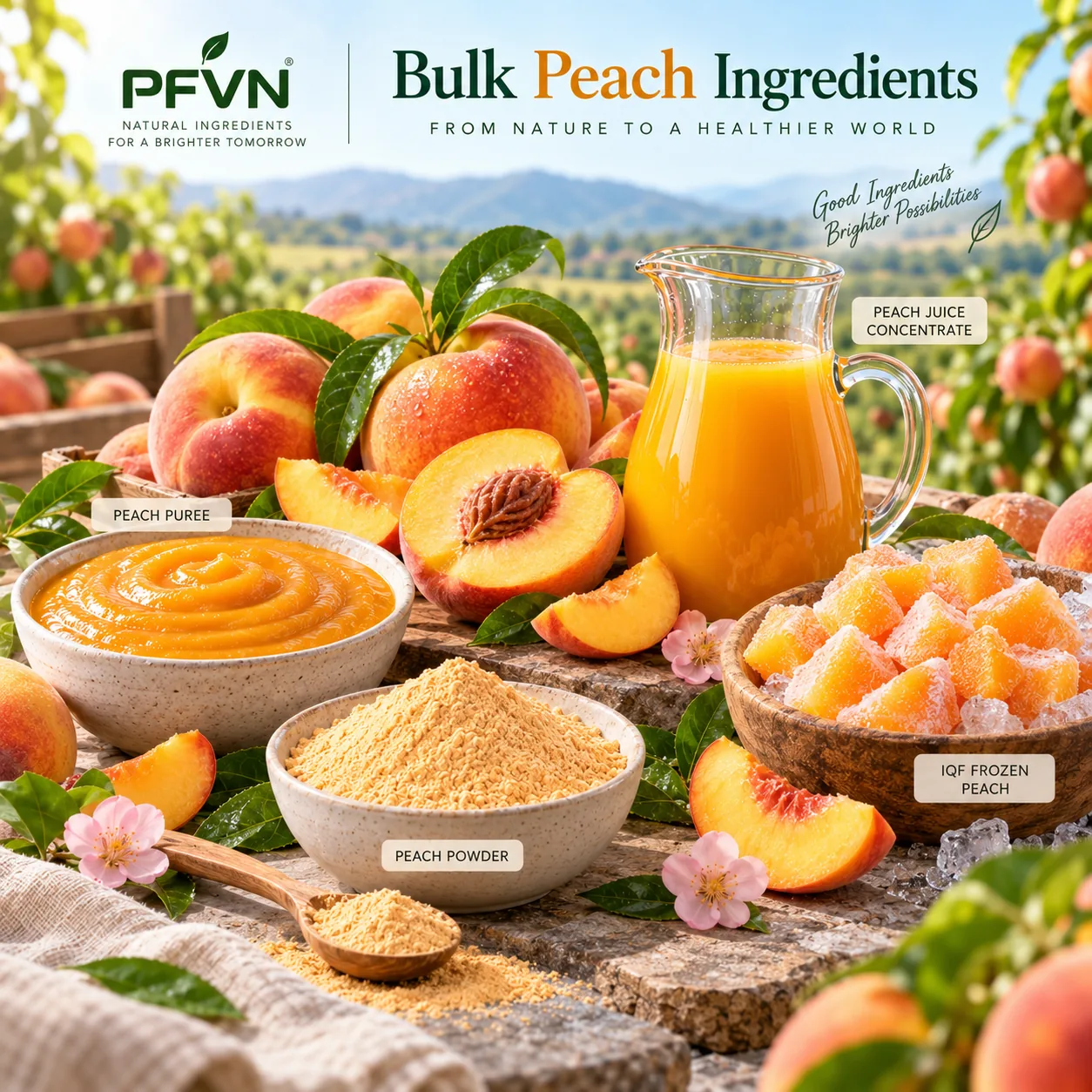
Peach (Prunus persica) is a stone fruit in the Rosaceae family. Commercial peaches vary by flesh color, acidity, aroma and stone attachment, with yellow- and white-fleshed cultivars as well as clingstone and freestone types serving different fresh-market and processing uses.
Ripe peach has a sweet, aromatic stone-fruit profile with floral and mildly acidic notes. Variety, growing region and harvest maturity influence the final juice's sweetness, acidity, color and aroma, so peach concentrates from different origins may perform differently even when supplied at the same Brix.
For concentrate production, sound ripe fruit is washed, destoned and processed to obtain juice. Depending on the intended product, the juice may be clarified or retained in a cloudier style before water is removed under vacuum. Commercial concentrate can also be supplied with different levels of retained peach aroma.
Peach juice concentrate is widely traded near 65° Brix, but the exact acidity, pH, color, clarity and microbiological limits vary by source and processing method. Final purchasing should therefore be based on the approved supplier specification and lot-specific Certificate of Analysis.
Approximately 65° Brix is a common commercial concentration for peach juice concentrate. Other programs, including lower-Brix products, may also be available for specific applications.
FDA uses 10.5° Brix as the minimum single-strength reference for peach juice when calculating declared juice percentage in U.S. beverages made from concentrate.
Commercial peach concentrate specifications commonly fall within this general range. Actual pH depends on cultivar, crop and processing and should be confirmed where it affects formulation or preservation.
Commercial specifications may show roughly 2–5% titratable acidity as malic acid, while other suppliers report acidity on a citric-acid basis. Always compare the analytical method and acid basis when evaluating suppliers.
Clarified concentrate is useful for beverages and syrups requiring lower turbidity, while cloudy styles retain more suspended fruit character. Color normally ranges from pale yellow to golden or amber.
Typical commercial specifications establish limits for total plate count, yeast and mold together with relevant pathogen requirements. Exact limits depend on processing, packaging and storage conditions.
For peach-forward beverages and dairy products, aroma quality can be as important as Brix. Manufacturers should evaluate the concentrate after dilution and thermal processing because volatile peach notes can change during concentration, pasteurization and storage.
Clear concentrate can be advantageous in juice drinks, flavored waters and syrup systems, while cloudier products may provide more fruit character in smoothies or opaque formulations. Where body and pulp are important, peach puree or puree concentrate may be more suitable than juice concentrate.
Buyers should also define conventional or organic status, origin preference, required certifications, packaging, storage temperature, annual volume and delivery schedule before commercial approval.
Peach concentrate combines recognizable stone-fruit flavor, natural sweetness and fruit solids, making it suitable for a broad range of beverage and food-manufacturing applications.
Used in peach juice drinks, nectars, iced teas, smoothies and multi-fruit beverages. Peach combines well with apple, apricot, mango, passion fruit, citrus, berry and grape ingredients.
Peach is a major flavor in yogurt and cultured products. Concentrate can be incorporated into fruit preparations for dairy beverages, yogurt, plant-based alternatives and dessert systems.
Applicable to pastry fillings, cakes, fruit layers, glazes and toppings where concentrated peach flavor and soluble solids are required without adding large quantities of puree.
Used in gummies, fruit jellies, chews, hard candies and confectionery centers where peach's familiar sweet-tart flavor works well with sugar and acid systems.
Provides peach character to ice cream, frozen yogurt, sorbet, popsicles, granita and dessert sauces either alone or as part of a blended fruit system.
Used in fruit preparations, snack fillings, bars, syrups and multi-fruit bases where concentrated peach flavor and fruit solids support formulation.
Choose the peach format according to required texture, fruit solids, flavor intensity, handling system and finished-product application.
Package selection should reflect annual consumption, production batch size, concentrate Brix, storage conditions, pumping capability and the required clear or cloudy product style.
Suitable for product-development trials and smaller production runs. Exact fill weight depends on concentrate density and the selected supplier program.
High-Brix peach concentrate is commonly supplied in steel drums with food-grade liners or aseptic bags. Exact net weight and pallet configuration are supplier-specific.
Tote supply may be available where concentrate stability, storage capability, annual consumption and supplier filling equipment support larger-format handling.
Other bulk arrangements may be possible for qualified programs where sanitary transport, temperature control and unloading equipment are suitable.
Include your application, target Brix, clear or cloudy style, acidity and pH requirements, aroma or color targets, certification needs, estimated quantity, packaging, delivery location and timing. These details help us identify the most suitable peach concentrate program.